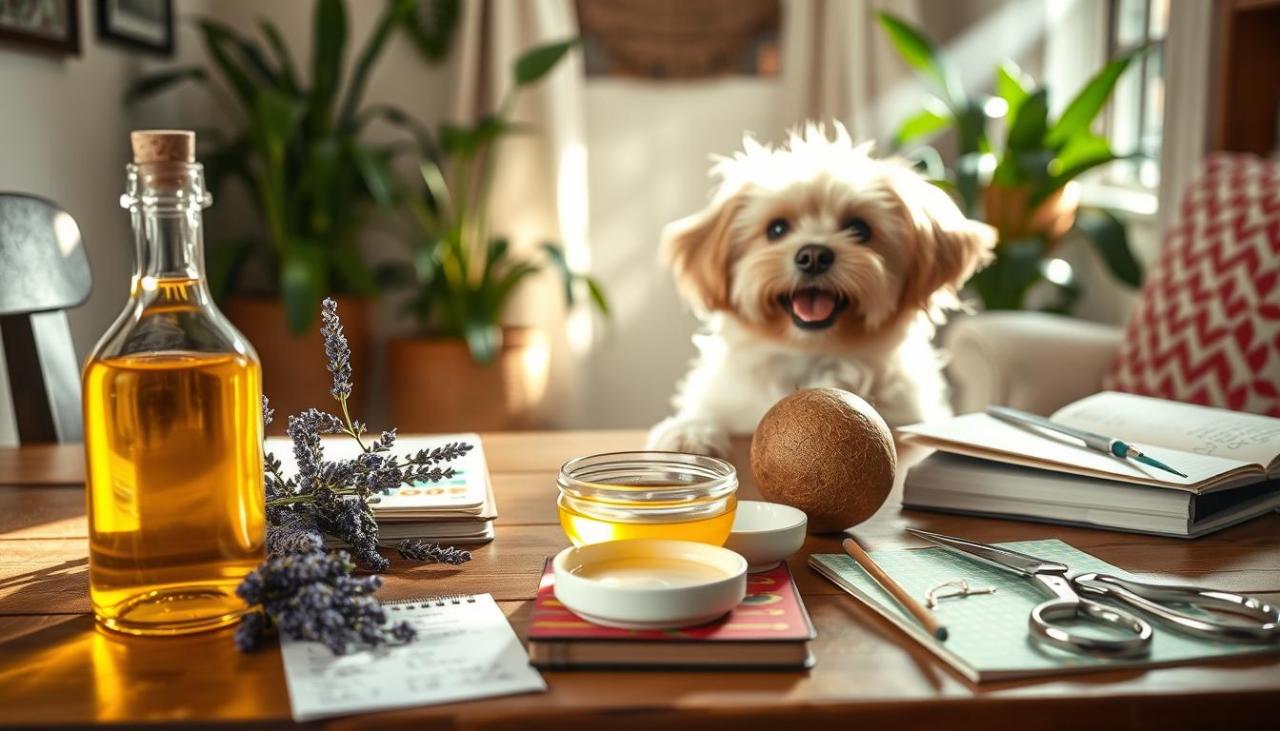
Did you know a dog’s skin is its biggest organ? It protects them from the outside world. Keeping it healthy is key for a shiny coat. Using a good daily care dog hair oil can help a lot.
We look for cold-pressed, unrefined oils. They keep important fatty acids and antioxidants. Nature provides powerful nutrients that make fur soft and healthy.
But, a great coat needs more than just oil. Food, grooming, and a clean place are also important. We’ll show you how to use these natural oils safely at home.
Key Takeaways
- Cold-pressed extracts retain vital nutrients like antioxidants and fatty acids.
- Topical treatments work best when paired with a balanced diet and hydration.
- Regular grooming helps distribute natural moisture across the entire coat.
- Environmental factors significantly impact the health of your pet’s skin.
- Always perform a patch test before applying new products to your pet.
What is Daily Care Dog Hair Oil?
Grooming often brings up pet hair conditioning oil as a game-changer. Many owners mix up these treatments with dietary supplements. But they have different roles in your dog’s care.
Definition and Purpose
A pet hair conditioning oil is a product for your dog’s fur and skin. It’s different from oils in food, which work inside out. These products hydrate the surface, improve texture, and protect from the environment.
“Topical coat care is not just about aesthetics; it is about creating a protective barrier that supports the natural integrity of the skin and hair follicles.”
These oils help with skin elasticity and shine. But they’re not for treating medical issues. If your dog has flaking, itching, or dullness, see a vet.
Benefits for Your Dog’s Coat
The right product can make your dog’s fur softer and easier to manage. These oils have essential fatty acids for skin moisture. They reduce dryness, making your pet more comfortable and looking great every day.
| Feature | Topical Conditioning Oil | Dietary Oil Supplements |
|---|---|---|
| Primary Application | Directly on fur/skin | Mixed into food |
| Main Benefit | Surface shine and softness | Internal health and immunity |
| Absorption | Absorbed by hair/skin | Digested and metabolized |
| Best Use Case | Managing dry, brittle hair | Supporting overall wellness |
Adding pet hair conditioning oil to your grooming routine is easy. It makes your dog’s coat vibrant and silky.
Key Ingredients to Look For
Knowing what’s in your pet’s coat care products is key for their health. We focus on the quality of ingredients, how they’re made, and the fatty acids that keep skin moist. This is crucial when we look at natural dog hair products.
Natural Oils for Optimal Hydration
To get a soft, shiny coat, we seek oils rich in essential fatty acids. Wild salmon oil is a top choice, packed with omega-3 and omega-6 fatty acids. These nutrients nourish the skin from the inside out.
Flaxseed oil is another great option, rich in alpha-linolenic acid. Mixing these oils gives a wide range of fatty acids. This helps keep the skin’s barrier function normal.
| Oil Type | Primary Benefit | Source |
|---|---|---|
| Wild Salmon | Omega-3/6 Boost | Marine |
| Flaxseed | Alpha-linolenic Acid | Plant |
| Coconut | Deep Conditioning | Plant |
Essential Oils for Conditioning
Botanical extracts can be beneficial, but essential oils for dog fur need careful use. These oils are very strong and can irritate sensitive skin if not used right.
Here are some safety tips for using products with botanical extracts:
- Make sure the product is made for dogs.
- Do a small test on your dog’s skin first.
- Don’t put concentrated oils near the eyes, nose, or mouth.
Choosing natural dog hair products with safe amounts of these oils keeps your pet comfortable. Always choose quality over quantity when picking essential oils for dog fur for a healthy coat.
How to Choose the Right Dog Hair Oil
When you look for dog grooming products, the label is key. Ignore fancy packaging and focus on what’s inside. A good oil should help your pet’s skin, not just make it shiny.
Factors to Consider
Think about your dog’s lifestyle and skin before buying. Puppies and older dogs need gentle, hypoallergenic formulas. Choose single-source, cold-pressed oils for more nutrients.
Make sure the ingredients are clear and the source is known. Even with organic dog grooming supplies, check for quality tests. The instructions should match your dog’s needs.
Popular Brands and Their Offerings
Many trusted brands offer oils for different needs. Look for brands that show what’s in their products. Here’s a table showing oils for different coat issues.
| Oil Type | Best For | Key Benefit |
|---|---|---|
| Coconut Oil | Dry, flaky skin | Deep hydration |
| Argan Oil | Brittle, dull fur | Adds natural luster |
| Jojoba Oil | Sensitive skin | Balances oil production |
| Hemp Seed Oil | Inflamed skin | Calming properties |
When comparing organic dog grooming supplies, check for certifications. Good dog grooming products list all ingredients. This helps avoid allergens and supports your dog’s health.
Application Techniques for Best Results
Using daily care dog hair oil the right way makes grooming a special treat for your pet. It keeps their fur shiny and healthy.
Being consistent and patient is crucial. This way, the oil gets into the fur well without making it greasy.
Step-by-Step Guide
Always do a patch test on a small skin area before using a new product. It checks for any skin reactions.
Put a tiny bit of oil in your hands and warm it up. Then, gently rub it into your dog’s fur, focusing on dry or tangled spots.
A good brush is key for grooming essentials for dogs. Brushing after oil application spreads it evenly and removes loose hair. It also boosts skin health.
Frequency of Use
Don’t think every dog needs oil every day. Check the product label for the right frequency. Different oils have different strengths.
Change your routine based on your dog’s fur and skin. A thick coat needs more care than a short one.
Don’t over-bathe your pet. Washing too much takes away their natural oils. Use oil treatments to keep their skin moist and their coat shiny between groomings.
Common Myths About Dog Hair Oil
Dealing with dog grooming products can lead to misunderstandings about safety and effectiveness. We aim to give you accurate info to keep your pet healthy and happy. Many think natural products are safe for all dogs, but this isn’t true.
Debunking Misconceptions
Many believe using more oil will fix a dry coat faster. But, over-applying can block pores and attract dirt, causing skin problems. Remember, topical treatments can’t replace a balanced diet or vet care.
If your dog has ongoing skin issues, oils might just hide symptoms, not solve the problem. Always talk to your vet before starting new treatments. Also, don’t assume a product is safe just because it’s in a pet store; check its quality and use.
Understanding Ingredients
When picking products, know the difference between additives. For example, essential oils for dog fur are very strong and should never be used straight. They’re not the same as food-grade oils, which offer different benefits.
Look for cold-pressed and unrefined oils to keep your dog’s skin healthy. Always check labels to avoid harmful additives. Choosing the right products is key to your dog’s well-being.
| Practice | Status | Reasoning |
|---|---|---|
| Using undiluted essential oils | Avoid | Can cause severe skin irritation |
| Cold-pressed natural oils | Recommended | Preserves vital nutrients |
| Replacing vet care with oil | Dangerous | May mask underlying health issues |
| Checking for synthetic additives | Essential | Prevents allergic reactions |
The Role of Diet in Coat Health
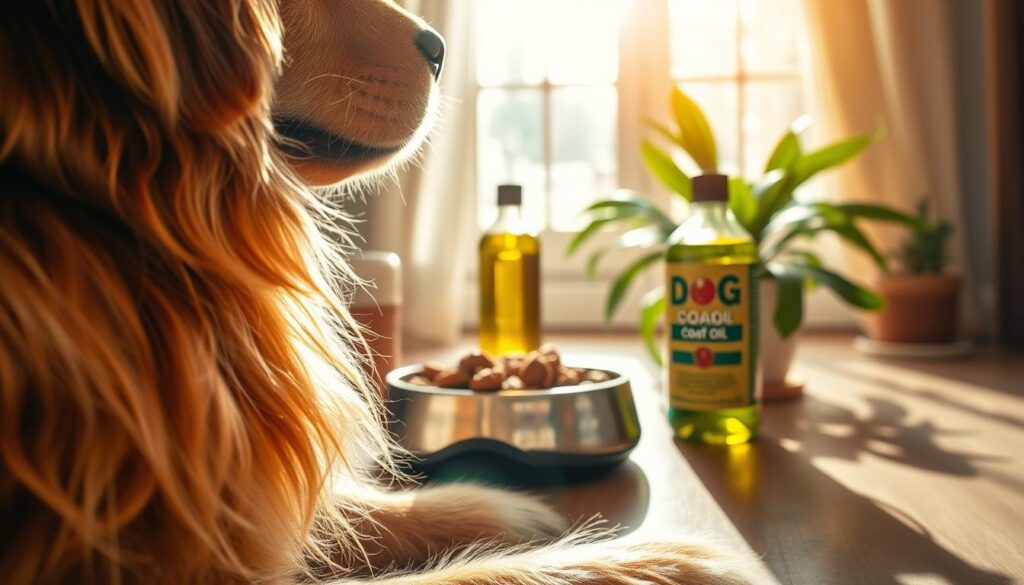
Many of us overlook the importance of diet for a shiny coat. A healthy coat reflects your pet’s overall health. The right nutrients keep their skin hydrated and fur strong against the environment.
Nutrients That Promote Shine
To get that shiny look, your dog needs certain nutrients. High-quality protein is key for hair, and fatty acids keep skin moist. Adding specific foods can boost your pet’s health:
- Fish-based sources: Full of omega-3 for dogs, they fight inflammation and make fur silky.
- Liver: It’s packed with Vitamin A and zinc, crucial for skin renewal.
- Eggs: Eggs are great for protein and biotin, strengthening hair.
- Vegetables: Carrots and sweet potatoes boost skin health with beta-carotene.
Supplements to Consider
Even with a good diet, sometimes extra help is needed. You might look into dog skin supplements with biotin, zinc, or hyaluronic acid. These supplements should enhance a balanced diet, not replace it.
Always talk to your vet before adding dog skin supplements. This is crucial if your dog’s coat looks dull and they’re losing weight, itching a lot, or having digestive problems. A vet can ensure your dog gets the right amount of omega-3 for dogs and other nutrients.
Consistency is important when changing your dog’s diet. By focusing on quality ingredients and getting vet advice, you’re giving your dog the best care for their coat.
Customer Reviews and Testimonials
Learning from other pet parents is key when choosing care for your dog. Marketing claims are a good start, but real performance shows in user feedback.
Top-Rated Products
When looking at dog hair oil reviews, look for patterns. Comments about softer fur or a nice scent are good signs. They show the product is high quality.
How easy it is to apply is also important. If many say an oil absorbs fast without being greasy, it’s likely a top choice for daily use.
| Feature | What to Look For | Why It Matters |
|---|---|---|
| Softness | Consistent positive feedback | Indicates effective hydration |
| Scent | Subtle and natural notes | Prevents irritation for dogs |
| Absorption | Non-greasy finish | Ensures comfort and cleanliness |
| Tolerance | No skin reactions | Confirms safety for sensitive pets |
Real-Life Experiences
Remember, results can vary a lot. This depends on your dog’s breed, skin, and health. Reviews are helpful but not proof.
It’s smart to also talk to your vet. Check the ingredients and return policy before buying. This makes sure the product fits your dog’s needs.
By using both community feedback and vet advice, you can pick the best dog coat oils for your pet. Reading dog hair oil reviews helps you find what really works for your dog’s coat.
DIY Dog Hair Oil Recipes
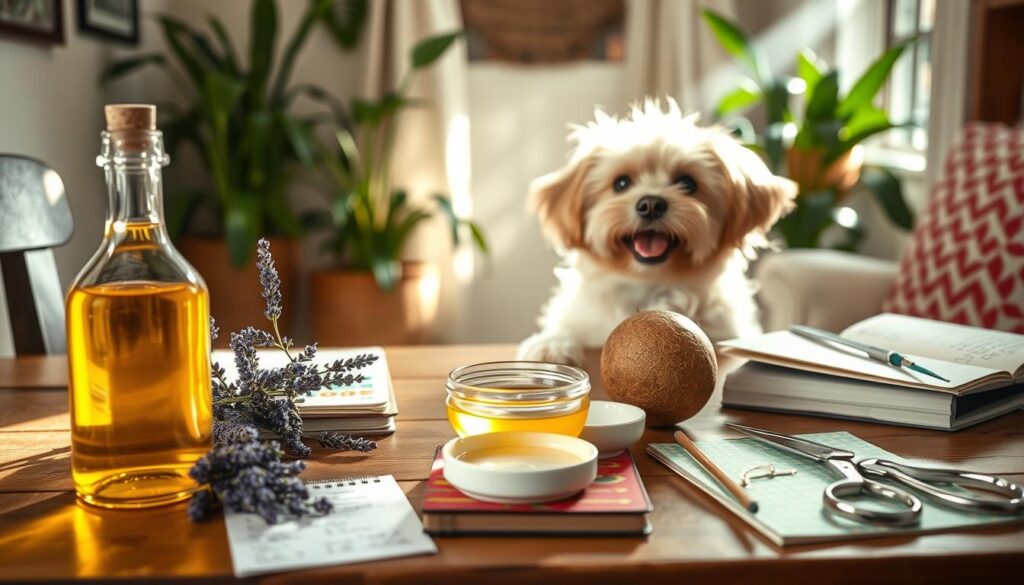
Some pet owners like to make their own canine hair care remedies at home. This way, they can choose what goes on their pet’s skin. But, it’s important to remember that homemade products might not always be safe.
If you’re into organic dog grooming supplies, making your own blends is a good idea. Use simple, quality ingredients. Always be careful when trying new things on your pet.
Simple Ingredient Combinations
For a basic moisturizer, try coconut, olive, or linseed oil. These oils are usually okay in small amounts for a healthy coat. But, avoid strong oils like black cumin oil, which can harm pets.
When adding scents, make sure to follow expert advice on DIY essential oil. Never just guess the amounts, as the wrong mix can cause serious skin problems.
“Essential oils are highly concentrated plant extracts that must be handled with extreme care when used on animals.”
| Oil Type | Primary Benefit | Usage Note |
|---|---|---|
| Coconut Oil | Deep Hydration | Use sparingly |
| Olive Oil | Coat Shine | Best for dry patches |
| Linseed Oil | Skin Soothing | Keep refrigerated |
Tips for Safe Application
Always do a patch test on a small, hidden area of your dog’s skin first. Wait 24 hours to see if there’s any reaction. Never put oils on your dog’s face, eyes, or broken skin.
Stop your dog from licking the treated area to avoid stomach problems. If you see any signs of irritation, wash it off right away and talk to your vet. Also, use diluted apple cider vinegar carefully and never on inflamed skin.
Conclusion: Investing in Your Dog’s Coat Health
To get a shiny coat, you need more than just creams. Grooming, eating right, and staying active are key. These steps help your pet feel great.
Choosing the right products is important. Brands like Burt’s Bees for Dogs and TropiClean are good choices. Look for natural ingredients and start with small amounts to see how your dog reacts.
Food rich in omega-3s is also crucial. It makes your dog’s coat shine from the inside. Brushing regularly spreads these oils and keeps the fur and skin healthy.
If your dog’s coat looks dull or itchy, it might be a sign of a bigger problem. Watch for changes in behavior or health. If things don’t get better, a vet visit is a good idea.
Sticking to these routines keeps your dog happy and healthy. Share your grooming tips with others. We’re excited to hear about your dog’s success.