Did you know that over 60% of common household botanical extracts can cause severe respiratory distress or skin irritation in pets? Many owners think natural products are always harmless, but their risks are more complex. Use essential oil for dog hair only with extreme caution to protect your furry companions.
Not every aromatic liquid is safe, and some can harm pets through inhalation or direct contact. We separate veterinary-approved grooming solutions from risky home remedies. Our goal is a safety-first framework that puts your pet’s health first.
Before applying any substance, we strongly recommend consulting with your veterinarian. Know the difference between diluted topical treatments and concentrated vapors. These guidelines can keep grooming positive instead of turning it into a medical emergency.
Key Takeaways
- Natural products are not always safe and can cause severe reactions in pets.
- Always consult a veterinarian before introducing new grooming substances.
- Distinguish between professional veterinary products and risky household aromatherapy.
- Some substances are toxic if inhaled, ingested, or absorbed through the skin.
- Immediate action is required if you suspect your pet has had a negative reaction.
Understanding Essential Oils and Their Benefits for Dogs
Learning about essential oil strength is the first step in adding them to your pet’s wellness routine. These highly concentrated, aromatic compounds come from plant parts, including flowers, leaves, and bark.
Because these extracts are concentrated, they have a significant level of potency. A dog’s sense of smell can be up to 100,000 times stronger than ours, so small amounts feel intense to them.
What Are Essential Oils?
Essential oils are more than scented liquids; complex chemicals can affect the body in powerful ways. A dog hair care essential oil contains volatile compounds that may overwhelm a pet’s sensitive respiratory system.
These oils are not for internal use or direct, undiluted application. Extreme caution and proper handling help keep pets comfortable and safe during grooming.
How Essential Oils Can Benefit Dog Hair
Many owners ask whether these oils can repair damaged fur or speed hair growth. Some oils may support a pleasant grooming environment, but little scientific evidence supports miraculous coat repair or faster growth.
Instead, these plant-based additions support general hygiene and a fresh-smelling coat. A high-quality dog hair care essential oil may make brushing more enjoyable for owners and pets by neutralizing odors.
Popular Essential Oils Safe for Dogs
When choosing products, owners often consider lavender, chamomile, frankincense, and ginger. These are generally safer choices, but “safer” does not mean risk-free.
Each dog reacts differently to aromatic compounds, and sensitivities can vary greatly. Use a very low concentration and watch your pet’s response before regular use of this dog hair care essential oil.
Choosing the Right Essential Oil for Your Dog
Choosing the best essential oils for dog grooming means checking key health factors before use. Look beyond marketing claims and consider your pet’s biological needs to support long-term health.
Factors to Consider When Selecting Oils
Before trying a product, assess your dog’s individual profile. Age, medical history, and pregnancy help show whether an oil is safe.
Consider your dog’s sensitivity and any other household pets. Identify the exposure route because topical use differs from diffusion or inhalation.
Recommendations for Specific Coat Types
For coat care, choose veterinarian-approved grooming products instead of raw, undiluted oils. These professional formulas are balanced to support skin health without causing irritation.
Some oils are high-risk and should be avoided entirely around dogs. Keep these substances away from your dog:
- Tea tree and Peppermint
- Pine and Wintergreen
- Cinnamon and Clove
- Citrus and Ylang Ylang
Choosing best essential oils for dog grooming vetted by professionals can help protect dogs from toxicity. Always put safety first, and ask your veterinarian about any uncertain product.
Safety Guidelines for Using Essential Oils on Dogs
When using natural essential oils for dog coat care, safety comes first. Many owners think dilution makes a product harmless, but that belief is dangerous. Ask your veterinarian before putting any concentrated botanical substance on your pet’s skin or fur.
Dilution: Why It Matters
Dilution does not make natural essential oils for dog coat use safe. Even with carrier oil, these substances can irritate a dog’s sensitive skin. Do not guess at homemade ratios; small mistakes may cause harmful reactions.
Rather than experiment at home, choose veterinarian-approved grooming products. These products are tested for safety and offer botanical extracts without raw, concentrated oils.
Signs of Sensitivity in Dogs
Watch your dog closely after applying any new product. If you see any symptom below, wash the area at once and contact your vet:
- Respiratory changes or difficulty breathing
- Excessive drooling or vomiting
- Unusual weakness or lethargy
- Visible tremors or muscle twitching
- Redness, swelling, or irritation on the skin
“The skin of a dog is significantly thinner and more permeable than human skin, making them far more susceptible to the absorption of concentrated botanical compounds.”
Storage and Handling of Essential Oils
Store oils in sealed, dark-glass containers to protect their quality and prevent breakdown. Keep them in locked cabinets or high shelves completely out of your pets’ reach.
If you use household cleaners with essential oils, keep your dog away until surfaces dry completely. This keeps oils from reaching the paws or fur, where grooming could cause swallowing.
| Practice | Status | Reasoning |
|---|---|---|
| Homemade Dilution | High Risk | Inconsistent potency levels |
| Vet-Approved Products | Safe | Formulated for canine physiology |
| Storing in Reach | Dangerous | Risk of accidental ingestion |
| Full Surface Drying | Recommended | Prevents dermal absorption |
DIY Essential Oil Dog Hair Care Recipes
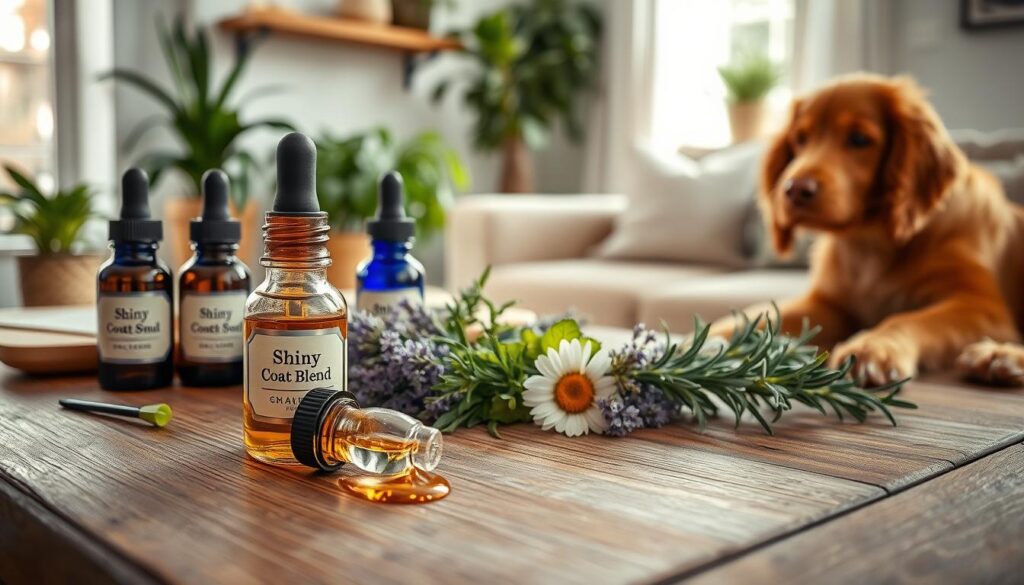
We often receive questions about using essential oil blends for shiny dog hair in homemade mixtures. While the prospect of crafting your own grooming supplies is tempting, we must emphasize that dogs have unique physiological needs. Many substances safe for humans can harm dogs when applied to skin or swallowed during grooming.
Homemade Shampoo with Essential Oils
Many owners mix oils into shampoo to create a glossy coat. However, improper dilution can cause severe skin irritation or chemical burns. We recommend high-quality, fragrance-free veterinary shampoos instead of risky homemade mixtures.
These products balance your dog’s skin pH without the dangers of volatile plant compounds.
Essential Oil Infused Dog Spritzers
Owners often use spritzers to mask odors, but these products can leave fur residue. Dogs frequently groom themselves and may swallow concentrated oils from their coats. We strongly advise against using DIY sprays.
For essential oil blends for shiny dog hair, ask your veterinarian whether topical products suit your breed.
Natural Flea Repellent with Essential Oils
Many DIY flea repellent recipes exist, but they may not work or may prove dangerous. High concentrations of essential oils can cause neurological issues in pets. We encourage veterinarian-recommended parasite prevention instead of unverified home remedies.
Professional products undergo rigorous testing to protect pets without causing harm.
| Approach | Risk Level | Effectiveness | Recommendation |
|---|---|---|---|
| DIY Essential Oil Blends | High | Unpredictable | Avoid |
| Fragrance-Free Grooming | Low | High | Preferred |
| Vet-Approved Parasite Control | Minimal | Proven | Essential |
Bathing Your Dog with Essential Oils
At bath time, safety should come before scent. Many owners seek essential oil tips for healthy dog fur, but standard, high-quality dog shampoos are usually safer and more effective than concentrated oils in bathwater. Our team at our dedicated pet care resource says your dog’s skin health comes first during grooming.
Step-by-Step Guide for Bath Time
Start by brushing your dog well to remove loose hair and tangles. Use lukewarm water to wet the coat, because extreme temperatures can cause stress or irritation. Apply a veterinarian-approved, dog-formulated shampoo to clean the fur.
Always rinse the coat completely so no residue remains. Leftover shampoo can cause itching or dryness. Prevent your dog from licking its fur during and after the bath. If you notice coughing, drooling, vomiting, weakness, tremors, or trouble breathing, seek veterinary help immediately.
“The best grooming routine is one that prioritizes the comfort and safety of your animal companion above all else.”
Frequency of Baths with Essential Oils
Many people ask how often to use specific products, but bathing should not follow an essential oil schedule. Set bath times based on your dog’s coat type, skin condition, and daily lifestyle. A dog that plays outdoors in mud needs more baths than a house-bound pet.
We recommend consulting your veterinarian to set a routine that supports your dog’s natural skin barrier. Following these essential oil tips for healthy dog fur can keep your pet clean without harming long-term health. Consistent grooming gives your furry friend the best results.
Brushing Your Dog’s Coat with Essential Oils
When discussing using essential oils for dog grooming, remember one key safety rule. Never put these oils on your dog’s brush, coat, or skin. They may cause irritation or other bad reactions.
Focus instead on a healthy coat through proper mechanical grooming. If you use a diffuser, keep the room well-ventilated, and let your dog leave if overwhelmed. Store essential oil bottles safely away from your pet to prevent contact or accidental ingestion.
Techniques for Effective Brushing
Choose a tool suited to your dog’s hair length and texture. Work in small, manageable sections so you reach the skin without pulling or causing pain.
Before full brushing, check for mats or tangles. For a stubborn knot, use a dog-safe detangling spray instead of forcing through it. Always stop immediately if your dog shows discomfort, such as pulling away or whining.
Oils to Use for Different Fur Types
Although we do not apply oils to the coat, we can choose products with safe, natural ingredients. The table shows suitable tools and product choices for each coat type.
| Coat Type | Recommended Tool | Grooming Focus |
|---|---|---|
| Short/Smooth | Rubber Curry Brush | Removing loose hair |
| Long/Silky | Pin Brush | Preventing tangles |
| Wire/Curly | Slicker Brush | Removing debris |
| Double Coat | Undercoat Rake | Managing shedding |
These mechanical techniques make using essential oils for dog grooming a safe, indirect experience. Putting your dog’s comfort first builds trust and keeps the coat in top condition.
Incorporating Essential Oils into Your Dog’s Routine
Consistency helps keep your dog’s coat healthy and bright. Good grooming combines proper nutrition, regular brushing, and careful health checks.
Many owners seek essential oils for dog hair growth, but no science supports these products for hair growth. Call your veterinarian at once if you see sudden shedding, bald patches, or lasting skin irritation. Use professional advice instead of home remedies.
Daily Care Practices
Daily care helps keep your dog comfortable and clean. Focus on these basic habits to support healthy skin and a healthy coat:
- Balanced Nutrition: High-quality food provides the essential fatty acids needed for a shiny coat.
- Consistent Brushing: This removes loose fur and distributes natural skin oils evenly.
- Parasite Prevention: Use vet-approved treatments to keep fleas and ticks at bay.
- Observation: Check your dog’s skin daily for redness, bumps, or unusual odors.
“The health of a dog’s coat is a direct reflection of their internal well-being and the care they receive every single day.”
Seasonal Considerations for Dog Grooming
Your dog’s needs change with the seasons, so adjust your grooming plan. During heavy shedding, brush more often to manage loose hair.
Changes in humidity and temperature can affect skin health, causing seasonal allergies or dryness. Speak with your veterinarian before adding products or changing routines. This matters especially if you are considering essential oils for dog hair growth or coat conditioning.
Extra caution is vital for some dogs. Be especially careful with these dogs:
- Puppies with developing immune systems.
- Pregnant or nursing dogs.
- Senior dogs with sensitive skin.
- Dogs currently managing chronic medical conditions.
Stay alert and follow veterinary advice to keep grooming safe and positive for your pet. Natural additives may fit a routine, but they must not replace professional medical evaluation for skin or coat concerns.
Alternative Uses for Essential Oils in Dog Care
To improve your dog’s routine, consider care options beyond traditional DIY essential oil recipes for dog hair care. Natural grooming can help, but some needs require safer, proven methods than home-mixed products.
Aromatherapy for Stress Relief
When dogs feel anxious or stressed, owners often seek quick ways to calm them. Rather than use volatile oils, choose dog-specific pheromone products. They come as diffusers, collars, and sprays that copy natural calming signals.
These products may reduce destructive behavior and general nervousness in a controlled way. Always ensure your home has proper ventilation when using scent-based products. Give your dog an escape route if an aroma feels overwhelming.
Skin Care: Soothing Dry or Irritated Skin
A natural oil blend may seem helpful when your dog scratches or develops dry patches. Yet oils on broken or inflamed skin can often worsen the underlying irritation. Seek a professional veterinary assessment for persistent skin problems.
A veterinarian can determine whether allergies, parasites, or infections caused the problem and require specific medical treatment. An unverified mixture on damaged skin may cause more discomfort or allergic reactions. Prioritizing professional guidance helps your dog receive safe, effective care for its needs.
Conclusion: Enjoying the Benefits of Essential Oils
Adding natural scents to pet care requires balance, with safety first. Natural ingredients are not always harmless. Using any essential oil for dog hair requires research and knowledge of your pet.
Summary of Best Practices
Ask your veterinarian before bringing new products into your home. Store supplies in cool, secure places away from curious paws, and use good ventilation. If your dog shows distress, contact your veterinarian immediately with the product label, and review professional resources for essential oil for dog hair safety.
Commitment to Responsible Care
Learning safe grooming habits can improve your pet’s quality of life and guide choices for a healthy, shiny coat. Avoid toxic substances and use proven, diluted methods to create a safer home. Watch your dog closely when trying a new scent or grooming technique.