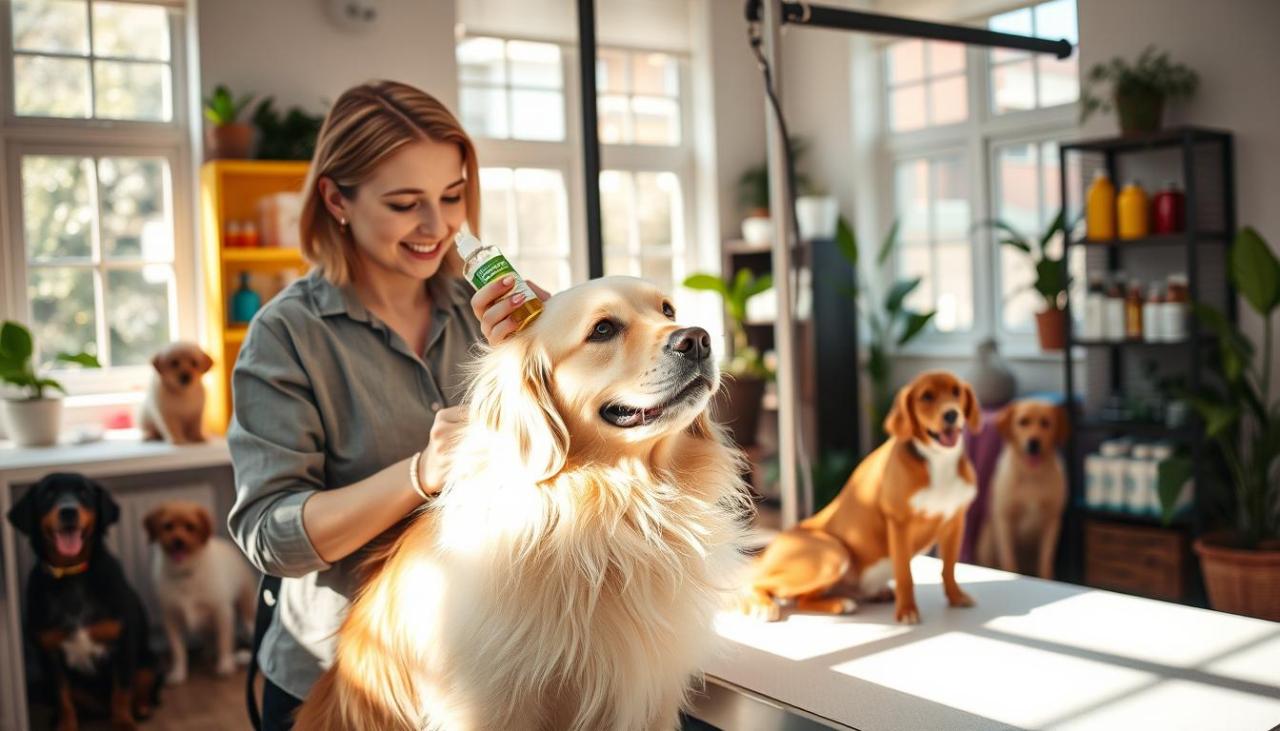
Did you know that nearly 40% of all vet visits are about skin or coat issues? We often focus on how shiny a pet’s coat looks. But, the skin is the biggest organ and needs more than just surface care.
Using a good pet fur conditioning oil is key in grooming. But, these treatments can’t fix everything. Dull coats might mean deeper problems like bad food, stress, or hidden bugs that need vet help.
Our guide shows you the best pet hair care products out there. We’ll teach you how to use them safely. Remember, they work best with fresh water, regular brushing, and a healthy diet. Let’s get your pet’s coat looking great and healthy together.
Key Takeaways
- Skin health is a primary indicator of overall wellness in animals.
- Topical treatments provide cosmetic benefits but cannot replace veterinary care for underlying conditions.
- Balanced nutrition and hydration are the foundations of a shiny coat.
- Regular brushing helps distribute natural moisture across the skin.
- Always consult a professional if you notice sudden changes in skin texture or hair loss.
What is Pet Fur Conditioning Oil?
Understanding topical grooming products is key. Pet fur conditioning oil is a special treatment. It softens hair, makes it easier to manage, and gives a healthy look.
These oils don’t strip away dirt like shampoos do. Instead, they add moisture and seal the hair cuticle. This helps prevent tangles and static, common in long-haired breeds during dry winter.
Definition and Purpose
Topical grooming oils are different from dietary supplements. Using kitchen oils on pets is not recommended. Professional-grade products are made for animal skin’s pH levels.
“Topical application provides immediate relief for surface dryness, whereas dietary oils work from the inside out to support long-term coat health. They are not interchangeable.”
These products protect the skin’s outer layer. They help against dust and harsh sunlight when used right.
Key Ingredients to Look For
When looking for an organic pet fur oil, check for safety and effectiveness. Not all natural ingredients are good for all pets. Always check the label for animal compatibility.
Quality products have nourishing ingredients. Look for:
- Essential Fatty Acids: They keep the skin’s lipid barrier healthy.
- Jojoba or Argan Oil: They absorb well without being greasy.
- Vitamin E: It’s an antioxidant that keeps skin elastic.
Watch out for heavy fragrances or synthetic additives. They can irritate pets. Even if it’s labeled as organic pet fur oil, check the ingredients. Using a good pet fur conditioning oil regularly keeps your pet’s coat soft, manageable, and vibrant all year.
Benefits of Using Pet Fur Conditioning Oil
Using high-quality oils in your pet’s grooming routine does more than just make them look good. When we choose natural pet grooming products, we give our pets important nutrients. These nutrients help keep their hair healthy and easy to manage.
Promotes Shiny Coats
A shiny coat is a sign of a healthy pet. Using a pet fur treatment oil helps bring back the natural shine lost due to the environment or dry air. This makes your pet’s fur softer and more enjoyable to cuddle and groom.
“The secret to a radiant coat lies in consistent care and the use of high-quality, nourishing ingredients that respect the animal’s natural biology.”
Reduces Shedding
While oil can’t stop shedding completely, it’s key to understand that it’s natural. Regular brushing is the best way to remove loose hair and prevent mats. But, a conditioning oil can make brushing easier and less stressful for your pet.
- Softens hair to prevent tangles.
- Makes loose fur easier to remove during grooming.
- Reduces the static electricity that often causes hair to cling to furniture.
Enhances Skin Health
Keeping the skin barrier healthy is crucial for avoiding dryness and irritation. A good pet fur treatment oil deeply hydrates, soothing minor dryness and keeping the skin flexible. Remember, these products are for cosmetic and maintenance use.
If your pet has persistent itching, redness, sores, or hair loss, see a vet right away. These signs often need medical attention, not just topical treatments. Always use natural pet grooming products alongside professional vet care for your pet’s health.
How Pet Fur Conditioning Oil Works
The secret to a shiny coat is in how oils work with hair. When you use a top-notch pet fur conditioning oil, it forms a shield around each hair. This shield makes hair smoother, cutting down on tangles and mats.
Deep Nourishment
A premium pet fur nourishing oil does more than just smooth the surface. It locks in moisture, keeping hair healthy. This deep nourishment keeps fur strong and soft.
Regular use of a pet fur treatment oil makes grooming easier. It makes brushing through tangles painless. But, remember, the shine is just the start. Keeping your pet’s coat healthy takes ongoing care.
Hydration for Dry Skin
It’s key to know the difference between surface care and skin hydration. A conditioning oil for pets can calm the skin but can’t fix deep issues. If your pet’s skin is always dry, the oil is just a quick fix.
Watch your pet after using a pet fur treatment oil to see how they react. If dryness keeps coming back, it might be time to see a vet. A conditioning oil for pets is great, but it’s even better with a healthy lifestyle and enough water.
Factors to Consider When Choosing Oil
Choosing the right oil for your pet is important. Each animal has a unique coat that reacts differently to treatments. Knowing these differences helps you pick the best dog oil for coat for your pet.
Pet’s Coat Type
The length, density, and natural oiliness of your pet’s fur matter. Short, fine hair needs lighter formulas to avoid looking greasy. Thick or double-coated breeds need richer oils to nourish their undercoat.
Start with a small amount to see how your pet’s fur reacts. Heavy oils can weigh down fine hair or cause buildup if used too much. Choose natural pet grooming products that match your pet’s coat type for a healthy shine.
Allergies and Sensitivities
When introducing new treatments, safety is key. Many prefer vegan pet care products to avoid animal allergens. Always check the ingredients for potential irritants like essential oils or synthetic fragrances.
“The skin is the largest organ of the body, and what we apply to it matters just as much as what we feed our pets.”
If your pet is sensitive, choose non-toxic pet grooming essentials for their skin. Do a small patch test before using it all over. This ensures your pet stays comfortable and happy during grooming.
Top Brands for Pet Fur Conditioning Oil
Choosing the best products for your pet should be easy and informed. We look beyond marketing to check the ingredients and how well they work. It’s important to see how these oils fit into your pet’s grooming routine.
Reviews of Popular Options
Brands like Earthbath and TropiClean are often at the top because of their natural ingredients. We focus on companies that are open about where they get their ingredients and how they make their products. It’s key to check if they are cruelty-free by looking for third-party certifications on their websites.
We test these oils on different coat types to see how they work. A good oil should soak in fast without making your pet’s fur greasy. We also check if they work well with other grooming tools for a smooth experience.
Value for Money Comparison
Figuring out a product’s value means looking at the cost per use, not just the price. Some oils may cost more but last longer than cheaper ones. We’ve made a comparison to help you find the best value.
| Brand | Concentration | Best For | Value Rating |
|---|---|---|---|
| Earthbath | High | Sensitive Skin | Excellent |
| TropiClean | Medium | Daily Shine | Good |
| Bio-Groom | High | Show Coats | Premium |
The best value comes from products that are smartly packaged to reduce waste. By choosing cruelty-free pet grooming, you support good practices and keep your pet’s coat healthy. Remember, the best pet hair care products make your pet comfortable and keep them healthy for a long time.
How to Apply Pet Fur Conditioning Oil
Learning to use pet fur conditioning oil right can make grooming better for your pet. A regular routine helps your pets get the most from these non-toxic pet grooming essentials without any trouble.
Step-by-Step Application Guide
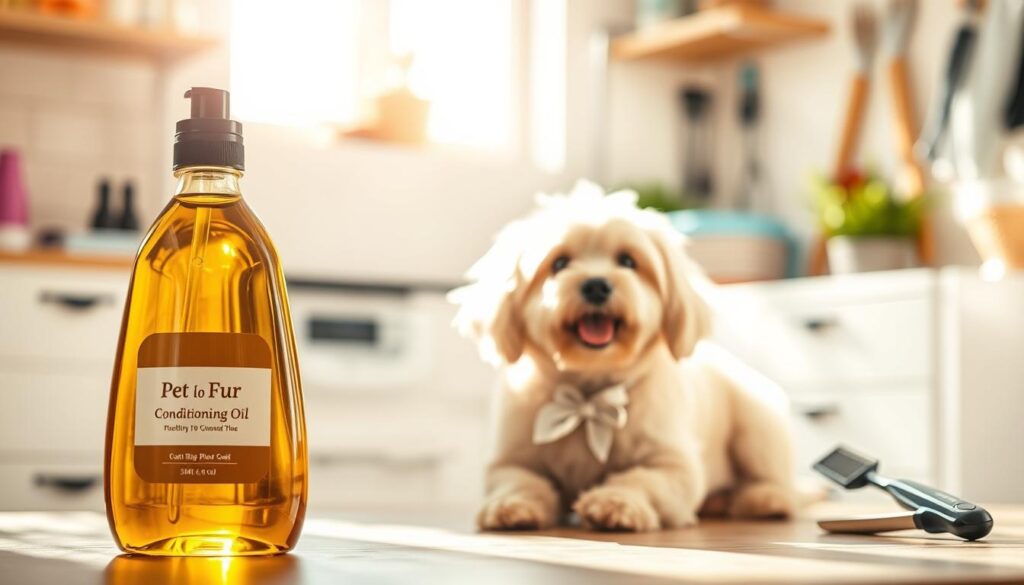
First, check your pet’s coat for mats or skin problems. Then, put a small amount of conditioning oil for pets in your hands and warm it up. Massage the oil into the fur, focusing on the middle and ends. Be careful around sensitive spots like the eyes, ears, and nose.
- Brush the coat well to get rid of tangles.
- Put a dime-sized amount of oil on your hands.
- Spread it evenly, starting from the neck and going to the tail.
- Watch for any signs of redness or itching on the skin.
If you’re using a rinse-out formula, wash the coat well after the wait time. For leave-in treatments, use a light touch to avoid a greasy look. Always talk to your vet if your pet’s skin keeps reacting after using the oil.
Frequency of Use
How often to use pet fur conditioning oil depends on your pet’s coat and grooming routine. Start with weekly use to see how it works. If the coat gets too oily, use less or apply it less often.
Keeping a balanced routine is important for these non-toxic pet grooming essentials. Use the table below to find the best schedule for your pet.
| Coat Type | Application Frequency | Recommended Amount |
|---|---|---|
| Short/Smooth | Every 2 weeks | Very light mist |
| Long/Silky | Weekly | Small dime-sized |
| Thick/Double | Monthly | Moderate amount |
| Curly/Wired | Every 10 days | Light application |
Conditioning oil for pets should make the coat look better, not weigh it down. Watch how your pet reacts and adjust as needed for the best shine.
DIY Pet Fur Conditioning Oils
We often look for simple, natural ways to keep our pets’ coats looking good between grooming sessions. Many natural pet grooming products are out there, but some owners like making their own at home. It’s important to remember that homemade doesn’t always mean safe or vet-approved.
Simple Recipes to Try
For a gentle refresh, try the apple cider vinegar rinse. Mix one part raw apple cider vinegar with ten parts water. This helps balance your pet’s skin pH. Use it sparingly as a final rinse to avoid irritation.
Another good method is the damp-cloth technique. Dampen a soft microfiber cloth with warm water and a tiny bit of mild, pet-safe soap. This method keeps the coat clean without harsh chemicals.
Benefits of Homemade Solutions
When you make your own grooming aids, you control the ingredients. Many people make an organic pet fur oil blend with coconut or almond oil. But, remember to avoid essential oils, as they can be toxic to pets.
If you prefer plant-based alternatives, there are many vegan pet care products available. Homemade solutions can save money, but they need careful research and accurate mixing. Always think about your pet’s comfort and talk to your vet before trying new skin products.
Common Misconceptions About Pet Fur Conditioning Oil
Dealing with pet care can lead to misunderstandings about conditioning oils. These products are great for upkeep but can’t fix all skin problems.
Myths vs. Facts
Many think conditioning oil fixes all issues like shedding, itching, or flaky skin. But, these problems often come from diet, hormones, or allergies.
Oils can’t replace vet care or prevent parasites. If your pet’s coat changes suddenly or badly, see a vet, not just use oil.
“A shiny coat is a beautiful sight, but it does not always indicate that the underlying skin is free from irritation or disease.”
Clarifying Misunderstandings
Some believe cruelty-free pet grooming means safe for all pets. While these labels are good, they don’t cover every pet’s needs.
Even the best non-toxic pet grooming essentials can upset some pets’ skin. Here’s how to keep your pet safe:
- Always test a new oil on a small area first.
- Look at the ingredients for things your pet might be allergic to.
- Remember, non-toxic pet grooming essentials aren’t a vet’s replacement.
- Cruelty-free pet grooming means no animal testing, not that it’s safe for all.
Being informed helps us care for our pets better. Always get a vet’s opinion on ongoing skin or coat problems.
Customer Testimonials
We think real results are the best way to see if a grooming product works. Hearing how pets do with a pet fur treatment oil shows its benefits at home.
Real Experiences from Pet Owners
Many owners say their pets’ fur feels softer after a few weeks. They love how softer fur and reduced tangling make grooming easier for everyone.
Using a pet fur treatment oil makes brushing easier. This means less pulling, which keeps pets calm and happy during grooming.
Before and After Comparisons
A healthy coat comes from many things, not just a pet fur treatment oil. Diet, regular baths, and staying hydrated are also key.
When looking at success stories, consider everything. Lighting, pet breed, and how often you use the oil affect how shiny the coat looks.
| Observation | Before Treatment | After Treatment |
|---|---|---|
| Coat Texture | Coarse and dry | Silky and smooth |
| Brushing Ease | Frequent matting | Glides through easily |
| Overall Shine | Dull appearance | Visible healthy luster |
If your pet shows signs of irritation or patchiness, see a vet right away. Always start with a small amount of pet fur treatment oil to check for a good reaction.
Final Thoughts on Pet Fur Conditioning Oil
Starting your pet’s health journey begins with their grooming. Choosing the right pet fur conditioning oil can change their coat’s texture. It also helps keep their skin healthy.
Selecting the Ideal Solution
Before you buy, think about what your pet needs. Look for brands like Burt’s Bees for Pets or TropiClean. They have formulas for different pets. Choose natural ingredients that keep your pet’s coat moist without being oily.
Starting Your Wellness Journey
Being consistent is key to a shiny, healthy coat. Adding the best pet hair care products to your routine is good for both of you. Watch how your pet’s comfort and look improve as you stick to this simple care.