Did you know a pet’s skin is their biggest organ? It often shows signs of internal health problems. A dull or brittle coat usually means more than just a surface issue.
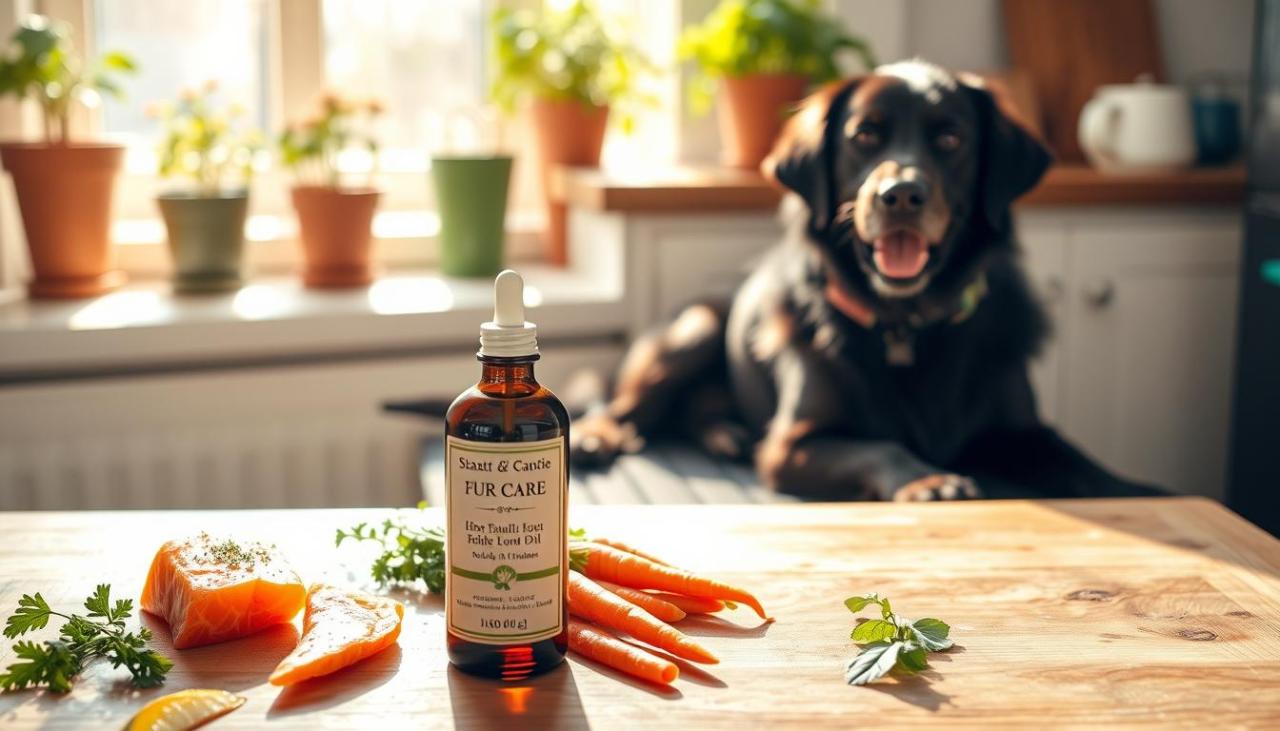
Environmental factors, nutrition, and grooming habits greatly affect how pets look and feel. Using a high-quality dog fur repair oil can help. It adds much-needed moisture to dry patches. But, it works best with a balanced diet and regular brushing.
Consistency is key in improving coat texture. While we can tackle many issues at home, some dryness might mean a bigger health problem. Using a dog fur repair oil safely helps support our pets. But, if symptoms don’t get better, always check with a vet.
Key Takeaways
- Skin health shows how well your pet is doing overall.
- Topical treatments work best with good nutrition and hydration.
- Regular grooming spreads natural moisture evenly.
- Watch for signs of allergies or skin sensitivities.
- If coat quality doesn’t get better, see a vet.
Understanding Dog Fur Repair Oil
Learning about specialized oils is key to making your pet’s fur shine again. Many dogs have dry, brittle fur that needs more than just regular grooming. A good fur restoration oil is a special treatment for dry skin and to make your dog’s coat better.
What is Dog Fur Repair Oil?
This product deeply hydrates the hair follicles and the skin. It’s not for medical issues or infections. If your dog has serious skin problems, see a vet first.
For pets with sensitive skin, a hypoallergenic fur repair oil is a good choice. Always test a small area of your dog’s skin before using it to avoid any bad reactions.
Key Ingredients to Look For
The best oils have natural ingredients that moisturize and comfort the skin. Here are some common good ones:
| Ingredient | Primary Benefit | Skin Effect |
|---|---|---|
| Coconut Oil | Deep Hydration | Softens brittle fur |
| Aloe Vera | Soothing | Calms irritation |
| Omega Fatty Acids | Barrier Support | Promotes luster |
| Vitamin E | Antioxidant | Protects skin health |
How Does It Work?
These oils create a barrier on the hair shaft to keep moisture in. They replace oils lost from bathing or dry weather, making fur soft and shiny. Using a hypoallergenic fur repair oil regularly makes your dog’s coat easier to manage.
Ingredients like rosemary oil and oatmeal soothe the skin, stopping your dog from scratching. Applying a fur restoration oil is like giving your dog a spa treatment, helping their coat stay healthy and comfortable.
Benefits of Using Dog Fur Repair Oil
Using a pet grooming oil can change how your dog looks. But, it works best when you brush them regularly. Brushing gets rid of dead hair, stops painful mats, and helps oils spread evenly.
Restoring Shine and Luster
A dull coat means it might be dry or damaged. A pet grooming oil seals the hair, making it shine. This makes your dog look like they just came from the salon.
Reducing Shedding
Too much shedding is a big problem. Keeping hair moist and flexible stops it from breaking. Strong, elastic hair stays in the follicle longer, cutting down on fur on your furniture.
Improving Skin Health
A dog’s coat is mostly protein, so good nutrition and care are key. A pet grooming oil protects against dryness and irritation. Healthy skin means stronger hair and a happier dog.
| Benefit Category | Primary Effect | Key Outcome |
|---|---|---|
| Coat Appearance | Reflects light | Enhanced shine |
| Hair Integrity | Increases elasticity | Reduced breakage |
| Skin Condition | Locks in moisture | Less flaking |
| Grooming Ease | Softens texture | Easier detangling |
How to Choose the Right Dog Fur Repair Oil
Choosing a good coat conditioning oil is key for your dog’s health. With many choices, picking the right one ensures your pet gets the care they need.
Assessing Your Dog’s Coat Type
First, check your dog’s fur type. Look at the length, density, and texture. This tells you how well the oil will soak in.
Dogs with naturally oily skin need lighter oils to avoid being too greasy. Dogs with dry or long hair do better with richer oils that hydrate deeply.
Reading Product Labels
Check the ingredients in your coat conditioning oil for safety. Look for clear labels and instructions. This shows the maker cares about quality.
Stay away from oils with “proprietary blends” that don’t list what’s inside. Good labels tell you what’s in the oil and why, helping avoid allergies.
Reputation of Brands
Choose brands known for quality and safety. They should share how they source and test their products.
Read reviews that match your dog’s fur type. This shows the oil works well in real life, not just in ads.
| Coat Type | Recommended Oil Base | Application Frequency |
|---|---|---|
| Short & Smooth | Light Jojoba Blend | Weekly |
| Long & Silky | Argan or Coconut | Bi-weekly |
| Thick & Wiry | Heavy Almond Oil | Monthly |
| Sensitive Skin | Fragrance-Free Hemp | As Needed |
Application Tips for Best Results
How you apply grooming treatments greatly affects your dog’s coat. Getting a soft, healthy coat is more than just using a good dog fur repair oil. It also needs a consistent and careful routine.
How to Apply the Oil
First, brush your dog well to remove loose hair and tangles. This helps the product reach the skin and coat the hair shafts evenly.
Take a small amount of dog fur repair oil and warm it in your palms. Then, gently massage it into the coat, focusing on dry or damaged areas. Make sure to avoid the eyes, nose, mouth, and any irritated or open skin.
Frequency of Use
There’s no one-size-fits-all schedule for these treatments. The best frequency depends on your dog’s coat type and how their skin reacts to the product.
Start with a conservative approach, like once or twice a week. Watch your pet closely to see if they need more or less. Always follow the directions from the manufacturer to use the dog fur repair oil safely.
Combining with Other Grooming Products
Using the oil with bath time helps lock in moisture. Apply it after a gentle shampoo while the fur is still damp. This maximizes absorption.
Be careful not to use too many products at once, as it can leave a residue. Also, avoid overusing oils to prevent stomach upset or greasy buildup. Always aim for a balanced approach to keep your dog looking and feeling great.
Popular Dog Fur Repair Oils on the Market
Looking for a good solution for your dog’s coat health means skipping the marketing hype. We focus on what’s really in the product. Every pet is different, so we make sure to be clear about what we find. Whether you want a natural fur repair remedy or a commercial one, knowing what’s in it is key for your dog’s health.
Product Reviews and Comparisons
We examine how well oils absorb and their smell. A top-notch hypoallergenic fur repair oil should soak in fast and not leave a mess. We also check the packaging, as bottles with pumps are easier to use than open containers.
It’s crucial to note that the quality of ingredients varies a lot between brands. Look for cold-pressed oils, as they keep more nutrients than heated ones. Here’s a comparison of common features in grooming products to help you choose wisely.
| Feature | Natural Oil Blend | Synthetic Formula | Hypoallergenic Option |
|---|---|---|---|
| Ingredient Purity | High | Low | Very High |
| Absorption Speed | Moderate | Fast | Fast |
| Scent Profile | Earthy/Neutral | Artificial | Fragrance-Free |
| Skin Sensitivity | Low Risk | Moderate Risk | Minimal Risk |
Ratings and Feedback from Pet Owners
Professional reviews are a good start, but what pet owners say is even more valuable. Many say a natural fur repair remedy helps with dryness in different seasons. Still, always talk to your vet before trying a new product, if your dog has skin issues.
The best results come when you pick a product that fits your dog’s coat type. A hypoallergenic fur repair oil is a good choice for dogs that easily get irritated. By combining expert advice with what other owners say, you can find a product that makes your dog’s coat look great.
Common Issues Addressed by Dog Fur Repair Oil
Dogs often face coat quality issues. It’s crucial to know when to use a dog hair repair treatment and when to see a vet. These products improve your dog’s coat look but don’t treat deep health problems.
Dry and Flaky Skin
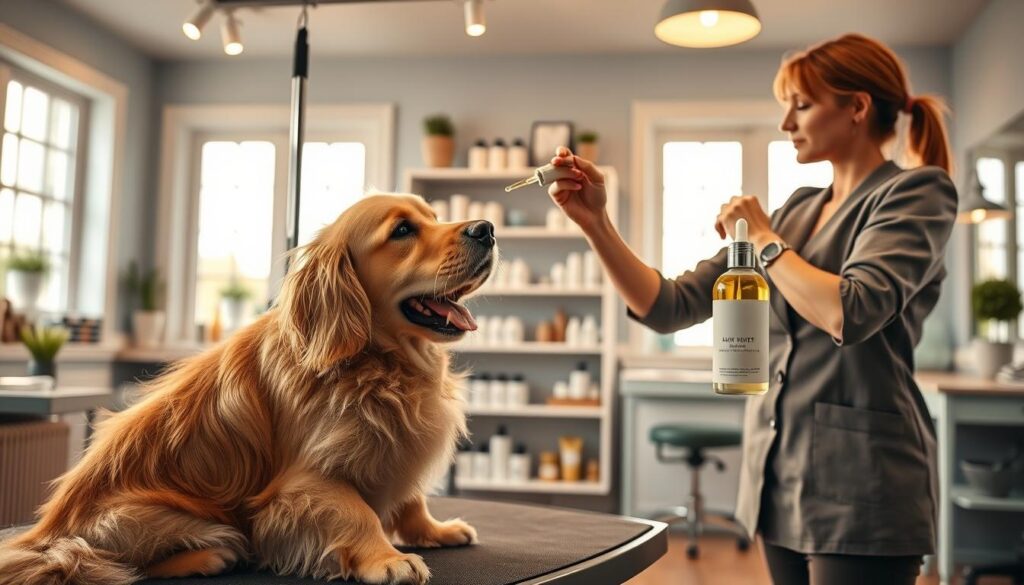
Many dogs deal with dry skin due to the weather. A good oil can soothe the skin barrier by keeping moisture in and flakes away. Regular use can ease your dog’s tight, itchy skin.
Dull and Lifeless Fur
If your dog’s coat lacks shine, it might need more fatty acids. Topical oils coat the hair, making it smooth and shiny. This simple step can make your dog’s coat look vibrant and healthy.
Allergies and Sensitivities
A dog hair repair treatment can’t fix deep issues like food allergies or infections. If your pet is losing hair in patches and scabs, see a vet fast. Persistent itching, redness, or unusual odors mean your dog needs a vet, not just a cosmetic fix.
Frequently Asked Questions about Dog Fur Repair Oil
We get a lot of questions about using fur treatments safely. Whether you’re new to pet care or have been doing it for years, knowing how to use coat conditioning oil is key. We want to clear up these common worries so you can choose the best for your dog.
Is it Safe for All Dog Breeds?
Most fur treatments are gentle, but different breeds need different care. Dogs with thick fur might need less oil to avoid clogging pores. Dogs with sensitive skin could react to some oils. Always do a patch test before using it all over.
If your dog has skin problems or fur loss, talk to your vet first. Using canine fur rejuvenation oil on a dog with an infection could make things worse. Always get your vet’s advice for ongoing skin issues.
How Long Before You See Results?
How fast you see results depends on a few things. Some dogs feel softer after just one use, but fixing deep damage takes time. Being consistent is key to a healthy, shiny coat.
Several things affect how well your dog responds to treatment:
- How well your pet is nutritionally.
- The quality and type of coat conditioning oil you use.
- How often and well you groom your dog.
- How bad the dryness or damage is.
Can It Be Used on Puppies?
Be very careful with any treatments on puppies. Their skin is thinner and absorbs more than adult dogs. It’s best to wait until a puppy is at least six months old before using canine fur rejuvenation oil.
Always check the label for warnings about age. If your puppy needs extra moisture, start with a tiny amount of a natural, scent-free product. Watch your puppy closely for any signs of irritation during the first few uses.
The Importance of a Healthy Diet for Fur Health
Grooming is important, but a good diet is key for a healthy coat. Topical oils help, but a balanced diet keeps your dog’s coat strong. It gives the hair follicles the nutrients they need for shiny fur.
Nutritional Factors Impacting Coat Quality
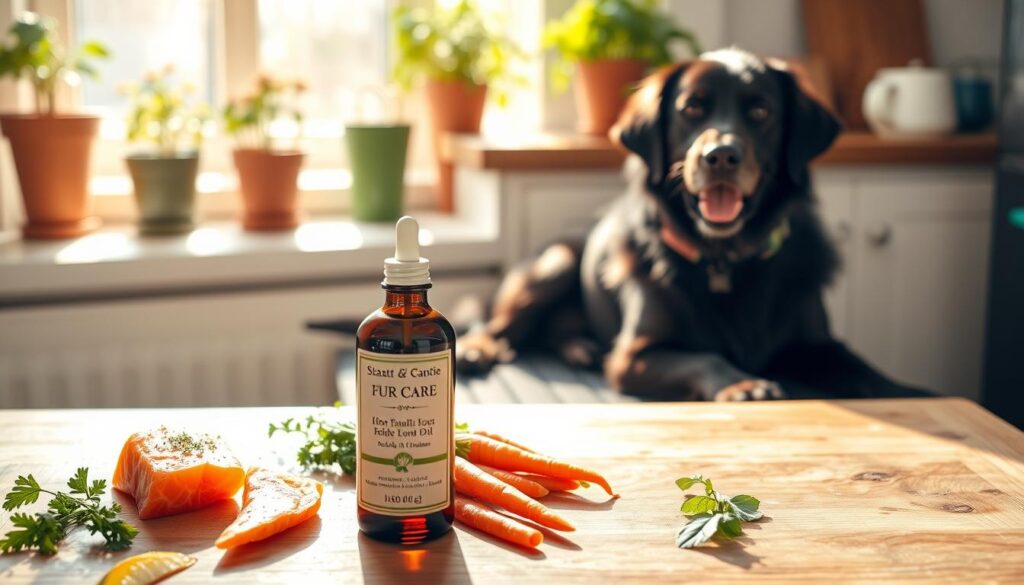
Animal proteins are crucial for hair growth. Without enough, your dog’s hair may break or grow slowly. Omega-3 and omega-6 fatty acids keep the skin moist and reduce itchiness.
Other nutrients are important too. Vitamin A helps skin cells, and zinc prevents dry skin. Biotin and Vitamin E make hair strong and shiny.
| Nutrient | Primary Benefit | Source |
|---|---|---|
| Protein | Structural growth | Meat, Poultry, Fish |
| Omega Fatty Acids | Moisture & Shine | Fish Oil, Flaxseed |
| Zinc | Skin barrier health | Organ meats, Grains |
| Vitamin E | Antioxidant support | Vegetable oils, Seeds |
Recommended Supplements for Fur Health
Even a great diet might need a little extra sometimes. Supplements like fish oil, biotin, or zinc can help. But, always talk to your vet before adding them.
Too many supplements can be bad. They might harm your pet’s organs. A vet can tell if your dog needs a supplement or a diet change. This way, your pet gets what they need for a healthy coat.
DIY Dog Fur Repair Oil Alternatives
If you’re looking for a natural fur repair remedy, you might consider using common household items. But, it’s important to be careful. This ensures your pet stays safe and comfortable.
Simple Recipes for Home-Made Oils
Organic, unrefined coconut oil is a basic treatment. Warm a small amount in your palms until it melts. Then, gently rub it into dry skin or fur.
An oatmeal bath can also help. Grind plain oats into a powder and add it to warm water. Make sure your dog doesn’t lick it, as it can upset their stomach.
Pros and Cons of DIY Options
Using a natural fur repair remedy lets you control what you put on your pet. But, homemade solutions might not work as well as a fur restoration oil. They can leave a greasy residue or be applied unevenly.
Here’s a comparison to help you choose:
| Feature | DIY Alternatives | Commercial Products |
|---|---|---|
| Ingredient Control | High | Moderate |
| Shelf Stability | Low (Risk of contamination) | High (Preserved) |
| Ease of Use | Requires preparation | Ready to apply |
| Medical Oversight | None | Often vet-tested |
DIY methods are cheap but might not fix health issues. Relying only on home remedies can delay vet visits. Always watch your dog for signs of allergic reactions, like redness or more scratching, when trying new things on their coat.
Maintaining Your Dog’s Coat Year-Round
Creating a regular grooming schedule is key to keeping your dog happy and healthy all year. It helps avoid matting and skin problems. Using a good pet grooming oil adds extra care for your dog’s coat.
Regular Grooming Habits
Brushing your dog daily or weekly is essential for a healthy coat. It removes loose fur and prevents tangles. Brushing also lets you check for parasites or skin issues.
Bathing should be done when needed, but avoid too much. Use a canine fur rejuvenation oil after bathing to keep moisture in. For a shiny, healthy coat, choose products that protect the skin. Regular exercise also helps by improving circulation and strengthening the coat.
Seasonal Considerations for Coat Care
As the weather changes, so do your dog’s needs. Dry air in winter can cause flaky skin, while summer heat leads to shedding and sun damage. Adjust your grooming and products to meet these needs.
In spring and autumn, dogs shed more. Brushing more often helps manage this and keeps them comfortable. Always watch how your dog reacts to temperature changes and adjust their care routine.
| Season | Primary Focus | Grooming Tip |
|---|---|---|
| Spring | Shedding Control | Daily brushing to remove undercoat |
| Summer | Cooling & Protection | Check for ticks and sun exposure |
| Autumn | Skin Hydration | Use moisturizing pet grooming oil |
| Winter | Dryness Prevention | Apply canine fur rejuvenation oil |
Final Thoughts on Dog Fur Repair Oil
Choosing the right product for your pet is important. You need to do your research and watch how they react. Look for products with high-quality ingredients that fit your pet’s coat and skin needs.
A good dog hair repair treatment is a key part of grooming. It works best when your pet eats well and gets brushed regularly.
Making an Informed Decision
See any fur care solution as a help, not a fix for everything. If your dog keeps losing hair, itches a lot, or has skin problems, see a vet.
Talking to a vet helps make sure there’s no hidden health issue. Use these products to make your pet look great. But always watch their health closely.
Investing in Your Dog’s Health and Happiness
Grooming your dog every day strengthens your bond. A soft, healthy coat makes them more comfortable and happy.
We hope this guide helps you choose better for your furry friend. Your love and care for them is what makes their life special every day.