Did you know that nearly 40% of pet owners see their pets’ coats thin or become brittle twice a year? Shedding is normal, but it’s worrying to see your pet’s fur looking dull and damaged. You want the best for your pet, which is why finding a top-notch dog hair breakage oil is a smart choice to bring back their natural shine.
Remember, topical treatments are just supportive care and not a substitute for vet advice. If your pet has bald spots, red skin, or itches a lot, see a vet. These grooming products can make your pet’s fur softer and easier to manage.
We’ll show you how to pick the right ingredients, apply them safely, and fit them into your grooming routine. Your pet deserves a healthy, vibrant coat that feels as good as it looks.
Key Takeaways
- Topical treatments help improve coat shine and texture but do not replace veterinary care.
- Always monitor your pet for signs of skin irritation when introducing new products.
- Unrefined coconut oil is a popular choice for enhancing moisture and reducing dryness.
- Avoid essential oils that are toxic to pets, such as tea tree or peppermint.
- Consistency is vital; a weekly application is often enough to see noticeable improvements.
Understanding Dog Hair Breakage
We often notice changes in our pets’ fur, but it’s important to tell normal shedding from breakage. Seasonal shedding is natural, but hair that snaps off or thins out early might mean a health issue. Watching for these changes helps us prevent dog hair breakage and avoid serious skin problems.
Causes of Hair Breakage in Dogs
Many things can harm your dog’s coat. Fleas and mites cause intense scratching and damage to hair shafts. Also, allergies or food sensitivities can make fur brittle and prone to breaking.
Internal health problems also affect coat quality. Diseases like hypothyroidism or nutritional deficiencies weaken hair follicles. Excessive grooming or stress can make dogs pull or chew at their fur, causing breakage.
Common Symptoms of Damaged Fur
Spotting warning signs early is crucial. Look for thinning patches, dull fur, or fur that feels dry and brittle. Also, watch for dandruff, redness, or a bad smell from the skin.
If you see sores or your pet is always itching, act fast. Before trying home remedies, get a vet’s opinion. A vet can check for infections or diseases that need treatment, not just topical care.
| Feature | Healthy Coat | Damaged Coat |
|---|---|---|
| Texture | Soft and smooth | Brittle and coarse |
| Skin Condition | Clear and pink | Red, flaky, or sore |
| Shedding | Seasonal/Predictable | Patchy/Excessive |
| Odor | Neutral | Musty or foul |
Benefits of Using Hair Breakage Oil
We often look for ways to improve our pets’ comfort. Topical oils are a great addition to their wellness routine. Remember, a dog hair care oil is a supplement, not a replacement for a balanced diet and regular grooming.
These products offer targeted support for the skin and coat. They help keep your pet’s natural moisture balance. This keeps them feeling their best all year.
Nourishment for Healthy Fur
Topical treatments deliver essential nutrients directly to the skin. Many options, like flaxseed or salmon oil, are rich in omega-3 fatty acids. They help soothe inflammation and support skin health.
By using a nourishing oil for dog hair, you create a protective layer. This locks in moisture, which is great for dogs with dry, itchy skin in harsh weather.
Reducing Shedding
Shedding is a natural process for dogs. The amount of hair lost depends on their coat type, seasonal cycles, and health.
A quality oil can help manage loose fur by keeping hair hydrated and strong. But, consistent brushing is still the best way to control hair around your home.
Enhancing Shine and Softness
Using a dog hair care oil can make your pet’s coat look better right away. These products smooth the hair cuticle, reducing dryness.
Regular use leads to a noticeably softer coat that’s easier to groom. Choosing a high-quality nourishing oil for dog hair helps your pet look healthy and radiant.
Key Ingredients to Look For
Finding the best oil for dog hair breakage means looking at certain nutrients. Marketing claims can be tricky. Always check the ingredient list before buying. Knowing what each part does helps you choose the right oil for your pet.
Natural Oils for Hair Strength
A good natural oil for dog hair has essential fatty acids. These fats keep the skin barrier strong. They also help keep the coat moist, preventing it from breaking easily.
- Unrefined Coconut Oil: Great for deep hydration and fighting off germs.
- Flaxseed Oil: Full of Omega-3 fatty acids to reduce inflammation.
- Salmon Oil: Boosts skin health and makes the coat shine.
- Argan Oil: Gives a protective shine and helps with tangles.
| Oil Type | Primary Benefit | Best For |
|---|---|---|
| Coconut | Hydration | Dry, itchy skin |
| Salmon | Omega-3s | Overall coat health |
| Argan | Shine | Brittle, dull fur |
Vitamins Beneficial for Fur Health
A nourishing oil for dog hair should have vitamins for growth and strength. These nutrients help keep the coat strong from the inside.
Look for Vitamin E for protection and Biotin for structure. Zinc and B vitamins support the skin barrier. Amino acids help build healthy hair follicles.
Avoiding Harmful Chemicals
When picking grooming products, safety is key. Choose dog-safe, additive-free formulas to keep your pet healthy.
Stay away from products with concentrated essential oils that can harm dogs. If a label says “fragrance” or “parabens,” avoid it. Stick to pure, natural ingredients for your dog’s safety and well-being.
Top Dog Hair Breakage Oils Reviewed
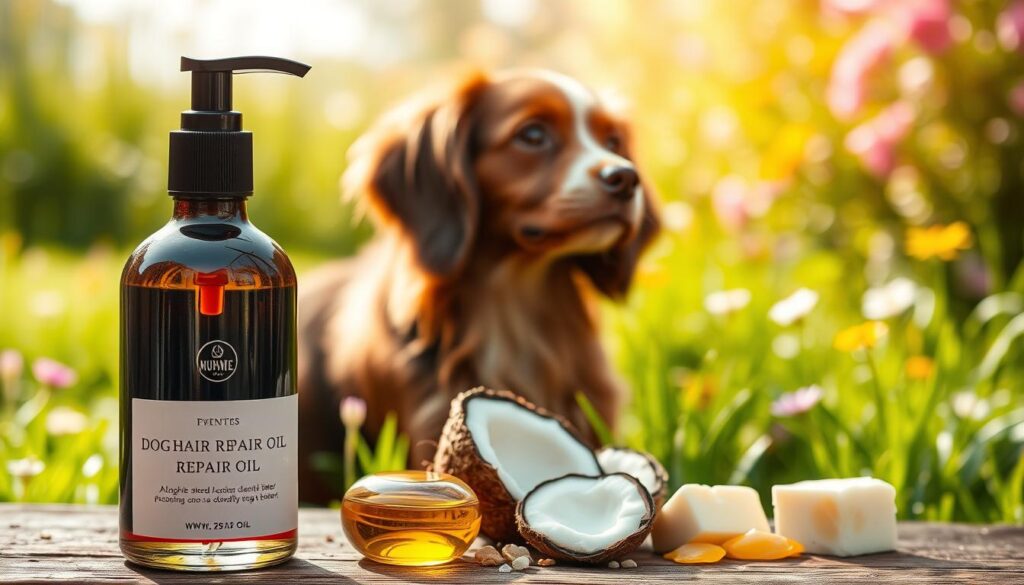
When your dog has brittle or dry fur, picking the right treatment is key. We’ve looked at several popular choices to find a good dog hair repair oil for your pet. Remember, results can vary, and always check for allergens in the ingredients.
Product 1: Ingredients and Benefits
The first option uses coconut-based extracts for deep hydration. It’s made to get into the hair shaft, adding essential moisture to stop breakage and split ends. It’s also free from harsh synthetic fragrances, making it gentle for sensitive skin.
Product 2: Customer Feedback and Results
The second option focuses on omega-3 fatty acids for soothing skin. Users say it greatly reduces scratching and dryness after a few uses. While these stories are encouraging, they shouldn’t replace vet advice for serious skin issues.
Product 3: Price Point and Value
The last product uses argan oil for a smooth, conditioned look. It’s a great choice for those wanting quality without the high price of luxury brands. This dog hair repair oil is known for detangling tough knots and leaving the coat soft.
| Product Name | Primary Ingredient | Best For | Price Range |
|---|---|---|---|
| Hydra-Coconut Blend | Coconut Oil | Deep Moisture | $15 – $20 |
| Omega-Soothe Serum | Fish/Flax Oil | Itchy Skin | $20 – $25 |
| Argan Gloss Treatment | Argan Oil | Shine & Detangling | $12 – $18 |
How to Apply Hair Breakage Oil
Learning the right way to apply oils is key to keeping your dog healthy and happy. The right technique helps your pet’s coat stay strong and healthy. By sticking to a routine, you can tackle dry or brittle fur and keep your dog content.
Step-by-Step Application Guide
Always do a patch test on a small, hidden spot on your dog’s skin before using a new product. This step is crucial to avoid allergic reactions. After confirming safety, use clean hands and a tiny amount of dog grooming oil.
Warm the oil in your palms to make it spread easily. Massage it into the dry parts of the coat, focusing on the ends. Make sure to carefully avoid the eyes, nose, and mouth to prevent irritation.
Let the oil soak into the hair for a few minutes. Then, use a soft-bristle brush to spread it evenly and remove any extra. This keeps the coat manageable without feeling heavy.
Best Practices for Maximum Effectiveness
Using the right amount of dog hair breakage oil is crucial. Too much can make the coat greasy and attract dirt. It also raises the risk of your dog getting sick from licking it.
Watch your pet closely after the first few uses. If you see redness, vomiting, diarrhea, or more itching, stop right away. If these problems don’t go away, talk to your vet.
Tips for Maintaining Healthy Dog Hair
To really prevent dog hair breakage, you need to think about your dog’s overall health. Oils help protect the surface, but a healthy coat comes from inside and around your dog every day.
Regular Grooming Routines
Being consistent is key in managing your dog’s coat. Create a grooming routine that fits your dog’s breed and hair length. This helps prevent dog hair breakage early on.
Short-haired dogs need a good brush once a week to get rid of loose hair. Dogs with thick or long coats, on the other hand, need more brushing. They might need a brush every few days or even every day to avoid mats.
Proper Diet for Fur Health
A good diet is essential for strong hair follicles. Choose high-quality foods that provide the right fatty acids and proteins. Proper hydration and nutrition are key for a healthy coat.
Always talk to your vet before adding supplements to your dog’s food. Also, remember that stress management is important for skin health. A regular routine, exercise, and enough sleep can help reduce stress. This can prevent hair loss and skin irritation.
| Coat Type | Brushing Frequency | Primary Goal |
|---|---|---|
| Short/Smooth | Weekly | Remove loose hair |
| Medium/Wavy | 3-4 times weekly | Prevent tangles |
| Long/Silky | Daily | Avoid matting |
| Thick/Double | Daily/Every 2 days | Manage undercoat |
Seasonal Considerations for Dog Hair Care
Changes in the weather affect your pet’s fur health. Adjusting grooming to the climate helps keep their skin strong and fur healthy.
Winter Care Tips
Winter’s cold and dry air can cause dry, flaky skin and brittle hair. We suggest bathing your dog less to keep their natural oils. These oils protect their coat.
When bathing, use lukewarm water and a moisturizing shampoo. It’s crucial to dry your pet well, paying extra attention to the tail base and toes. This prevents irritation from moisture.
Brushing regularly in winter helps spread oils through the hair. This keeps the coat strong against dry air.
Summer Fur Management
In warmer months, we focus on managing shedding and heat issues. Brush more often to remove loose undercoat. This improves air flow against the skin.
Always check for fleas and ticks during grooming. Shaving a double-coated dog is not recommended. Their coat keeps them cool naturally.
Keep mats under control to avoid heat trapping. If you see sudden hair loss, itching, or sores, see a vet. These could be signs of health problems.
| Season | Primary Focus | Grooming Frequency | Key Concern |
|---|---|---|---|
| Winter | Moisture Retention | Low | Dry Skin |
| Spring | Shedding Control | High | Allergens |
| Summer | Air Circulation | Moderate | Parasites |
| Autumn | Coat Preparation | Moderate | Matting |
DIY Dog Hair Breakage Oil Recipes
Making a natural oil for dog hair at home needs careful planning and safety. Mixing your own grooming products can be tempting, but your pet’s health is most important. At our organization, we find that simple is best for your furry friend.
Essential Oils for Home Blends
Stick to simple, additive-free carrier oils instead of complex blends. A bit of plain, organic coconut oil is safer and easier to manage. These oils deeply hydrate and seal the hair cuticle to prevent breakage.
If you add apple cider vinegar, make sure to dilute it properly or rinse well. Concentrated additives can remove natural protective oils, causing dryness. Start with one quality ingredient to see how your dog reacts.
Safety Precautions to Consider
Using any natural oil for dog hair must be safe. Avoid essential oils like tea tree, peppermint, and eucalyptus. These can be toxic to dogs if ingested or applied too much.
Always check with your vet before trying new products, even if it’s just a small patch test. Puppies and dogs with health issues need extra care. Make sure the ingredients are safe for them.
| Oil Type | Primary Benefit | Best For | Safety Level |
|---|---|---|---|
| Coconut Oil | Deep Conditioning | Dry, brittle fur | High |
| Sweet Almond Oil | Softening | Dull coats | High |
| Olive Oil | Moisture Retention | Thick, coarse hair | High |
| Tea Tree Oil | None (Avoid) | Not Recommended | Toxic |
Customer Testimonials and Success Stories
Listening to other pet owners can give great insight into how treatments work for a dog’s coat. We really value the feedback from our community. It helps us see how different hair care solutions can make a difference. Even though every dog is different, these stories show the good changes that come from regular care.
Before and After Transformations
Seeing progress needs a systematic approach. Take photos in the same light to track changes in coat density and shine. Also, check the fur’s texture. A healthy coat should feel soft, not brittle or coarse.
Watch for skin flaking and changes in grooming habits. If your dog stops scratching or biting at their fur, it’s a good sign. Consistency is key when tracking these changes over weeks.
Real-Life Experiences with Breakage Oils
Many owners share their success stories. They note their dog’s coat type and initial symptoms. It’s helpful to mention the specific ingredients and how often the oil was applied. This helps others understand the context of the results, but remember, results vary.
It’s important to tell the difference between cosmetic improvements and health issues. If your dog has parasites, allergies, or endocrine diseases, they need targeted veterinary treatment. If symptoms get worse or don’t improve, stop using the product and see your vet right away.
| Observation Metric | Signs of Improvement | Signs of Concern |
|---|---|---|
| Coat Texture | Soft and smooth | Brittle or coarse |
| Itching Frequency | Significant reduction | Persistent or worsening |
| Skin Condition | Clear and hydrated | Visible flaking or redness |
| Grooming Habits | Calm and relaxed | Excessive biting or licking |
Where to Buy Dog Hair Breakage Oils
Finding the right products for your pet is important. Look for quality supplies from reputable sources. This ensures you get authentic items that help your dog’s coat stay healthy.
Online Retailers
Chewy and Amazon have a wide range of grooming supplies. You can compare prices and read reviews to find the best organic oil for dog hair. They also offer fast shipping right to your door.
Specialty Pet Stores
Local boutiques and big chains like Petco or PetSmart offer a hands-on shopping experience. The staff can give expert advice on the right dog grooming oil for your breed. You can also check the labels and packaging before buying.
Choosing high-quality care products makes a big difference in your pet’s comfort and look. Start your search today to give your furry friend the soft, strong coat they deserve. Your dedication to their wellness will make everyone in your home happier.