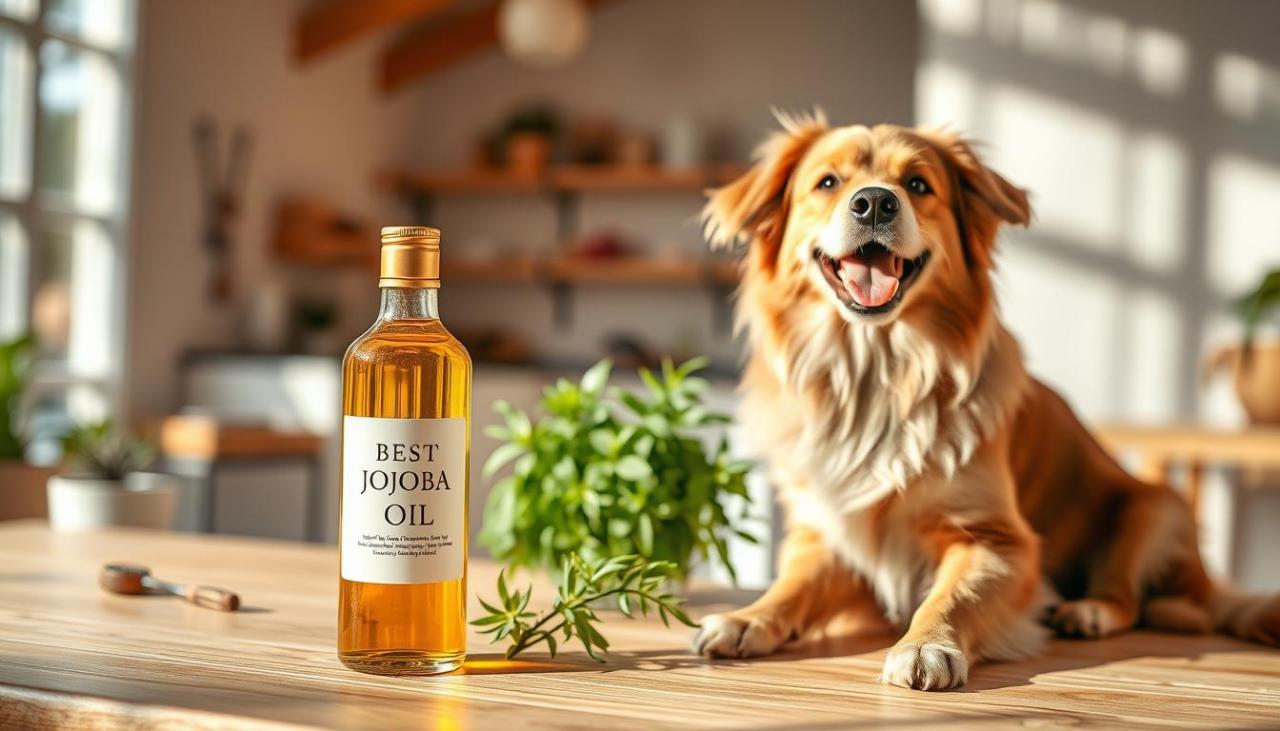
Did you know canine skin is roughly three times thinner than human skin? This difference makes furry companions more likely to develop dryness and irritation during harsh seasonal changes. We often focus on nutrition, but external hydration plays a vital role in maintaining a lustrous appearance.
Using jojoba oil for dog coat care may help owners smooth fur and soothe itchy patches naturally. This botanical extract mimics natural sebum from your pet and provides deep moisture without a greasy residue.
However, grooming requires caution. Concentrated substances may overwhelm sensitive animals, so choose properly formulated pet products instead of raw, homemade mixtures. The right supplies support a safe and effective routine that keeps your best friend looking their best.
Key Takeaways
- Canine skin is significantly thinner than human skin, requiring gentle care.
- Natural extracts can help restore moisture and improve fur texture.
- Always prioritize professionally formulated products over raw, homemade applications.
- Proper grooming routines support long-term skin health and comfort.
- Consult your veterinarian if you notice persistent skin issues or irritation.
What is Jojoba Oil and Its Benefits for Dogs?
Jojoba oil is a plant-derived extract that supports canine skin health. It is a liquid wax ester from the seeds of the Simmondsia chinensis shrub, not a typical oil. Since it is not a concentrated essential oil, it is generally safer for correct topical use.
Overview of Jojoba Oil
When we discuss dog grooming with jojoba oil, we mean using an oil that mimics a dog’s natural skin oils. This makes it a versatile way to support a healthy, shiny coat. It absorbs quickly without the greasy residue often reported with heavier oils.
“Nature provides us with simple, effective ingredients that can transform the way we care for our pets’ skin and fur.”
Nutritional Components
This golden liquid contains essential nutrients that support healthy skin. It contains high levels of vitamins and minerals that nourish hair follicles from the root.
- Vitamin E: A powerful antioxidant that protects skin cells from damage.
- Vitamin B Complex: Helps in maintaining skin moisture and elasticity.
- Essential Fatty Acids: These provide the building blocks for a strong, resilient coat.
Skin and Coat Benefits
Its main benefit is balancing the skin’s natural moisture levels. For dogs with dry, flaky skin, dog grooming with jojoba oil can bring relief by creating a protective barrier.
It softens coat fibers, making them less likely to break or tangle. Always remember that each dog is different, so results can vary. We recommend pet-specific products for the best safety and effectiveness.
How to Use Jojoba Oil on Your Dog
We can help you apply jojoba oil so your dog enjoys a healthy, glowing coat. Knowing the benefits of jojoba oil for dog coat health is only the first step. Proper application keeps your pet comfortable and happy.
Application Methods
There are several ways to add this oil to your grooming routine. Add a few drops to your dog’s regular shampoo to boost moisture during bath time. Alternatively, for dry patches, a spot application works well by targeting irritated areas.
For a full-body treatment, warm the oil slightly in your hands before massaging it into the fur. Use a soft-bristle brush to spread the oil from the skin to the hair tips. This method helps the benefits of jojoba oil for dog coat maintenance reach every strand effectively.
Recommended Dosage
Dosage is not one-size-fits-all; it depends on your dog’s size, coat thickness, and current skin condition. Always follow the instructions on your pet-formulated product label instead of generic measurements.
Start with a very small amount, especially when using a concentrated formula. You can always add more, but too much oil can leave fur greasy or heavy. Always avoid the eyes, nose, and inner ears during application to prevent discomfort.
Frequency of Use
When introducing a new product, start with infrequent applications to monitor your dog’s reaction. Watch closely for redness or itching, and stop use immediately if irritation develops.
Preventing your dog from licking the treated area is essential while the oil absorbs into the skin. After your dog tolerates the product, increase use as you observe the benefits of jojoba oil for dog coat health. Consistency is key, but moderation is best for long-term success.
Choosing the Right Jojoba Oil Product
When exploring natural remedies for dog coat health, ingredient quality matters most. Look past marketing labels and check what the bottle contains. Products made for humans may not suit your furry companion.
Types of Jojoba Oil
The extraction method can change how well the oil works. Choose cold-pressed, organic jojoba oil whenever possible. This process preserves nutrients and fatty acids that benefit your dog’s skin.
Refined oils often face heat processing or chemical bleaching. These methods can remove properties that make jojoba useful for pet care. Check the label for pure, unadulterated oil.
Ingredients to Avoid
Transparency matters when choosing natural remedies for dog coat health. Avoid products with synthetic fragrances, parabens, or phthalates. These additives can cause irritation or allergic reactions in sensitive dogs.
Avoid “proprietary blends” that do not list every ingredient. If a product contains essential oils, confirm they are safe for dogs and properly diluted. Never use products containing xylitol or tea tree oil, as these can be toxic to pets.
Brand Recommendations
Choose brands that specialize in veterinary-approved or pet-safe grooming supplies. Reputable companies provide clear ingredient lists and testing documents. High-quality products help keep your natural remedies for dog coat health safe and effective.
| Product Type | Key Benefit | Safety Priority |
|---|---|---|
| Pure Cold-Pressed Oil | Maximum Nutrient Retention | High |
| Pet-Specific Conditioners | Balanced pH Levels | High |
| Human-Grade Lotions | Convenience | Low (Check for additives) |
| Fragrance-Heavy Elixirs | Scent | Very Low (Avoid) |
DIY Jojoba Oil Treatments for Dog Coats
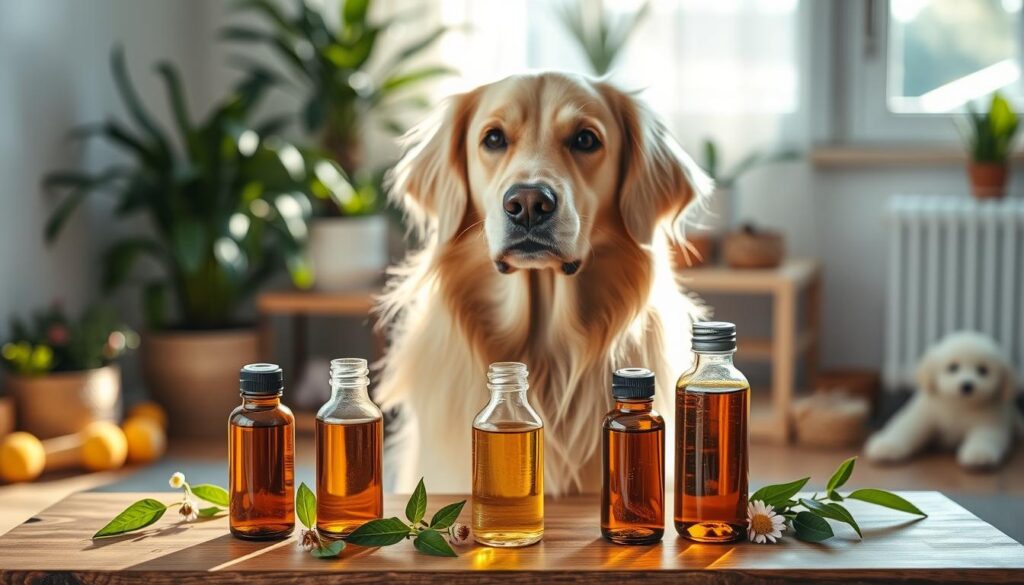
Making grooming products at home can improve your pet’s appearance. Quality ingredients help maintain a jojoba oil for shiny dog coat routine. These simple methods use light applications to keep your dog comfortable and clean.
Simple Recipes for Coat Shine
For a basic shine treatment, mix a few drops of jojoba oil with distilled water in a clean spray bottle. Shake it well before each use so the oil spreads evenly. Lightly mist your dog’s coat from a distance, then brush through it evenly.
Use only a tiny amount to prevent greasy residue on your dog’s fur. This method creates a jojoba oil for shiny dog coat effect without weighing down the hair. Start with a small test patch to ensure your dog enjoys grooming.
Combining with Other Natural Oils
You may pair jojoba oil with other pet-safe carrier oils for extra nourishment. Sweet almond oil and fractionated coconut oil blend well with jojoba. Avoid essential oils because they may be too strong for sensitive canine skin.
Ensure every ingredient is 100% natural and safe for topical pet use. A jojoba oil for shiny dog coat blend lets you match treatment to your dog’s hair texture. The table shows simple, safe combinations for your grooming routine.
| Oil Blend | Primary Benefit | Application Tip |
|---|---|---|
| Jojoba + Almond | Deep Conditioning | Use on dry ends |
| Jojoba + Coconut | Natural Luster | Apply after brushing |
| Jojoba + Water | Daily Detangling | Mist lightly daily |
Jojoba Oil vs. Other Oils for Dog Coats
Many pet owners compare jojoba oil with coconut and olive oil. When using jojoba oil for dog fur, we should examine how each oil affects skin and coat. Each oil has unique traits for different grooming goals and coat types.
Comparison with Coconut Oil
Coconut oil is popular, but it is much heavier than jojoba. It offers deep conditioning, but too much can leave a greasy residue. In contrast, jojoba oil mimics natural skin sebum and absorbs faster without weighing down hair.
If you are interested in dog coat oils recommended by groomers, jojoba is often preferred for daily care. It is less likely to attract dirt or dust than thicker oils. This suits dogs that spend much time outdoors.
Benefits Over Olive Oil
Olive oil is common, but it is not ideal for every dog. It can sit on the hair’s surface and create a sticky feel. By using jojoba oil for dog fur, we provide a lighter, more breathable barrier for healthy skin.
Jojoba oil is technically a liquid wax, so it spreads easily. This gives even coverage without olive oil’s heavy, greasy finish. For those exploring carrier oils safe for pets, jojoba stands out because it does not clog pores.
When to Consider Alternatives
Jojoba is versatile, but other treatments may sometimes be needed. Chronic irritation or lasting dryness may need more than temporary relief from natural oils. We recommend consulting a veterinarian to check for health problems before using topical treatments alone.
| Oil Type | Texture | Absorption Rate | Best Use |
|---|---|---|---|
| Jojoba Oil | Light/Wax-like | Fast | Daily Shine |
| Coconut Oil | Rich/Heavy | Slow | Deep Conditioning |
| Olive Oil | Medium/Oily | Moderate | Occasional Treatment |
Ultimately, using jojoba oil for dog fur is an excellent way to maintain a healthy shine. Understanding these differences helps us choose oils that keep dogs looking and feeling their best.
Addressing Common Concerns
Jojoba oil is generally safe, but watch how your pet reacts to new topical treatments. Even natural ingredients can cause unexpected reactions in some animals. Choose the best jojoba oil for pets by seeking pure ingredients and clear, species-specific labels.
Allergies and Sensitivities
Before applying oil to your dog’s entire coat, perform a patch test. Apply a tiny amount to a hidden skin area and wait twenty-four hours. Watch for redness, hives, or irritation, and stop use immediately if these appear.
Some dogs may react to botanical extracts. If your dog has skin allergies, consult your veterinarian before trying new products. Choose high-quality, cold-pressed options to support purity and reduce contaminant risks.
Effects of Overuse
Too much oil can create an uncomfortable, greasy buildup on your dog’s fur. This residue attracts dirt and debris, which may clog pores or cause skin discomfort. Start with a very small amount, then add more only when needed.
Too much oil may also trigger compulsive licking. Jojoba oil is non-toxic, but constant licking can cause secondary skin infections or digestive upset. If your dog seems obsessed with grooming the treated area, you probably used too much.
When to Consult a Veterinarian
Stop using any topical treatment and call your veterinarian after concerning physical changes. Seek help if your dog has swelling, severe itching, or trouble breathing. These signs may show an allergic reaction needing immediate medical attention.
Vomiting, lethargy, or sudden weakness after application also require a professional checkup. Your veterinarian can identify whether the product caused them or an underlying health issue did. Always put your pet’s safety first when choosing the best jojoba oil for pets.
| Symptom | Action Required | Urgency Level |
|---|---|---|
| Mild Redness | Stop use and wash area | Low |
| Excessive Licking | Reduce dosage | Low |
| Swelling or Hives | Contact Vet | High |
| Vomiting/Weakness | Emergency Vet Visit | Critical |
Maintaining Your Dog’s Coat Beyond Jojoba Oil
While jojoba oil for dog skin and coat helps, it works best within a broader wellness plan. Topical care alone rarely keeps your dog comfortable and healthy. Add these practices to your weekly routine for better results.
Importance of Regular Grooming
Regular brushing is the foundation of a healthy coat. It removes loose fur, prevents painful mats, and helps you spot parasites or skin irritation. No oil can remove debris or replace early checks for skin problems.
Set a schedule based on your dog’s breed and hair type. Long-haired breeds often need daily brushing, while short-haired dogs may need it weekly. This routine also builds a strong bond between you and your companion.
Recommended Dog Shampoos
Choosing the right shampoo matters as much as choosing a conditioner. Choose products made for canine skin, which has a different pH level than human skin. Harsh chemicals can remove natural oils and leave skin dry and itchy.
Choose gentle, soap-free formulas with soothing ingredients like oatmeal or aloe vera. They clean the coat without causing irritation. If your dog has a skin condition, ask your veterinarian before trying a new brand.
Dietary Factors for a Healthy Coat
A lustrous coat often reflects good internal health. Providing a balanced, high-quality diet is the most effective way to support skin and fur vitality. Focus on complete nutrition instead of unproven supplements or quick fixes.
If dullness or heavy shedding continues, consult your veterinarian about underlying health concerns. Proper hydration and essential fatty acids from high-quality kibble or raw diets support coat quality. Jojoba oil for dog skin and coat is a useful supplement, but it should never replace a vet-approved diet.
| Grooming Tool | Primary Benefit | Best For |
|---|---|---|
| Slicker Brush | Removes mats and tangles | Long or curly coats |
| Rubber Curry Brush | Massages skin and removes loose hair | Short, smooth coats |
| Metal Comb | Finds hidden knots and debris | All coat types |
| De-shedding Tool | Reduces heavy undercoat shedding | Double-coated breeds |
Seasonal Coat Care Tips
Seasonal changes create new challenges for dog skin and fur. Humidity, extreme temperatures, and indoor heating affect your pet’s coat throughout the year.
Remember, jojoba oil for dog hair growth is not a proven treatment. It cannot treat sudden shedding, alopecia, or unexplained bald patches. Consult your veterinarian for a professional assessment if you notice major hair loss.
Summer Care Strategies
During warmer months, high humidity and outdoor exposure can cause skin irritation or matted fur. Use light conditioning to hydrate the coat without weighing it down. Regular, gentle brushing removes loose undercoat and helps the skin breathe in the heat.
Winter Coat Maintenance
Cold air and indoor heating can strip moisture from your dog’s skin, causing dryness and itching. During these months, prioritize paw inspection for cracks caused by ice or salt. Keeping the coat clean and dry after walks prevents debris buildup that can cause discomfort.
Adjusting Routine for Weather Changes
Your grooming schedule should change with the seasons, with more moisturizing treatments in dry months. In humid weather, you may bathe your dog more often to prevent odors. Monitor your dog’s skin closely to see whether your products remain effective.
By staying observant, you can meet your pet’s specific care needs. While jojoba oil for dog hair growth is popular, it supports coat health, not treatment for underlying issues. Consistency and attention to detail remain the cornerstones of a beautiful, healthy coat year-round.
Conclusion: Embrace Jojoba Oil for a Lustrous Coat
A healthy shine for your dog starts with steady care and the right natural ingredients. Jojoba oil moisturizes dry skin, conditions fur, and reduces friction during grooming.
Choose pet-formulated products instead of concentrated oils for better safety. Proper dilution helps protect dogs with respiratory concerns or existing skin disease from irritation. Start with a small amount and watch how your pet reacts.
Use this oil with a balanced diet and regular brushing for the best results. Brands like Earthbath or TropiClean offer options that follow these natural care standards. Watch your dog for signs of sensitivity during the first few uses.
Coat texture or skin changes that continue require a visit to your veterinarian. Professional guidance helps ensure your grooming choices support long-term wellness. Share your natural coat care experiences in our community forums to help owners give companions the best life.