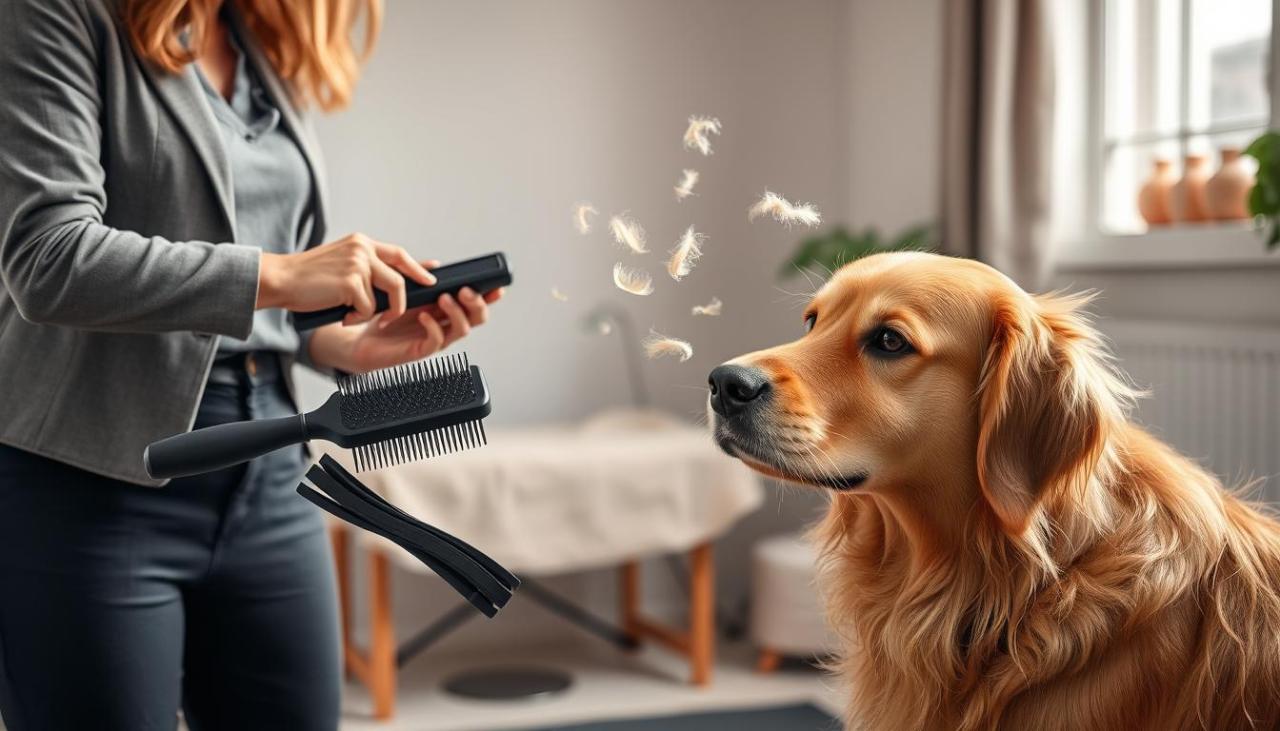
Did you know that nearly 80% of a pet’s internal health status is reflected in their fur? Many owners see grooming as just for looks. But a shiny, soft coat is a vital sign of a thriving animal. If your dog’s fur looks dull or brittle, it might mean they’re missing something in their diet or care routine.
We think that regular canine coat care is key to being a good pet owner. By watching for changes in fur texture or shedding, you can spot health issues early. Our guide offers dog haircare tips to help you keep your furry friend looking great every day. By taking these small steps today, you ensure a happier, healthier life for your loyal companion.
Key Takeaways
- A shiny, healthy exterior is a primary indicator of your pet’s internal physical well-being.
- Grooming serves as a proactive way to monitor your dog for skin issues or health changes.
- Consistent maintenance routines prevent matting and promote better skin circulation.
- Proper nutrition plays a massive role in the natural luster of your pet’s fur.
- Establishing a regular schedule makes the process easier for both you and your animal.
Understanding Your Dog’s Coat Type
Learning about pet fur maintenance starts with knowing your dog’s coat type. Each dog has its own grooming needs based on its breed and coat texture. By understanding these differences, you can keep your dog happy and healthy.
Different Coat Textures and Their Needs
Dogs can have double-coated, wire-haired, or silky-haired coats. Double-coated dogs, like Huskies or Golden Retrievers, need regular brushing to avoid mats. Wire-haired breeds might need hand-stripping to keep their coat right.
Silky or long-haired dogs need daily grooming to prevent tangles. No matter the coat type, regular grooming is key for a shiny coat. If your dog’s fur looks dull or tangled, a professional dog coat treatment might help.
Recognizing Coat Health Issues
A healthy coat should be soft and vibrant. Look out for signs like redness, hair loss, or dandruff. These can mean skin problems or nutritional issues that need quick action.
Remember, your dog’s mood affects its coat too. Stress from changes, like moving or new family members, can make the coat dull. Watch for both physical and emotional changes to care for your dog properly.
Essential Grooming Tools
Getting the right tools can turn grooming into a fun activity. It’s important to pick the right dog grooming tools for your pet’s hair type and length. The right tools help keep your pet’s coat healthy and makes them feel calm and comfortable.
Brushes for Different Coat Types
Each coat type needs a special brush to avoid irritation. Long-haired dogs need a pin brush to detangle and remove loose hair. Curly or wiry coats should use a slicker brush to prevent mats.
Short-haired dogs do well with rubber curry brushes. These grooming tools for dogs spread oils and remove dead hair gently. Choose a brush that fits your hand well for better control.
Combs and Shedding Tools
After brushing, a metal comb is the next step. It finds tangles near the skin that brushes miss. Regular combing keeps your pet’s coat knot-free.
For dogs that shed a lot, a de-shedding tool is essential. These tools get deep into the undercoat to remove loose fur. They help keep your home clean and your pet happy.
When picking grooming tools for dogs, look for durability and comfort. Good materials last longer and make grooming better for your pet. Building a good grooming kit makes every session better for everyone.
Bathing Your Dog: When and How
Having a regular bathing schedule is key to keeping your dog’s skin and coat healthy. But, it’s important to do it right to avoid harming their skin. Using the wrong shampoo or bathing too much can dry out and irritate their skin.
Make bath time a positive experience for your dog. Keep them calm and give lots of praise. This way, bath time is stress-free for both of you.
Choosing the Right Dog Shampoo
Never use human shampoo on your dog. Our skin is different from theirs, and human shampoo can be too acidic. It can take away the natural oils that protect their skin and coat. Instead, use a pH-balanced shampoo made just for dogs.
“The skin of a dog is significantly more alkaline than human skin, making specialized grooming products essential for maintaining a healthy moisture barrier.”
When looking for shampoo, look for these features:
- Natural ingredients: Stay away from harsh sulfates, parabens, and artificial fragrances.
- Hypoallergenic formulas: These are best for dogs with sensitive skin or allergies.
- Conditioning agents: Oatmeal or aloe vera can soothe the skin and make the fur shine.
Bathing Frequency by Coat Type
Most dogs need to be bathed once or twice a month. But, how often depends on your dog’s lifestyle and coat type. Active dogs that spend a lot of time outside might need to be bathed more often to get rid of dirt.
Here are some general guidelines for bathing:
- Short-haired breeds: They usually don’t need to be bathed as often because their coats don’t trap as much dirt.
- Long-haired or double-coated breeds: They might need more grooming to prevent matting, but be careful not to over-bathe and dry out their skin.
- Sedentary indoor dogs: These dogs can go longer between baths if they’re brushed regularly to remove loose fur.
Watch your dog’s skin after a bath. If it’s flaky or they’re scratching a lot, you might be bathing them too much or using the wrong shampoo.
Nutrition for a Shiny Coat
The secret to a shiny coat often lies in the food bowl. A dog’s fur shows the first signs of poor nutrition or dietary deficiencies. By choosing high-quality ingredients, we can improve our pets’ skin health from the inside.

Essential Fatty Acids and Vitamins
Adding certain nutrients to a dog’s diet can greatly improve their coat’s shine and texture. Omega-3 and Omega-6 fatty acids help reduce inflammation and support a healthy skin barrier. These fats keep hair follicles strong and hydrated.
But, we must be careful with these nutrients. Too much can cause nausea or upset stomach in dogs. Always talk to a vet to find the right amount for your dog’s needs.
Foods to Promote Healthy Coats
We can also add natural extras to their meals to boost their coat’s health. A small amount of vegetable oil or coconut oil can make a big difference. These oils are full of nutrients that keep the skin moist and healthy.
It’s important to choose diets rich in lean proteins and balanced vitamins for long-term health. Foods with whole-food ingredients give dogs the nutrients they need for a vibrant and resilient coat. Feeding them consistently is the best way to keep their coat shining.
The Importance of Regular Brushing
Regular brushing is a key dog haircare tip. Many see grooming as a chore, but it’s a chance to bond with pets and keep them healthy. Brushing often is better than doing it rarely, which can stress your pet.
Benefits of Daily Brushing
Brush your dog every 3 to 4 days to avoid painful mats. These tangles can hurt your pet’s skin and even cause infections. Regular brushing keeps the coat soft, shiny, and clean.
Grooming is also a health check. It helps you spot problems early:
- Early detection of lumps, bumps, or skin irritations.
- Monitoring for external parasites like fleas or ticks.
- Distribution of natural skin oils to keep the fur healthy.
“A well-groomed dog is a happy dog, as the act of brushing provides both physical comfort and emotional security for your companion.”
How to Brush Your Dog Effectively
Learning how to brush your dog right is key for a good experience. Always brush in the direction of hair growth to avoid pain. If you hit a tough mat, use a detangling spray or a special tool instead of forcing it.
Start brushing from the neck and move down to the tail, making sure to get the undercoat. Be gentle around sensitive spots like the belly, ears, and paws. By following these dog haircare tips, your pet will stay comfortable and willing to be brushed.
Dealing with Shedding
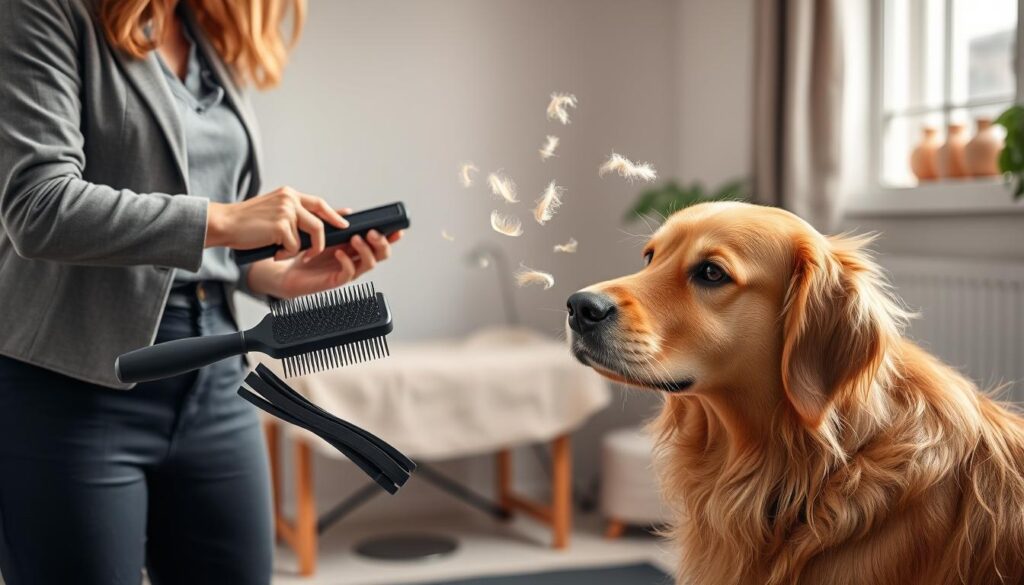
The change of seasons often means more shedding at home. This natural process can be overwhelming when fur covers your furniture and floors. Learning the right brushing techniques for canines helps keep your space clean.
Managing Seasonal Shedding
In spring and autumn, dogs often shed heavily as temperatures change. Increase grooming during these times to remove loose undercoat. This prevents painful mats and keeps your dog comfortable.
When you see more loose hair, use the right brushing techniques for canines. Short, gentle strokes work better than long pulls. This method spreads natural oils and catches shedding fur.
Products to Help Control Fur
The right tools make a big difference in managing shedding. De-shedding rakes and slicker brushes trap loose hair. Grooming sprays also help by reducing static, which makes hair stick to fabrics.
Consider air purifiers or vacuum attachments for dander and fur. Regular grooming and the right tools make cleaning easier. Here’s a table of the best tools for different shedding needs.
| Tool Type | Best For | Primary Benefit |
|---|---|---|
| De-shedding Rake | Double-coated breeds | Removes deep undercoat |
| Slicker Brush | General maintenance | Prevents tangles and mats |
| Grooming Glove | Short-haired dogs | Gentle hair removal |
| Anti-Static Spray | All coat types | Reduces fur cling |
Common Coat Problems
Sometimes, our dogs face coat problems that show deeper health issues. We see the coat as a reflection of our pet’s health. Changes in texture or look should not be ignored.
Identifying Allergies and Skin Conditions
Parasites like fleas and ticks are common causes of poor coat health. They make dogs itch a lot, leading to hair loss and damage.
Dogs also face environmental allergies or food sensitivities. These can cause red, inflamed skin or even yeast infections with a musty smell.
Watch your dog closely for signs of skin problems. Excessive licking, biting at paws, or hair loss are clear signs of trouble.
Treatments for Dull or Oily Coats
A dull or oily coat often means the skin’s balance is off. For minor issues, soothing oatmeal baths can help calm the skin and add moisture.
But, home remedies aren’t enough for all problems. If your dog’s coat stays greasy, crusts, or smells bad, see your vet.
Your vet can figure out what’s needed. This might include special shampoos, diet changes, or treatments for infections. Early action helps keep your dog comfortable and their coat healthy for years.
Coat Maintenance in Different Seasons
Keeping your dog comfortable means grooming them in ways that change with the seasons. Things like temperature and humidity affect their skin and fur. By adjusting your grooming, you keep your dog safe from the weather all year.
Winter Coat Care Tips
Winter air is very dry, which can dry out your dog’s skin. We suggest using moisturizing treatments like organic coconut oil on dry spots. Consistency is key when it’s cold and dry inside.
Snow and ice can get stuck in your dog’s paws, causing pain. Always clean their paws and belly after walks to avoid chemicals. Trimming the fur between their toes helps prevent ice and slush from sticking.
“Proper seasonal grooming is not just about aesthetics; it is a vital component of your dog’s overall health and comfort during extreme weather conditions.”
Summer Coat Considerations
When it gets warmer, your dog faces new challenges like humidity, mud, and sun. Brushing them often in summer helps remove their thick undercoat. This lets them stay cooler by letting air reach their skin.
Watch out for sunburn, as dogs with light or thin coats are at risk. Try to keep them indoors during the hottest part of the day. If they love playing in mud, make sure to wash them well to avoid skin problems.
| Season | Primary Concern | Recommended Action |
|---|---|---|
| Winter | Dry Skin | Use coconut oil and limit baths |
| Spring | Heavy Shedding | Daily brushing sessions |
| Summer | Heat and Humidity | Regular rinsing and sun protection |
| Autumn | Coat Regrowth | Check for skin irritations |
The Role of Professional Grooming
While taking care of your dog at home is important, sometimes they need a professional’s touch. Regular dog grooming sessions offer more than just looks. They use special tools and know-how for tricky hair types that are hard to manage at home.
When to Seek Professional Help
Book an appointment if your dog’s coat easily mats or needs a specific cut. Groomers can spot skin problems like lumps, rashes, or parasites early. Catching these issues early is crucial for your pet’s health.
If you’re not sure what your pet needs, learning about professional dog grooming can help. A pro can give advice based on your dog’s skin and coat. This can stop small problems from becoming big health issues.
What to Expect From a Grooming Session
A grooming session starts with a detailed check of your dog’s coat and skin. The groomer looks for any signs of discomfort or health problems before grooming. This step makes sure the grooming is safe and right for your dog.
After the check, your dog gets a deep clean with special shampoos and treatments. The groomer then trims or de-sheds the coat, keeping it healthy and easy to manage. These sessions are a great addition to your daily care routine. They keep your dog comfortable and looking great all year.
Bathing Your Dog at Home vs. Professional Services
Choosing between grooming at home or using professional services is a big decision for dog owners. Your choice depends on your dog’s personality, your schedule, and how comfortable you are with grooming tools for dogs. Finding the right balance keeps your pet clean and happy all year.
Pros and Cons of DIY Grooming
Grooming at home is a great way to bond with your dog. It’s often cheaper and fits your schedule. But, you need good grooming tools to get professional results safely.
Successful home grooming needs a dedicated area and patience. If your dog is calm and enjoys it, DIY grooming is rewarding. Remember, you’ll handle the mess and need the right tools for different fur types.
Recognizing When Professional Help is Needed
Some dogs need professional grooming because of their coat or behavior. If you see severe matting that hurts, get an expert. They have the right tools to avoid hurting your dog.
Also, if your dog gets aggressive or very anxious during baths, get help. Groomers know how to handle tough dogs safely. You might need professional help if:
- You need a special haircut for your breed.
- Your dog has skin problems that need special baths.
- Managing a big or very active dog is too hard alone.
- There are deep mats that can’t be brushed out gently.
Building a Canine Coat Care Routine
A healthy coat starts with a daily plan. Consistency is key for long-term wellness. Set aside times for grooming to keep your dog comfortable and looking great all year.
Creating a Comprehensive Care Schedule
Make a weekly calendar for brushing, baths, and nutrition checks. Use products like Burt’s Bees for Dogs for easy care. This makes coat care a habit, not a chore.
Adapting to Your Dog’s Needs and Lifestyle
Your dog’s needs change with age or activity levels. Adjust your care methods to fit these changes. Regular grooming strengthens your bond. Begin your new routine today for lasting benefits.