Did you know a dog’s skin is its largest organ? It shows how well your dog is doing inside. A dull or brittle coat can mean your dog is not getting the nutrients it needs or is stressed.
We think it’s key to keep your new friend looking good. By focusing on puppy fur care, you help your pet stay happy and healthy for years to come.
Starting a regular routine is the first step. Our coat care tips for puppies will guide you in creating habits that boost your dog’s natural oils and skin health. Follow these steps to keep your furry friend looking and feeling their best every day.
Key Takeaways
- A healthy exterior is a primary indicator of your pet’s internal physical well-being.
- Consistent grooming routines prevent skin irritation and promote natural oil production.
- Nutrition plays a critical role in achieving a soft and shiny texture.
- Early habit formation makes the process easier for both you and your canine.
- Regular brushing sessions help you bond while monitoring for potential health issues.
Understanding Your Puppy’s Coat Type
Starting your puppy fur care journey means knowing your dog’s coat type. Each breed has its own hair structure. This guides how you brush, wash, and care for their coat. Knowing this early helps keep your pet happy and healthy.
Different Coat Types Explained
Many breeds, like Huskies and Golden Retrievers, have a double-coated structure. They have a soft undercoat for warmth and a longer outer layer for protection. These dogs need good airflow to stay cool and breathe well.
On the other hand, single-coated breeds have only one layer of hair. They might need special trimming to keep their coat in shape. Knowing about these differences is crucial for good puppy fur care.
“A well-maintained coat is not just about aesthetics; it is a direct reflection of your puppy’s internal health and your dedication to their daily comfort.”
Common Coat Issues to Look For
Even with the best care, owners might face fur problems. Look out for matting, which happens when hair gets stuck in the undercoat. Dull or brittle hair can mean your puppy fur care needs a tweak or more nutrition.
Skin irritation, shown as redness or too much scratching, is another issue. It’s key to tackle it fast to avoid infections. Here’s a quick guide to coat needs:
| Coat Type | Primary Characteristic | Maintenance Focus |
|---|---|---|
| Double Coat | Dense undercoat | Regular de-shedding |
| Single Coat | Single layer | Frequent brushing |
| Wire/Curly | Coarse texture | Professional trimming |
Being vigilant helps you spot and fix coat problems early. Regular care leads to a shiny, healthy coat for your dog to be proud of.
Importance of Regular Grooming
We believe that proper puppy coat maintenance is key to a long, happy life for your pet. Brushing is more than just keeping them looking good. It’s about their health too. Regular grooming lets us check on our pets and keep them comfortable.
Benefits of Grooming for Your Puppy
Regular grooming is a special time to bond with your puppy. Brushing spreads natural oils in their fur, making it shiny and healthy. It also lets us check for any skin problems or parasites.
These sessions also remove loose hair and dirt that can hurt them. Keeping their coat clean lowers the chance of skin infections. It also makes your home cleaner. Grooming puppies early helps them get used to being handled, making vet visits easier.
How Often Should You Groom?
Having a regular grooming schedule is important. Brush your dog every 3 or 4 days to avoid tangles and mats. If they have long or thick fur, brush more often to keep it soft and manageable.
Here’s a guide to help you groom your pet based on their fur type:
| Coat Type | Brushing Frequency | Primary Goal |
|---|---|---|
| Short/Smooth | Once a week | Remove loose hair |
| Medium/Wavy | Every 3-4 days | Prevent tangles |
| Long/Curly | Daily | Avoid painful mats |
| Wire-Haired | Twice a week | Remove dead fur |
Sticking to a grooming routine is crucial for your pet’s health and happiness. Grooming puppies strengthens the bond between you and your pet.
Choosing the Right Grooming Tools
Having the right tools makes grooming easier for you and your pet. Quality puppy hair care products keep your routine smooth and your dog comfy. The right tools turn grooming into a special time for bonding.
Essential Brushes for Different Coats
Choosing the right brush for puppies depends on their fur type. Short-haired dogs do well with a rubber curry brush. It removes loose hair and is gentle on their skin.
For thick or double coats, you need special brushes. A de-shedding brush is great for shedding breeds. It gets the undercoat to prevent mats. Choose tools that feel good in your hand for better control.
Clippers vs. Scissors: What You Need to Know
Deciding between clippers and scissors is key for your puppy’s safety. Clippers are best for large areas needing even cuts. But, they need a steady hand and a calm puppy. Always prioritize safety with guards to avoid nicks or irritation.
Scissors are better for precise cuts, like around the eyes or ears. Use blunt-tipped safety shears to avoid injuries if your puppy moves. With these puppy hair care products, grooming is safe and effective.
Bathing Your Puppy: Best Practices
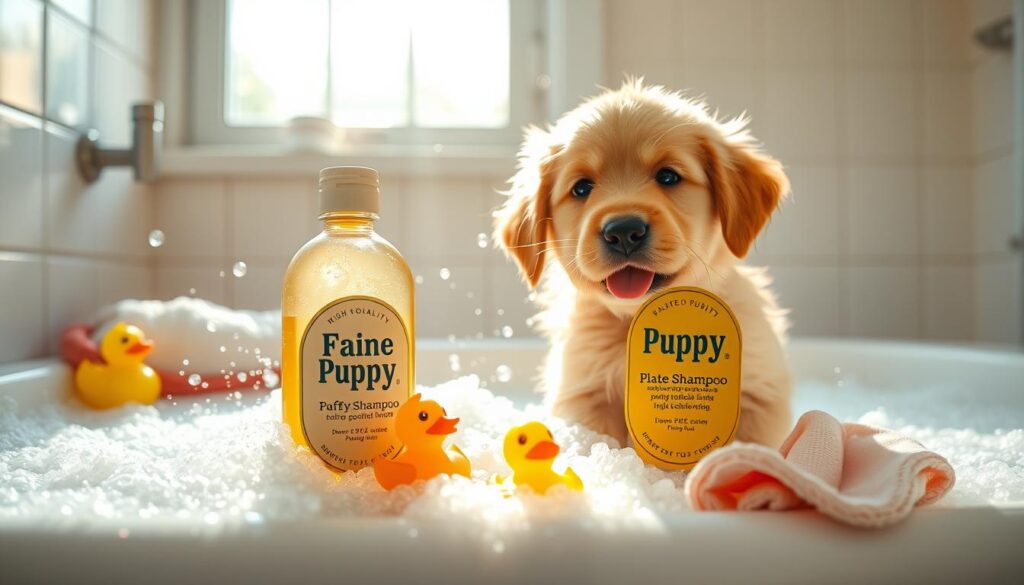
Having a regular bathing routine keeps your puppy clean and comfy. But remember, their skin is much more sensitive than ours. Over-bathing can dry out their skin and cause irritation.
How Often Should You Bathe Your Puppy?
Experts say bathing your dog once or twice a month is usually enough. If your puppy gets dirty or smells bad, you might need to bathe them more. But try not to wash them too much to keep their skin healthy.
Make sure to rinse your puppy well after every bath. Any soap left behind can make them itch or feel uncomfortable. Proper rinsing is a key step that many forget.
Choosing the Right Puppy Shampoo
When looking for the best shampoo for puppies, choose formulas made for young dogs. These shampoos are pH-balanced for their skin. Don’t use human shampoo, as it’s too harsh for their coat.
Using a good fur conditioner for dogs can also help. It keeps their coat soft and easy to manage. This is great for breeds with long or thick hair. Using these special products makes grooming easier for both of you.
| Product Type | Primary Benefit | Best For |
|---|---|---|
| Puppy Shampoo | Gentle Cleansing | All Coat Types |
| Fur Conditioner | Detangling & Shine | Long or Curly Coats |
| Waterless Foam | Quick Refresh | Spot Cleaning |
Dealing with Shedding
Managing loose hair can seem like a never-ending fight. But, with the right shedding solutions, it becomes much simpler for pet owners. Shedding is a natural part of life, but you can control your home environment with the right methods.
Tips to Minimize Shedding
Regular brushing is the best way to catch loose fur before it falls on your floors or furniture. By removing dead hair often, you stop it from spreading everywhere.
Warm weather makes dogs shed more. So, when the seasons change, you might need to brush your dog more often. This keeps them comfortable and your home clean.
“The bond between a person and their dog is built on the small, daily acts of care that keep them healthy and happy.”
Best Practices for Cleaning Up Fur
Even with the best shedding solutions, some hair will still fall on your things. Use a top-notch vacuum with a HEPA filter to catch dander and fine hairs well.
For quick cleanups on clothes or furniture, have these tools ready:
- Lint rollers for quick hair removal.
- Rubber gloves, which use static to pull hair from fabric.
- Washable furniture covers to protect your sofa from heavy shedding.
By being proactive with these simple habits, you can keep your home clean. And your puppy will stay happy and healthy. Remember, patience is crucial when dealing with your dog’s natural coat cycle.
Nutrition for a Shiny Coat
We believe a shiny puppy coat starts before grooming. A healthy coat shows your puppy’s overall health. Good nutrition is key for strong, shiny fur.

Foods that Promote Healthy Fur
The ingredients in your puppy’s food matter a lot. Choose premium puppy foods with high-quality animal proteins first. These proteins help build strong hair follicles and keep skin healthy.
A balanced diet also needs vitamins and minerals. Look for formulas made for your puppy’s breed and age. Key nutrients for a healthy coat include:
- High-quality proteins like chicken, fish, or lamb to support hair growth.
- Vitamin A to help maintain healthy skin cells and prevent dryness.
- Zinc, which is vital for skin repair and preventing dullness.
- B-vitamins that support the overall health of the skin barrier.
Supplements to Consider
Even with a good diet, sometimes extra help is needed for a perfectly shiny coat. Omega-3 and Omega-6 fatty acids are crucial. They help make the coat healthier and more resilient.
But, always talk to your vet before adding supplements. These nutrients are good, but too much can be harmful. Your vet can guide you on the right amount for your puppy’s health.
Skin Care: Keeping Your Puppy Comfortable
A healthy coat starts deep within the skin, needing our constant care. By focusing on skin health, we lay the groundwork for a shiny, strong coat. Regular coat care tips for puppies help us catch problems early.
Recognizing Skin Issues
Watch for signs of discomfort like redness, flaking, or too much scratching. These signs often mean your puppy has dry skin or allergies. If your pet bites at their paws or rubs against furniture, it’s time to find out why.
Spotting these issues early lets us fix them fast. Regular physical exams during grooming can catch bumps, hot spots, or hair loss. This keeps your puppy happy and itch-free.
Topical Treatments and Oils
Natural remedies can soothe sensitive skin. Coconut oil is a great, natural moisturizer for deep hydration. You can also add a bit to your shampoo for a gentle fur conditioner for dogs, making the coat soft and easy to manage.
Make sure any product you use is safe for dogs. Test a small skin area first to avoid bad reactions. Using these natural treatments regularly keeps your puppy’s coat looking beautiful and healthy.
| Symptom | Potential Cause | Recommended Action |
|---|---|---|
| Excessive Scratching | Dry Skin or Fleas | Check for parasites and hydrate |
| Redness/Inflammation | Allergic Reaction | Consult a veterinarian |
| Dull, Brittle Fur | Nutritional Deficiency | Review diet and supplements |
| Flaky Skin | Dehydration | Increase water and use oils |
Protecting Fur in Different Seasons
The changing seasons can affect a puppy’s coat health and look. Keeping up with puppy coat maintenance is key. This ensures your dog is comfortable, no matter the weather.
Summer Care Tips
In the summer, keeping your puppy cool and safe from UV rays is crucial. Never shave a double-coated breed. Their fur keeps them warm. Regular brushing helps remove loose undercoat, improving airflow.
Sun protection is vital for pets. Use dog sunscreen on thin-furred areas like the nose and ears. Make sure your puppy always has fresh water to stay hydrated, which affects their coat shine.
Winter Coat Maintenance Strategies
In the cold, the air is drier, causing brittle fur and itchy skin. Increase moisturizing to fight dry air. Use a good dog conditioner in baths to keep moisture in and prevent static.
Wipe your puppy’s paws and coat after walks to remove salt or ice-melting chemicals. These can dry out and irritate their skin. With the right puppy coat maintenance, your dog’s fur will stay strong all winter.
| Season | Primary Focus | Key Action |
|---|---|---|
| Summer | Sun Protection | Apply dog-safe sunscreen |
| Autumn | Shedding Control | Increase brushing frequency |
| Winter | Moisture Retention | Use hydrating conditioners |
| Spring | Deep Cleaning | Remove winter debris |
Training Your Puppy to Enjoy Grooming
Grooming should be a special time for bonding, not a chore. Starting early helps your pet see grooming as a time for love and care. It’s important to create a calm space and use a gentle touch. This makes your dog feel safe and secure.
Steps to Make Grooming Fun
Keep grooming sessions short and regular. Spend just five minutes each day brushing your puppy. This helps them get used to different tools without feeling overwhelmed.
Let your puppy sniff the brush before you start. Slowly introduce it to their back or shoulders, avoiding sensitive spots at first. Short sessions keep your pet relaxed and willing to cooperate.
Using Positive Reinforcement
Positive reinforcement builds confidence. Reward your puppy with treats or praise right after a good grooming session. This makes them think the brush is something truly rewarding and fun.
Being consistent is key when grooming puppies to keep their coat healthy. If your puppy seems stressed, stop and try again when they’re calmer. Patience is crucial. It teaches your dog that grooming is a safe, loving part of their day.
When to Seek Professional Help
Keeping your puppy’s coat healthy needs regular effort at home. But, some problems need a pro’s touch. Watch your puppy for signs that mean more than just grooming.
Recognizing When Expert Care Is Necessary
Itching that won’t stop, bald spots, or tough mats can mean health issues. If you see these, call your vet right away. They can check for allergies or skin infections.
Professional groomers at places like PetSmart or Petco have the right tools. They can deal with tough tangles without hurting your pet.
Finding a Qualified Grooming Service
Finding the right groomer means checking reviews and asking friends. Look for groomers with certifications from the National Dog Groomers Association of America. A good groomer will know what your puppy needs based on its breed.
By choosing wisely, you keep your puppy happy and comfortable. This is true for every part of their life.