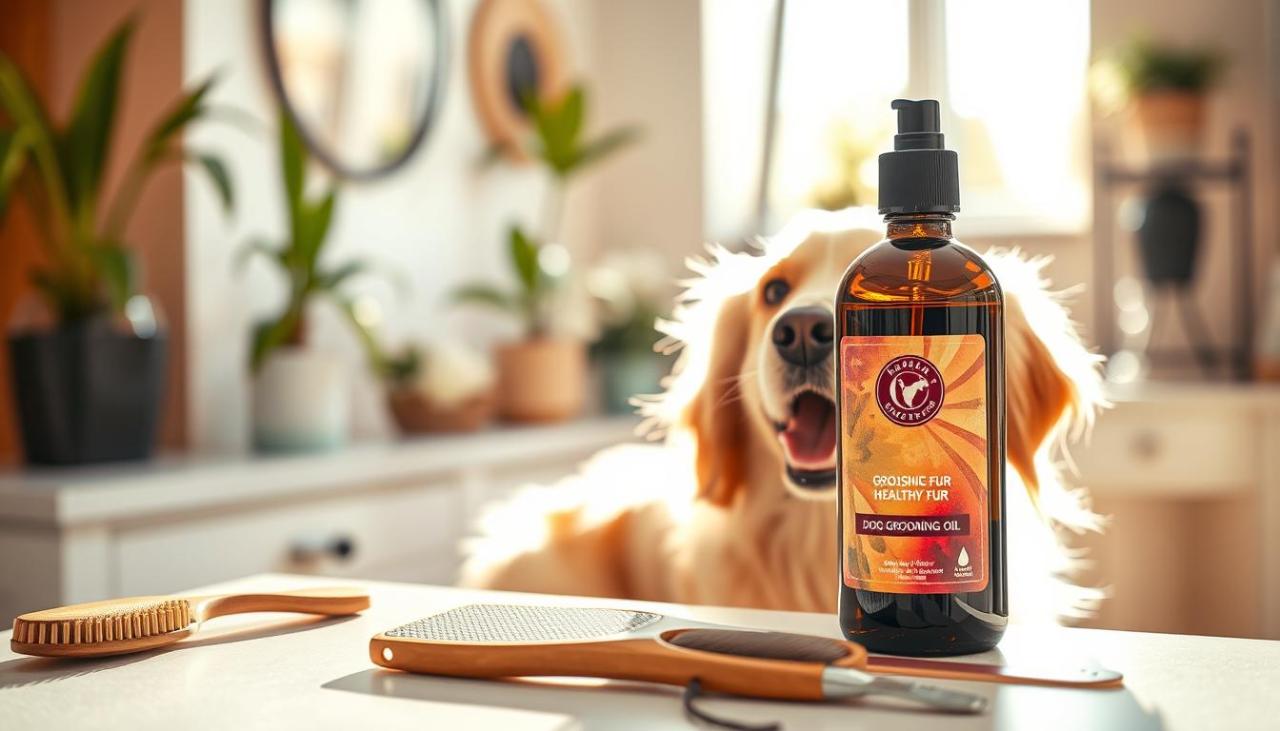
Did you know that nearly 40% of canine skin issues come from what they eat, not from outside? We often focus on grooming, but true beauty starts from within. A balanced approach to wellness is key to your pet’s natural glow.
Adding a dog fur nutrition oil to your pet’s daily routine is a smart start. It provides the fatty acids needed for a shiny, strong coat. Targeted supplementation fills the gap between regular meals and peak health.
We think informed owners make the best choices for their pets. Using top-notch dog fur nutrition oil tackles dryness and shedding at the root. This simple step supports long-term health and keeps your pet looking great every day.
Key Takeaways
- Internal wellness is the primary driver of a healthy, shiny coat.
- Dietary gaps are a leading cause of common skin irritations in pets.
- Supplementation provides essential fatty acids that standard food may lack.
- Consistent use of targeted products promotes long-term skin resilience.
- Informed choices in daily care lead to visible improvements in vitality.
Understanding Dog Fur Nutrition Oil
To care for your dog’s coat, we need to understand their skin. The skin is the largest organ, making up 10% to 15% of a dog’s weight. It protects them from the environment, so keeping it healthy is key.
Dog fur nutrition oil is a special supplement for their skin. It gives them the nutrients they need to keep their skin and hair healthy.
What is Dog Fur Nutrition Oil?
These supplements are made to fill gaps in a dog’s diet. They add essential fatty acids that are lost in regular pet food. This is because pet food is often cooked at high heat.
Ingredients in Dog Fur Nutrition Oil
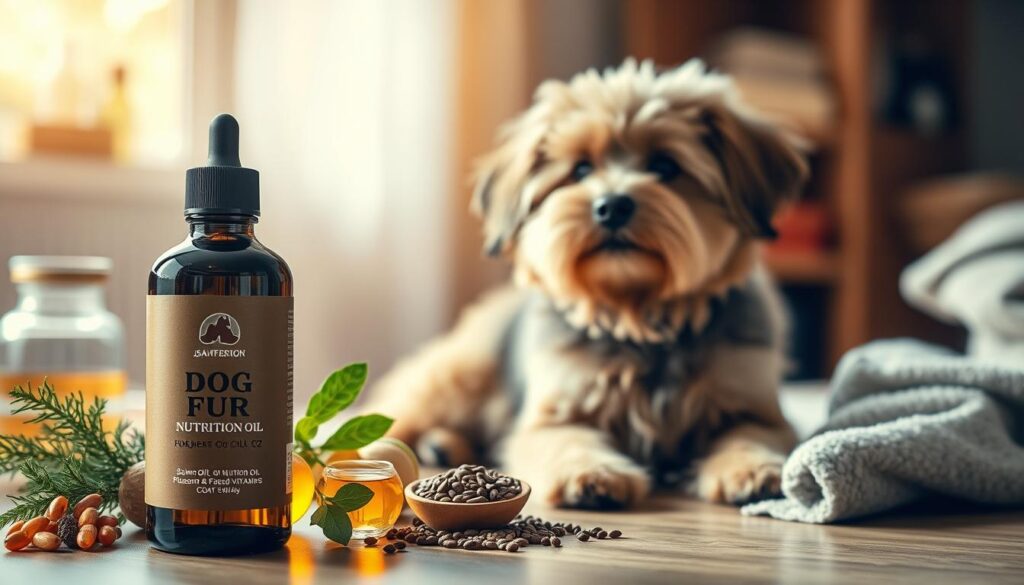
Good oils use natural ingredients like salmon oil, flaxseed, and borage oil. These ingredients are packed with nutrients. Here’s a table showing what’s in these supplements and why they’re important.
| Ingredient | Primary Benefit | Key Nutrient |
|---|---|---|
| Salmon Oil | Reduces inflammation | Omega-3 (EPA/DHA) |
| Flaxseed Oil | Supports skin barrier | Alpha-linolenic acid |
| Borage Oil | Improves coat texture | Gamma-linolenic acid |
| Vitamin E | Antioxidant protection | Tocopherols |
How It Works on Your Dog’s Coat
The oils work by helping the sebaceous glands. These glands make sebum, a waxy substance that keeps hair healthy. Without the right nutrients, sebum production can drop, causing dry fur.
Using dog fur nutrition oil helps the body make healthy sebum. This makes the hair follicles strong. As a result, the coat becomes soft, shiny, and healthy.
The Benefits of Using Dog Fur Nutrition Oil
Many pet owners find that natural fur care for dogs leads to a healthy, shiny coat. Giving our dogs the right nutrients can make a big difference in how they look and feel.
Enhances Coat Shine and Softness
Essential fatty acids, like EPA and DHA, are key for a shiny coat. They help nourish every hair follicle from the inside. This makes the coat softer and shinier.
Reduces Shedding and Dander
Regular use of these oils can cut down on shedding. They strengthen the skin, preventing dryness and flaky dander. This means fewer loose hairs and a happier pet.
Promotes Healthy Skin
The benefits of using oils for dog fur go beyond looks. They boost the immune system and help with temperature control. A healthy coat also soothes itchy skin, making your dog feel great every day.
Types of Dog Fur Nutrition Oils
Looking for the best dog fur products means knowing the different types of oils. Each type comes from a unique source. This knowledge helps us pick the right oil for our pets’ needs.
Marine-based or plant-based oils each have their own benefits. They help keep our dogs healthy and happy.
Fish Oil Variants
Fish oils are packed with EPA and DHA, important omega-3 fatty acids. These nutrients help strengthen the skin and reduce inflammation. Adding them to our dogs’ diet makes their coats shiny and strong.
Coconut Oil Options
Coconut oil is a favorite plant-based option. It’s rich in medium-chain triglycerides. Many pet owners choose it for its natural moisturizing properties.
Used right, it’s a top choice for essential oils for dog skin and coat health. It’s great for dogs with dry skin.
Omega-3 and Omega-6 Oils
Good nutrition balances omega-3 and omega-6 fatty acids. Linoleic acid, an omega-6 found in flaxseed and soy, keeps skin flexible. Choosing organic oils for dog coat health ensures our dogs get all the nutrients they need.
How to Choose the Right Oil for Your Dog
We believe every pet deserves a shiny coat. The right nutritional oil is key. You need to think about your pet’s biology, age, and health.
Consider Your Dog’s Coat Type
Different breeds need different care for their skin and fur. A thick coat might need more fatty acids than a short-haired dog. Watch your dog’s coat to see if it needs more moisture or support.
When looking for best dog fur products, find ones made for your breed. Tailoring your choice to their coat type can make a big difference in shine and softness.
Review Ingredient Quality
Not all oils are the same. The quality of the oil is very important. Look for cold-pressed oils that are pure. Avoid oils with fillers or artificial preservatives.
“Quality nutrition is the foundation of a healthy life, and the skin is the first place that reflects what goes into the body.”
Choose oils from brands that are open about their ingredients. This ensures your dog gets safe and effective nutrition.
Check for Allergies
Introducing a new supplement can sometimes cause reactions. Start with a small amount to see how your dog reacts. If there’s itching, redness, or upset stomach, stop and talk to your vet.
Choosing top-rated dog fur supplements means knowing your dog’s health history. Watch for signs of sensitivity like skin irritation, changes in stool, or excessive scratching.
By being careful and informed, you can find the best oil for your dog. This ensures your pet has a healthy, shiny coat for years.
How to Apply Dog Fur Nutrition Oil
Learning to apply oil to your dog’s fur is easy and can change their grooming routine. It’s important to apply it right to avoid any upset stomach. By following a few steps, you can add these nutrients to your dog’s daily care safely.
Dosage Recommendations
Start with a small amount of essential oils for dog skin and coat when you first use them. Begin with half the amount suggested on the label. This lets your dog get used to the new supplement without discomfort.
“Consistency is the bridge between a dull coat and a vibrant, healthy shine that reflects your dog’s inner vitality.”
If your dog seems fine after a few days, you can increase the dose. Always follow the manufacturer’s guidelines, as they vary by your dog’s size and breed. The right dog fur oil treatment for a shiny coat is found by following these exact amounts.
Application Techniques
The best way to give these nutrients is by mixing the oil into your dog’s food. This way, the oil is digested with the food, helping your dog absorb the vitamins better. Nourishing dog fur with oils becomes easy when you just add the oil to their kibble or wet food.
Some people like to use a dropper or pump for exact amounts. If your dog is finicky, mix the oil well into their food. This trick helps them get the oil without any fuss during meals.
Frequency of Use
Being consistent is key when using essential oils for dog skin and coat. Try to give the supplement at the same time every day. You’ll start to see better skin and coat in about four to six weeks.
- Make a daily schedule for oil feeding.
- Watch for any changes in your dog’s skin.
- Keep up the routine even when the coat looks better.
By sticking to this routine, you’re helping your dog’s fur stay healthy for a long time. Remember, it takes time to see the full effects of skin renewal.
Common Misconceptions About Dog Fur Nutrition Oil
Many owners worry that adding supplements might cause messes. They fear that dog fur nutrition oil will make their pet sticky or look unkempt. But, these worries often come from not understanding how these products work.
Oil Will Make My Dog Greasy
One big worry is that the oil will make their pet’s coat greasy. But, when given the right amount, the body absorbs the nutrients inside. Properly administered supplements help skin health and shine from the inside, without leaving oil on the fur.
It’s Only for Certain Breeds
Some think only long-haired or certain breeds need extra skin care. But, dog fur nutrition oil helps all dogs, no matter their coat type. It improves skin hydration and vitality for every dog, whether they have a short, wiry, or thick coat.
- Supports healthy skin barrier function for all breeds.
- Reduces seasonal dryness and irritation.
- Promotes a vibrant, healthy-looking coat for every dog.
All Oils Are the Same
It’s easy to think all oils are the same. But, not all products are of the same quality. High-quality options are made with care to keep essential fatty acids. This ensures your pet gets the best from their dog fur nutrition oil. Always choose reputable brands that focus on purity and transparency.
The Role of Nutrition in Coat Health
Your dog’s look shows what’s happening inside. Natural fur care for dogs starts with what they eat every day.
Importance of a Balanced Diet
Dogs need a lot of protein for their skin and fur. Without enough good protein, their skin and fur suffer.
Zinc is key for skin health. Without enough, dogs can get skin problems like hair loss.
Supplements vs. Oils
Some think oils can replace food, but they’re meant to work together. Oils help with shine and inflammation, but can’t replace essential nutrients.
Natural fur care for dogs is like a two-part job. Food builds the hair follicle, and oils make it shiny and soft.
Hydration and Skin Health
Water is crucial for healthy skin. It keeps the skin flexible and strong against harm.
Drinking enough water helps prevent dry, flaky skin. With enough water and the right food, your dog’s fur will look great.
Integrating Dog Fur Nutrition Oil into Daily Care
Keeping a regular grooming schedule is key to a shiny and healthy pet coat. Adding special supplements to your daily routine can greatly improve your dog’s skin and fur. Knowing how nutrition affects skin in winter shows why these supplements are crucial for your pet’s comfort.
Combining Oils with Bathing
Bathing is the best time to add organic oils for dog coat health to your pet’s care. After washing, the skin is open to dryness and irritation. Putting oil on while the coat is still damp keeps moisture in.
This simple step protects against harsh weather. Your dog’s fur will feel softer and easier to manage after drying. It’s a great way to keep fur hydrated all year.
Using Oils for Grooming
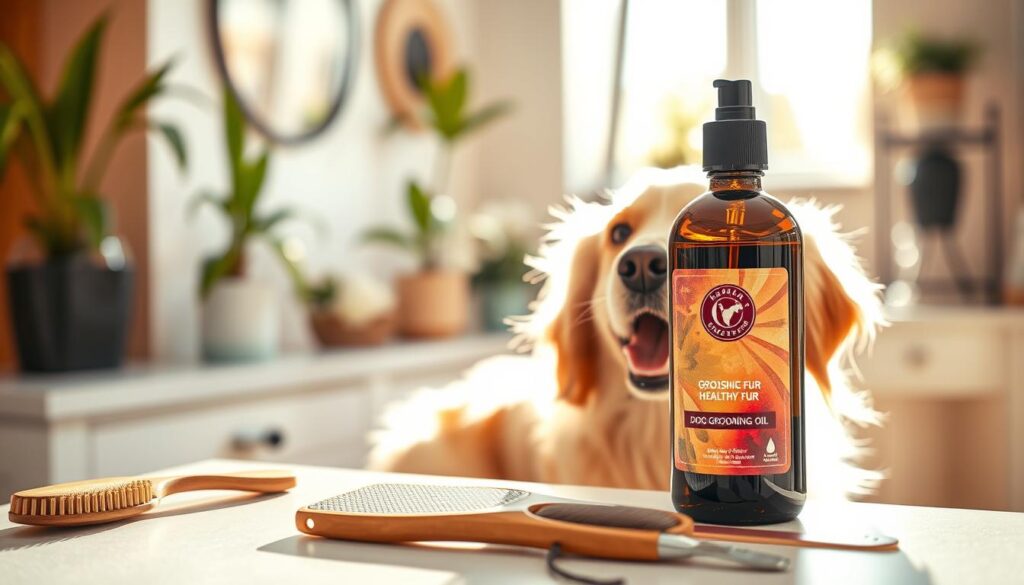
Using a top-notch dog grooming oil for healthy fur during brushing is also beneficial. Apply a light mist or a few drops to your brush before brushing. This spreads nutrients from roots to tips.
- Use a soft-bristled brush for short-haired breeds to ensure even coverage.
- Focus on areas prone to tangles or dryness, such as the tail and legs.
- Enjoy the polished, lustrous finish that comes from consistent application.
Maintaining an Oil Routine
Being consistent is crucial for lasting results in your pet’s look. Making these applications a daily habit keeps your dog comfortable and groomed. Regular use of organic oils for dog coat health prevents dander and keeps skin soft.
Keep your supplies in a grooming kit to stay organized. Treating this as a bonding experience makes your dog look forward to it. A steady dog grooming oil for healthy fur routine is the best gift for your pet’s health.
Monitoring Your Dog’s Response
Start watching your dog closely after using new supplements. Keep a simple log to note any changes in their behavior or looks. This helps make sure the dog grooming oil for healthy fur is working right without hurting them.
Signs of Improvement in Coat Health
Look for changes in a few weeks. A noticeable increase in shine is a good sign. Your dog’s coat might feel softer and look more alive.
Also, check for better skin and less flaky dander. These signs mean your pet is getting the fatty acids they need. Many owners see big improvements with top-rated dog fur supplements.
Possible Side Effects to Watch For
Every dog is different. Watch for mild stomach issues like loose stools or less appetite. If your dog starts scratching or shows red skin, it might be allergic to something.
Start new products slowly to let your dog adjust. If you see bad reactions, stop right away. Watching these small things helps you know if the supplement is right for your pet.
When to Consult a Veterinarian
At times, you need a vet’s help to keep your pet safe. If your dog vomits a lot, has diarrhea, or shows signs of an allergy, call your vet fast. These are serious signs that need immediate medical attention.
If you don’t see any changes after a few weeks, a vet can help. They can tell you if it’s time to try something else. Getting expert advice makes sure your use of top-rated dog fur supplements is safe and effective.
Conclusion: A Healthier Coat Awaits
Your journey to better pet wellness starts with small, consistent changes. By choosing high-quality ingredients, you give your dog the nutrients they need for a vibrant life.
Explore the benefits of using oils for dogs to see how they can change your pet’s look. A shiny, soft coat shows your dog is healthy and happy.
Embracing a New Wellness Routine
Using oils for dog fur needs patience and watching your pet’s needs. Start with small amounts in their diet and watch for better skin and hair.
Always talk to your vet about these changes. They can help make sure your dog gets the right care.
Long-Term Vitality Through Quality Care
Being consistent is key to better skin and coat health for your dog. Regular grooming and supplements are essential for a healthy pet.
Choose quality brands that focus on pure and strong formulas. Your effort in these simple habits will pay off for years.