Did you know that nearly forty percent of all veterinary visits involve skin-related concerns? Keeping your pet’s coat healthy is key to their overall well-being.
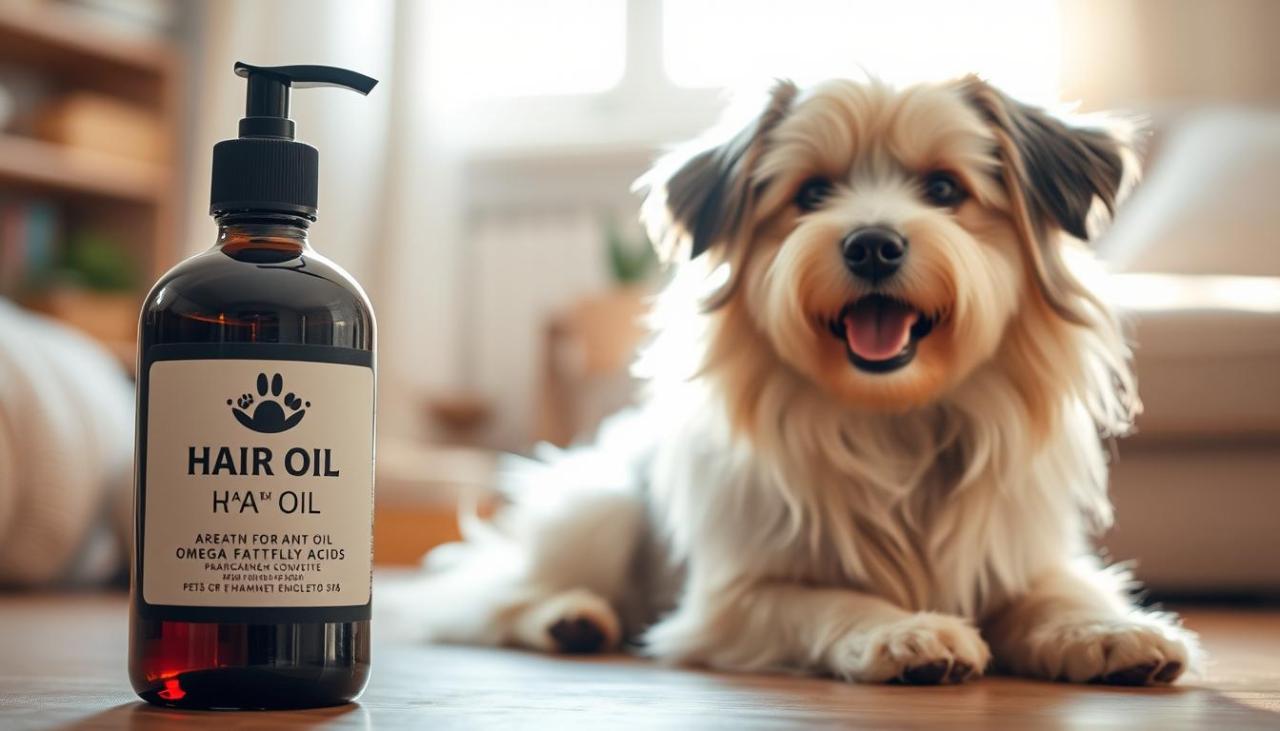
Using a dog hair oil for dry fur can be a simple way to add moisture and softness. These products give your pet a shiny, healthy look.
This guide is about using products on your pet’s skin or coat. It doesn’t cover things they can eat or internal health products.
Always watch your pet when you start new grooming routines. If they seem uncomfortable or their coat changes suddenly, get vet help right away.
Key Takeaways
- Topical treatments help restore essential moisture to the skin.
- Regular application promotes a soft, shiny, and healthy appearance.
- This guide focuses strictly on external grooming products.
- Avoid using ingestible supplements when following these topical tips.
- Consult a veterinarian if you notice signs of skin irritation.
What is Dog Hair Oil?
Dog hair oil is a special treatment for your pet’s coat. It’s like a deep conditioner that keeps the skin moist and the hair shiny. Using a high-quality hair oil for dogs gives your pet’s fur the nutrients it needs.
The Benefits of Using Hair Oil for Dogs
These products make your dog’s coat feel better right away. They help reduce dryness and prevent breakage. Your dog’s fur will stay soft and look great.
These oils also make grooming easier. They help detangle and reduce static, which is good for long-haired dogs. Using a natural dog hair oil keeps your pet’s skin healthy without harsh chemicals.
Common Ingredients in Dog Hair Oils
Look for products with natural ingredients like plant-based or marine oils. These oils are good for your dog’s coat and skin. Here are some common ingredients in good grooming products.
| Ingredient | Primary Benefit | Best For |
|---|---|---|
| Coconut Oil | Deep hydration | Dry, flaky skin |
| Flaxseed Oil | Omega-3 boost | Coat luster |
| Salmon Oil | Skin barrier support | Overall coat health |
| Argan Oil | Softening/Smoothing | Tangled, coarse fur |
Make sure the product doesn’t have artificial fragrances or dyes. A natural dog hair oil keeps your dog’s skin healthy and shiny. The right oil protects your dog’s coat every day.
How Dry Fur Affects Your Dog
When your dog’s coat loses its shine, it’s a sign they need extra care. A shiny coat means your dog is healthy. But dry or brittle fur can make them uncomfortable. Spotting these changes early helps you help your dog before it gets worse.
Signs Your Dog Has Dry Fur
Look for signs like your dog’s fur not being as soft as before. This might mean it’s time for a moisturizing dog fur oil. Watch for these signs:
- Visible flakes: Small, white particles on their coat or bedding.
- Rough texture: Hair that feels brittle or coarse.
- Reduced shine: A dull coat that doesn’t shine even after a bath.
- Excessive scratching: Constantly trying to itch irritated areas.
The Impact of Dry Fur on Your Dog’s Health
Dry fur is more than a cosmetic issue; it can cause skin irritation. Dogs with itchy skin might lick or bite it a lot. This can lead to broken skin and infections.
Using a good dry fur treatment can help soothe your dog’s skin. Remember, while oils are great for maintenance, they can’t replace a vet’s check-up. If you see sores or hair loss, see a vet.
By sticking to a regular care routine, you can keep your dog from getting irritated. The right amount of moisture keeps them comfortable and happy all year. Taking good care of their coat shows you care about their health and happiness.
Choosing the Right Dog Hair Oil
Choosing the best oil for dog hair means looking at what’s in it and what your dog needs. Knowing your dog’s coat type is key to picking the right oil for their skin and fur.
Factors to Consider When Selecting Hair Oil
When picking a dog grooming oil, purity and clear ingredients are top priorities. Choose products with natural, easy-to-spot ingredients, not synthetic stuff or strong smells.
Think about how you’ll use the oil. Some oils are for skin, while others go in food for inside health. Always check the label to make sure it’s right for your dog’s breed and fur.
Top Brands Offering Quality Dog Hair Oils
The market has many top-quality oils for different needs. For example, pure salmon oil is great for Omega-3 fatty acids, making coats shiny and healthy.
Unrefined coconut oil is also popular for its moisturizing properties. It makes fur soft and shiny without being greasy. Look for brands that use cold-pressed methods to keep nutrients intact.
The best dog grooming oil fits your pet’s life and needs. Choosing natural, high-quality ingredients helps keep your dog’s coat looking its best.
How to Apply Dog Hair Oil
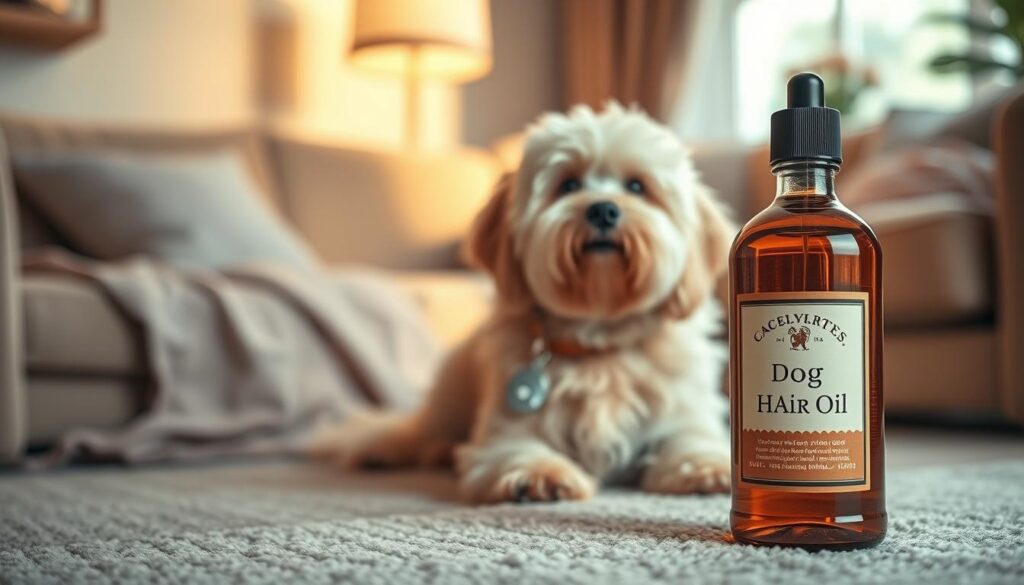
Learning to use a hair oil for dogs can make their coat shine. The oil gives essential nutrients. But how you apply it affects how well the skin absorbs these benefits without getting oily.
Step-by-Step Application Guide
Always do a patch test on a small, hidden area of your dog’s skin first. This checks if your pet will react to the ingredients.
After confirming it’s safe, follow these steps for the best results:
- Start with a very small amount of nourishing oil for dog fur in your palms.
- Gently massage the oil into the coat, focusing on dry patches while avoiding the eyes, ears, and nose.
- Allow the oil to sit for a few minutes to penetrate the hair shaft.
- Finish by thoroughly brushing your dog to distribute the product evenly from root to tip.
Tips for Best Results
Consistency is key for a healthy coat. Start with a light application to see how your dog’s skin and fur react. Then, you can adjust the frequency or amount used.
Always remember that less is often more with topical treatments. If the coat feels too oily, use less next time.
| Action | Purpose | Frequency |
|---|---|---|
| Patch Testing | Check for sensitivity | Before first use |
| Gentle Massage | Stimulate blood flow | Weekly |
| Thorough Brushing | Distribute nutrients | After every application |
| Monitoring | Assess coat health | Ongoing |
Natural Ingredients for Nourishment
We think nature is the best for your dog’s fur. Choosing a natural dog hair oil means knowing how plants and sea extracts work on your pet. Quality ingredients can make dry fur shine again.
Popular Oils and Their Benefits
Each oil has its own benefits. Coconut oil moisturizes from the inside out. Flaxseed and salmon oils are full of omega-3s, great for skin health.
Argan oil smooths frizz and adds shine without feeling greasy. Pick a nourishing oil for dog fur based on your dog’s coat and skin.
| Oil Type | Primary Benefit | Best Use |
|---|---|---|
| Coconut | Deep Moisturizing | Topical Massage |
| Salmon | Omega-3 Support | Dietary/Skin Health |
| Argan | Smoothing/Shine | Surface Conditioning |
DIY Hair Oil Recipes
Making your own hair oil can be fun and rewarding. Mix fractionated coconut oil with vitamin E for a simple treatment. Make sure all ingredients are completely pet-safe and don’t include toxic essential oils.
Always talk to your vet before making a mix. They can check if the ingredients are right for your dog. Also, ask a vet if you’re using treatments and supplements together to avoid too much.
Understanding Dog Coat Types
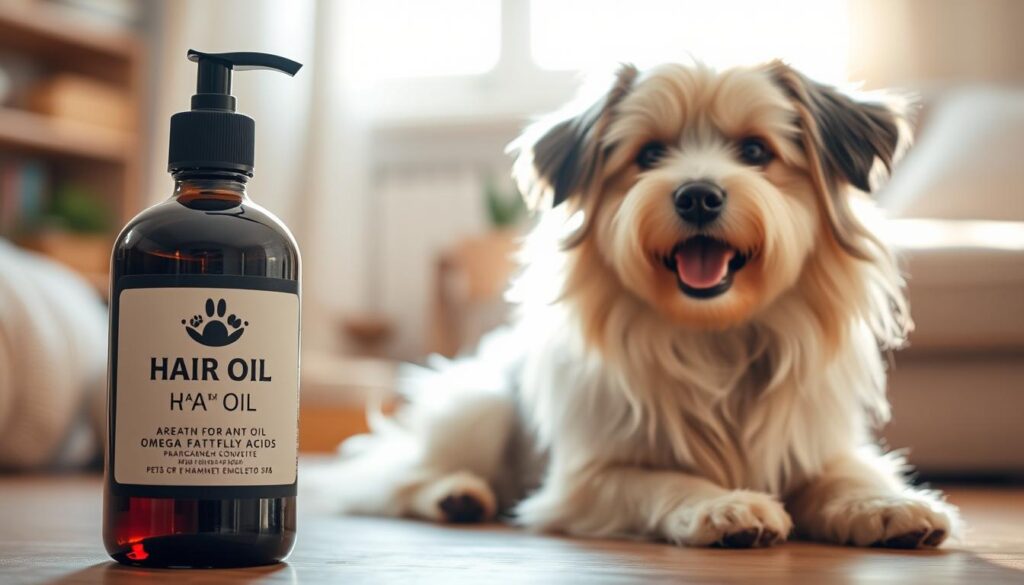
The secret to a healthy, glowing coat is knowing what each breed needs. Every dog has its own fur type. So, finding the best oil for dog hair needs a personal touch.
Different Types of Dog Coats and Their Needs
Short, smooth coats need little product to stay shiny. Too much oil can make them look greasy and attract dirt.
Long or silky coats need regular moisture to avoid tangles and breakage. Curly coats, like Poodles, are prone to matting. So, they need light hydration to stay manageable.
Double-coated breeds have a thick undercoat for warmth. When using dog coat oil on them, make sure it reaches the skin, not just the fur.
Tailoring Hair Oil for Various Breeds
Choosing the best oil for dog hair depends on your dog’s breed. For wiry coats, a small amount of oil can soften them without losing their crisp look.
Adjust how you apply oil based on your dog’s fur density. For thick coats, use a spray bottle to spread the dog coat oil evenly. Then, use a slicker brush to get it to the roots.
For short-haired dogs, just rub a few drops of oil between your palms and smooth it over their coat. Consistency is key. But always watch how your dog’s skin reacts to make sure the oil is absorbed well. This way, your pet gets the most benefits without any bad side effects.
Common Myths About Dog Hair Oil
We often hear that natural oils can fix any skin problem a dog might have. But, it’s important to be skeptical of these claims. Not every organic dog hair oil is safe or right for every dog’s coat.
Debunking Misconceptions
Thinking “natural” means something is safe is a big mistake. Some plant-based extracts and essential oils can be highly toxic to dogs. We advise avoiding products with tea tree, pennyroyal, or wintergreen oils, as they can cause serious reactions.
Also, many believe a good oil can replace medical treatment for skin issues or allergies. This is not true. While a quality organic dog hair oil can make the coat look better, it can’t treat serious health problems that need vet care.
The Science Behind Hair Oils
The real benefit of these oils is in their essential fatty acids and conditioners. These ingredients coat the hair, keeping it moist and improving its texture. They make the coat softer and shinier by smoothing the cuticle.
Choosing an organic dog hair oil gives your dog’s hair a protective layer. This layer helps prevent breakage and shields against dry air or harsh sunlight. It’s more about making the coat look good than fixing health issues.
Before adding a new product to your dog’s care routine, talk to your vet. They can tell if a specific oil is good for your dog’s skin. Professional advice helps keep your dog healthy while making their coat shine.
Additional Grooming Tips for Dry Fur
High-quality oils are great, but they’re just part of the grooming puzzle. Using only a dog grooming oil won’t fix dry fur for good. Skin health depends on many things inside and outside your dog.
Complementary Products to Consider
For better results, try gentle, oatmeal-based shampoos. They calm irritated skin and prepare it for moisturizing dog fur oil.
Don’t forget about your dog’s diet. Make sure they get enough omega-3 fatty acids. These help keep their skin healthy from the inside.
Regular Grooming Practices to Maintain Shine
Brushing regularly spreads natural oils and prevents mats. It also lets you check for any skin problems.
Keeping your dog’s space clean is key too. Wash their bedding often to avoid fleas and pests. These can make your dog scratch and damage their skin.
Dog grooming oil is a helpful tool, but it’s not everything. With the right diet, regular brushing, and a clean home, your dog’s coat will shine.
Customer Reviews and Testimonials
Listening to other pet owners can give us great insights. They share how grooming products work in real life. Seeing trends in feedback helps us understand how a good dog coat oil can affect different breeds.
Real Experiences from Dog Owners
Many owners say their pets look better after using a dog coat oil. They often talk about a softer texture and a brighter, healthier look after a few weeks.
Some users also mention less shedding or less scratching due to dry skin. But, it’s key to remember these stories are personal. Results can vary depending on the dog’s diet, environment, and health.
Expert Opinions on Hair Oil Benefits
Vets see topical treatments as a helpful addition for skin health. A dog coat oil can add moisture, but it’s not a replacement for a balanced diet or vet care.
If your pet has ongoing discomfort, severe inflammation, or open wounds, see your vet right away. These signs might mean an infection or allergy that needs medical help, not just a cosmetic fix. Getting professional advice is crucial to ensure your pet gets the best care for their needs.
Frequently Asked Questions
You might have questions about using oils for your dog’s coat. Choosing the right dry fur treatment for dogs needs both knowledge and understanding your pet’s needs.
How Often Should I Use Hair Oil on My Dog?
How often you use hair oil depends on your dog’s coat and skin. Most dogs do well with oil once or twice a week to stay hydrated.
Watch how your dog’s skin reacts to the oil. If it gets too greasy, use less or apply it less often. Talking to your vet can help find the right schedule for your dog.
Can Hair Oil Help with Shedding?
Oil mainly keeps the coat hydrated but can help with shedding too. A healthy coat sheds less and more evenly.
But, too much oil can make the coat greasy and attract dirt. Make sure the oil is safe for your dog to lick. Choose refined, pet-safe oils and avoid essential oils that can harm your dog.
Conclusion: A Longer-Lasting Shine for Your Dog’s Fur
Keeping your dog’s coat healthy is more than just grooming. Dog hair oil for dry fur adds moisture, making fur soft and shiny. It gives a natural glow.
Choosing organic dog hair oil is wise for those who prefer natural products. Always check the label to make sure it’s right for your dog’s breed. Watch how your pet reacts to the oil to ensure safety.
Summary of Vital Coat Maintenance
For the best results, use oils with a diet full of essential fatty acids. Regular brushing, exercise, and pest control are also key. These steps help keep your dog’s skin and fur healthy for a long time.
Taking the Next Steps for Your Pet
Look into brands like Burt’s Bees or Earthbath for the best oil for your dog. If your dog’s fur stays dry or they get skin irritation, see a vet. This will help keep your dog happy and looking great every day.