Did you know that nearly 40% of canine skin issues come from the environment, not health problems? Many owners see their pets with dry coats and itchy spots during the seasons. Using a dog dry hair oil can help, but it’s just part of the solution.
True health comes from a complete approach. A good dog dry hair oil can make the skin feel better. But, it can’t replace a balanced diet, regular exercise, or vet visits. Our guide helps you find safe, effective products for your pet’s grooming.
We’ll teach you how to use these treatments right to keep your pet hydrated. By setting realistic goals, we make sure your pet gets the best care for a soft, healthy coat.
Key Takeaways
- Topical treatments provide essential moisture but are not a substitute for proper nutrition.
- Always consult your veterinarian before introducing new skincare products to your pet.
- Consistent grooming habits are more effective than relying on single-use remedies.
- Look for natural ingredients that support the skin barrier without causing irritation.
- A healthy coat is a reflection of overall wellness, including exercise and parasite prevention.
Introduction to Dog Dry Hair Oil
We often overlook the importance of external hydration for our pets until we notice signs of discomfort. When your dog’s fur loses its natural luster, it might be time to consider a specialized grooming solution. Using a high-quality dog dry hair oil can help restore moisture and shine to a dull coat.
What Is Dog Dry Hair Oil?
A dog dry hair oil is a topical grooming product designed to be applied directly to your pet’s skin and fur. Unlike supplements that you mix into food, these oils work from the outside in to provide immediate relief. It is important to distinguish these products from dietary oils, as they are formulated for external use and should not be ingested.
Topical applications allow for targeted treatment of specific dry patches or brittle hair strands. By focusing on the surface, you can avoid the complexities of internal dosage and veterinary dietary restrictions. Always ensure the product you choose is labeled for canine use to maintain your pet’s safety.
Why Do Dogs Need Moisturizing Products?
Many factors contribute to a dog’s skin and coat health, including environmental changes and seasonal shifts. Dry indoor air during winter or excessive heat in the summer can strip away natural oils, leaving the skin feeling tight and itchy. Some dogs also suffer from allergies or sensitivities that require extra moisturizing support to prevent irritation.
When natural oil production decreases, the coat may become brittle, leading to breakage and discomfort. Providing a dog dry hair oil helps replenish these lost lipids, creating a protective barrier against environmental stressors. The following table highlights the key differences between topical and dietary approaches to coat health.
| Feature | Topical Oil | Dietary Supplement |
|---|---|---|
| Primary Goal | Surface hydration | Internal health |
| Application | Directly on coat | Mixed into food |
| Best For | Dry, brittle hair | Overall wellness |
| Key Benefit | Immediate shine | Long-term vitality |
Benefits of Using Dog Dry Hair Oil
Finding the best dog dry hair treatment can make a big difference in your pet’s life. Taking care of your dog’s skin and fur is key to their happiness. It also protects them from the environment.
Hydration for Dry Skin
Dry skin can really bother our dogs. Using a good oil helps add moisture to their skin. This makes their skin feel soft and healthy again.
“A healthy coat is the mirror of a dog’s internal well-being, reflecting the care and nutrition they receive every single day.”
Remember, oils are great for keeping things in check. But, if your dog keeps scratching or has red spots, it might be something serious. Always check with a vet if you notice these signs.
Improved Coat Health
The right oil can also make your dog’s fur look amazing. It makes their coat shiny and healthy. You can find more ways to keep their coat looking great by checking out our 9 dog coat oils for all dog breeds.
Ease of Grooming
Grooming can be tough, but the right oil makes it easier. It softens the fur, preventing painful tangles. This makes grooming a bonding experience for you and your dog.
Key Ingredients to Look For
It’s important to know what’s in your dog’s hair oil. This knowledge helps keep their skin and coat healthy. Look at the label to choose the best product for your pet.
Natural Oils and Their Benefits
Natural oils for dog hair add moisture and shine. Coconut oil goes deep into the hair shaft for hydration. Flaxseed oil soothes dry, itchy skin with its nutrients.
Salmon oil makes the coat shiny from the inside. Argan oil is a light conditioner that controls frizz without being greasy. These oils improve your dog’s fur texture and look.
Essential Vitamins for Canine Health
Some nutrients are key for a healthy coat. Vitamin E protects the skin from harm. Omega fatty acids keep moisture in and support the skin’s natural barrier.
Look for products with these nutrients to keep your dog’s coat soft. These ingredients are not treatments but essential for a healthy coat. Using quality products regularly can greatly improve your dog’s grooming.
Avoiding Harsh Chemicals
When choosing grooming supplies, safety comes first. Be careful with essential oils for dog grooming as some can harm dogs. Make sure the oil is safe for pets and doesn’t have synthetic fragrances or harsh preservatives.
Stay away from oils like tea tree or wintergreen because they can be toxic. Choose products with natural, pet-safe ingredients. If you’re unsure, talk to your vet about your dog’s skin sensitivity.
How to Choose the Right Dog Dry Hair Oil
Finding the right product is key for dog dry skin and coat care. Every pet is different, so we must consider several factors. By understanding your dog’s needs, you can give them the best relief for their dry hair.
Consider Your Dog’s Coat Type
The type and length of your dog’s fur affect how an oil works. Dogs with thick, double coats need light, non-greasy oils. These oils should go deep into the skin without causing mats. On the other hand, dogs with long, silky hair might need oils that add shine and help with tangling.
It’s important to know if your dog has a wiry, curly, or smooth coat. Using the wrong oil can weigh down a fine coat or not be enough for a dense one. Choosing the right viscosity for your dog’s hair type is crucial.
Assessing Your Dog’s Skin Condition
Before using any treatment, check your dog’s skin. Look out for persistent itching, open hot spots, or significant hair loss. These signs often mean there’s a deeper issue that needs a vet’s attention.
But for mild flaking or dryness, good oils can help. Watch for improvements in the skin after a few uses. If things get worse or don’t get better, stop using the oil and talk to a vet.
Reading Product Labels
When looking for an oil, read the ingredient list carefully. Look for natural, dog-safe oils like coconut, jojoba, or argan oil. Stay away from products with fragrances, artificial preservatives, or harsh chemicals that can irritate your dog’s skin.
Also, check the packaging for clear instructions. A good product will tell you how much to use and how often. By choosing safe and clear products, you can keep your dog dry skin and coat care routine effective and gentle.
Application Tips for Maximum Effectiveness
The secret to a shiny, hydrated coat often lies in how you apply products. After bathing your pet with moisturizing dog shampoos, their skin is ready to soak up nutrients. Using the right oil at the right time keeps your dog comfortable and looking great.
How Often to Apply Dog Dry Hair Oil
Consistency is key, but don’t overdo it. Start with a light application once a week to see how your dog’s skin reacts. If their coat is very dry, you might need to apply it twice a week. But watch for greasiness or irritation.
Remember, every dog is different. Observe your pet closely after each application. This helps you know if they need more hydration or if their natural oils are enough.
Proper Techniques for Application
Begin with a small amount of oil in your palms. Massage it into the fur, focusing on dull or dry areas. Always avoid the eyes, ears, and any open wounds to prevent discomfort or infection.
Let the oil sit for a few minutes to penetrate the hair shaft. Follow these steps for the best results:
- Warm the oil between your hands before touching your dog.
- Use a soft-bristle brush to distribute the product evenly through the coat.
- Focus on the ends of the hair to prevent breakage and split ends.
Avoiding Common Mistakes
Many owners use too much product, leading to a heavy, matted coat. Always check the ingredient list of your chosen oil. Make sure it doesn’t have harmful additives. Even with great moisturizing dog shampoos, adding oil with synthetic fragrances or harsh chemicals can harm your dog.
Don’t apply oil to a dirty coat. Applying products on top of dirt or debris can trap bacteria against the skin. Always ensure your dog is clean and dry before grooming.
Popular Brands of Dog Dry Hair Oil
When looking for dog dry hair solutions, don’t just look at the marketing. Many products claim to work wonders, but it’s the ingredients that really matter. Choose products that are safe and transparent, not just because of their brand name.
Overview of Leading Brands
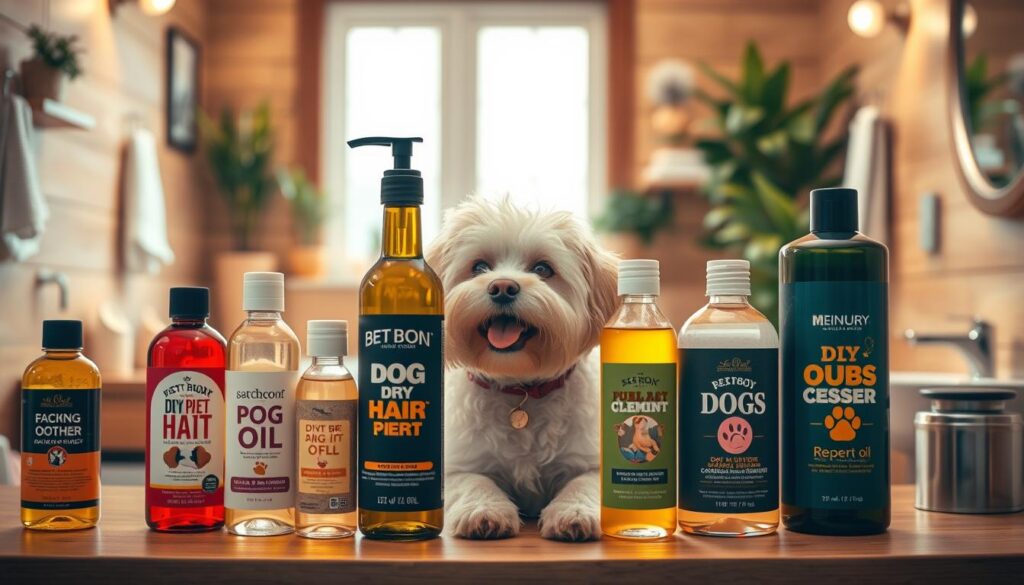
Some companies are known for using natural ingredients in their pet grooming products. Earthbath, TropiClean, and Burt’s Bees for Pets are well-regarded for their focus on pets. They clearly label their products, so you know what you’re using on your pet’s coat.
But, being popular doesn’t mean a product is right for your pet. Make sure the brand gives canine-specific directions and safety warnings. A good company puts your pet’s health first, not just how it looks.
Comparing Ingredients and Formulations
To find the best dog dry hair solutions, compare the ingredients. Look for oils like coconut, jojoba, or argan. These oils moisturize without making your pet’s coat greasy. Also, avoid products with harsh chemicals or artificial fragrances that can harm sensitive skin.
Here’s a table to help you compare different products:
| Feature | High-Quality Option | Low-Quality Option |
|---|---|---|
| Ingredient Source | Natural, plant-based oils | Mineral oils or petroleum |
| Fragrance | Essential oils or unscented | Synthetic perfumes |
| Transparency | Full ingredient disclosure | “Proprietary blend” labels |
The best dog dry hair solutions meet your pet’s specific needs. Always test a small area before using a new product on your dog. This way, you can be sure your dog dry hair solutions are good for your pet.
DIY Dog Dry Hair Oil Recipes
Creating homemade care routines lets us control what touches our dog’s coat. Many commercial products work well, but some owners like DIY dog dry hair remedies for gentle relief. These recipes often use safe, easy-to-find ingredients from our kitchens.
Simple Recipes for At-Home Creation
One great way to fight dry skin is an oatmeal bath. Grind plain oatmeal into a powder and mix it with warm water. This creates a soothing soak that locks in moisture and eases itching.
Looking for more ideas? Check out DIY grooming recipes with natural ingredients. Always rinse your dog well after treatments to avoid residue. Finish with a soft towel to keep them dry and comfortable.
Safety Precautions for DIY Oils
Natural ingredients are usually safe, but our pet’s health comes first. Always do a patch test on a small area before using a new mixture. If there’s redness or irritation, stop using it right away.
“The health of your dog’s skin is a reflection of their overall wellness; always treat it with the utmost care and caution.”
When using DIY dog dry hair remedies, remember these important safety tips:
- Consult your veterinarian before adding new homemade treatments to your dog’s routine.
- Stop your dog from licking treated areas to avoid digestive issues from oil ingestion.
- Don’t apply anything to broken, inflamed, or infected skin.
- Use simple, dog-friendly ingredients and avoid strong essential oils.
By following these tips, we can safely add natural care to our grooming routines. Remember, consistency and watching your dog’s response are crucial for a healthy, hydrated coat.
Customer Reviews and Testimonials
When choosing grooming products for our pets, we often look at what others say. Reading dog dry hair oil reviews can give us an idea of how well certain products work. But remember, every dog is different, so what works for one might not work for another.
Real Experiences from Dog Owners
When reading reviews, focus on specific, noticeable changes. Owners often mention improvements like less flaking, easier brushing, and softer fur. These details are more trustworthy than just general praise.
It’s also important to see how long a product has been used. Using it for weeks shows its true effectiveness better than just one try. Look for patterns in comments that match your dog’s needs, like dryness in certain seasons.
The Impact of Dry Hair Oil on Dogs’ Health
It’s key to know the difference between cosmetic and health benefits. While good oil can make fur look and feel great, it’s not a medical fix. See these products as tools for maintenance and comfort, not treatments.
If your dog shows signs of discomfort or redness after using a new product, stop right away. These could be signs of an allergy or skin issue that needs a vet’s help. Always put your pet’s health first, even if it means skipping the cosmetic benefits mentioned in dog dry hair oil reviews. Your vet is the best person to help with skin problems.
Frequently Asked Questions About Dog Dry Hair Oil
Keeping your dog’s skin healthy is a top priority for every pet owner. We get many questions about how to care for our furry friends. Knowing about grooming products helps you make the best choices for your pet.
Can I Use Human Hair Products on My Dog?
It’s not recommended to use human hair products on dogs. Dogs have a different skin pH than humans. This means our products can harm their natural barrier. Use hydrating dog conditioners made for dogs to keep them safe and healthy.
Are There Any Side Effects?
Most high-quality oils are safe, but some dogs might be sensitive. If your dog shows redness, itching, or irritation, stop using it right away. Also, watch how your dog acts after using the oil:
- Licking: Excess oil can upset their stomach.
- Allergic Reactions: Look out for hives or too much scratching.
- Professional Advice: Talk to your vet if problems keep happening or get worse.
How Long Before I See Results?
How long it takes to see results depends on your dog’s dry skin. Many notice a softer coat in a few days. But, deep hydration takes more effort.
Regular use of hydrating dog conditioners can lead to big changes in two to four weeks. Remember, healthy skin and coat growth take time. It shows your pet’s overall health and what they eat.
Where to Buy the Best Dog Dry Hair Oil
Finding the right place to buy your pet’s products is key. When looking for dog grooming products for dry hair, the choices can be too many. It’s important to buy from trusted sources to get safe and effective products for your dog.
Online Retailers
Shopping online is easy and lets you compare dog grooming products for dry hair from home. Big e-commerce sites let you sort by what’s in the product, how others rate it, and price. Before you buy, make sure to:
- Check the official website to make sure the seller is real.
- Look at recent reviews to see how well the oil works on different coats.
- See if they have a good return policy and how to contact customer service.
- Make sure the ingredient list is clear on the product page.
Local Pet Stores
Going to a local pet store lets you see the packaging up close. You can talk to staff who know a lot about pets and can give advice. When looking for dog grooming products for dry hair, always choose safety first.
Always check the labels to make sure there are no harmful additives. Never buy oils with xylitol or other artificial sweeteners because they are very bad for dogs. If you’re unsure about an ingredient, ask your vet before using it on your dog. Shopping at trusted places keeps your dog safe from harmful chemicals and helps them stay hydrated.
Tips for Maintaining Healthy Skin and Coat
We think a shiny pet comes from within. Topical oils help right away, but for lasting healthy dog coat care, you need a routine. This routine should take care of both the outside and inside of your pet.
Regular Grooming Practices
Brushing your dog often spreads natural oils in their fur. This keeps their coat soft and easy to manage. It also stops mats and lets the skin breathe.
But, don’t wash your dog too much. Washing too often takes away the protective natural oils that keep their skin and fur healthy. Only bathe them when really needed to keep their skin moist.
Nutrition’s Role in Coat Health
What your dog eats affects their skin and hair. High-quality protein is key for dog coat nutrition because hair is mostly protein.
Adding omega-3 and omega-6 fatty acids to their food can make their skin and coat better. Always talk to your vet before adding new supplements. They’ll help figure out the right amount for your pet.
| Factor | Primary Benefit | Frequency |
|---|---|---|
| Brushing | Oil distribution | Daily or Weekly |
| Bathing | Dirt removal | Monthly or As needed |
| Protein Intake | Structural growth | Daily |
| Omega Supplements | Skin hydration | Daily (Vet-approved) |
Conclusion: Making the Best Choice for Your Dog
Choosing the right topical treatment for your dog is important. It must match your pet’s skin needs and the oil’s properties. Options like salmon, flaxseed, or argan oil are good, but choose high-quality ones for your dog’s coat.
Even natural products, like coconut oil for dogs, should be used with care. Too much can upset their stomach or cause weight gain.
Synthesizing Your Pet Care Strategy
Good skin care is more than just using oils. They should be part of a bigger wellness plan. Regular grooming, preventing parasites, and a healthy diet are key for a shiny coat.
Prioritizing Long-Term Wellness
Keep an eye on your dog for any signs of irritation or allergies when trying new products. If you see flaking, redness, or discomfort, talk to your vet. Early action can stop small problems from getting worse.
By being proactive with your pet’s health, you help them stay happy and healthy for a long time.