Did you know that nearly 40% of pets have dull, brittle fur? This is often due to nutritional gaps. A shiny coat comes from a mix of good nutrition, regular grooming, and vet visits.
Looking for quick fixes? Dog hair gloss oil is a finishing touch, not a complete solution. It keeps fur moist and protects against the environment. Remember, it can’t replace a good diet or daily brushing.
Adding dog hair gloss oil to your routine can make your pet’s fur shine. It’s part of a bigger plan for their long-term health. Let’s see how to keep their skin and coat healthy for good.
Key Takeaways
- A shiny coat shows balanced nutrition and health.
- Topical treatments offer protection but don’t replace grooming.
- Regular brushing spreads skin oils and stops matting.
- See your vet if your pet’s fur or skin changes suddenly.
- Sticking to a routine is key for lasting results.
What is Dog Hair Gloss Oil?
Dog hair gloss oil is a grooming aid that makes a dog’s fur look and feel better. It can be applied directly to the fur or mixed into their food. A glossy coat treatment for dogs is essential for a healthy, shiny look. It also helps keep the fur from getting dry and protects it from the environment.
Ingredients Commonly Used
Effective formulas use natural oils that are good for the fur. Coconut oil keeps the fur hydrated, sunflower oil adds vitamins, and flaxseed oil provides essential fatty acids. Some premium products also include fish oils for Omega-3s, which are great for the skin.
| Oil Type | Primary Benefit | Best Use Case |
|---|---|---|
| Coconut Oil | Deep Hydration | Dry, brittle fur |
| Fish Oil | Skin Health | Internal coat support |
| Flaxseed Oil | Omega-3 Boost | Overall shine |
How It Works
There’s a difference between quick shine and long-term health. Sprays give an instant shine by smoothing the hair. They act as a glossy coat treatment for dogs right away. But, supplements work from the inside to improve new hair growth.
Using supplements takes time. You’ll see big changes in about six weeks of regular use. This lets the nutrients work their way into the dog’s body, making the coat healthier and stronger.
Benefits of Using Dog Hair Gloss Oil
Adding a nourishing oil for dog fur to your grooming routine has many benefits. It’s not a replacement for regular baths and brushing. But, it adds an extra layer of care for your dog’s skin and coat.
These oils work best when used alongside your regular grooming routine. They help keep your dog’s coat soft and vibrant all year round. This is by supporting moisture and surface softness.
Promotes a Shiny Coat
Many think oils make hair grow faster. But, a shinier appearance comes from smoother hair and better oil distribution. This makes the coat look healthy and shiny.
Applying a nourishing oil for dog fur seals in moisture. It prevents dullness from dry environments. This creates a reflective surface, making the coat look great without feeling oily.
Reduces Shedding
No oil can stop excessive shedding on its own. The best way to control it is through regular brushing. This removes dead fur from the coat.
Using a nourishing oil for dog fur helps with this. It makes the hair softer, so brushing is easier without breakage. Well-hydrated hair is less likely to break, reducing shedding around your home.
| Grooming Benefit | Primary Method | Role of Oil |
|---|---|---|
| Surface Shine | Regular Brushing | Enhances reflection |
| Coat Softness | Balanced Diet | Locks in moisture |
| Shedding Control | Frequent Brushing | Reduces hair breakage |
| Skin Health | Hydration | Soothes dryness |
How to Choose the Right Product
Finding the right shine enhancing oil for dogs is key for a healthy coat. Every dog is different, so a one-size-fits-all approach doesn’t work. It’s important to consider your dog’s unique traits before buying.
Consider Your Dog’s Coat Type
The type and length of your dog’s fur affect how a product works. Long-haired dogs need light, non-greasy oils to avoid mats. Dogs with coarse hair benefit from richer oils that deeply nourish.
Also, think about your dog’s skin sensitivity. If your dog itches a lot or has red skin, choose hypoallergenic oils. Look for products that soothe the skin and add shine naturally.
Read Product Labels Carefully
When looking at shine enhancing oil for dogs, ignore the front claims. The ingredient list is key. Avoid oils with too many fillers, artificial dyes, or parabens.
Also, consider your dog’s diet and health. If your dog has skin issues or coat problems, talk to your vet first. A good oil should work with a balanced diet, not hide nutritional gaps.
| Coat Type | Recommended Oil Base | Key Benefit |
|---|---|---|
| Long & Silky | Lightweight Argan | Detangling & Shine |
| Short & Smooth | Coconut or Jojoba | Moisture Retention |
| Coarse & Thick | Rich Hemp Seed | Deep Conditioning |
| Sensitive Skin | Oat or Aloe Infused | Soothing & Calming |
By researching these factors, you make sure your shine enhancing oil for dogs is the best. Making informed choices helps your pets stay healthy and happy.
Application Tips for Best Results
Getting the most out of your pet’s grooming means mastering application. Use a top-notch dog fur gloss oil to make their coat shine without feeling greasy. To get a natural coat luster for dogs, be patient and gentle while grooming.
Proper Measurement and Amount
Start with a tiny bit of oil. It’s simpler to add more than it is to take it away. Always follow the specific directions on the label, as different brands have different strengths.
Too much oil can make your dog’s fur look dull and heavy. By using the right amount, the oil goes deep into the hair. This keeps your pet’s skin and coat healthy.
Techniques for Application
Apply the product on clean, damp fur right after a bath. This helps the oil stay in and spread evenly. Massage it into the coat gently, making sure not to irritate the skin.
Remember, applying oils is different from giving them as food. Some oils are safe to eat, but too much Omega-3 can upset a dog’s stomach. Stick to using it on the outside to get that natural coat luster for dogs. Always check with your vet before adding oils to your pet’s diet.
Frequency of Use
Knowing when to apply treatments can greatly improve your dog’s skin and fur health. It’s important not to overdo it, as this can make your pet uncomfortable. Using a premium gloss oil for pet grooming wisely is key to keeping your dog healthy and shiny.
How Often Should You Apply?
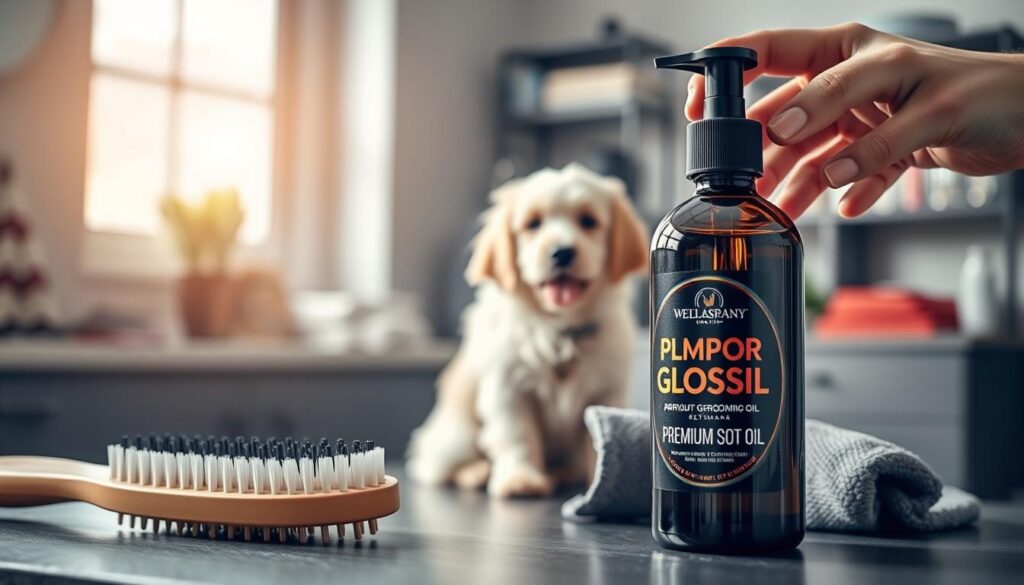
Most dogs do well with treatments once or twice a week, based on their fur type. If you bathe your dog often, apply the oil right after to keep moisture in. Remember, too much oil can cause buildup.
Always follow the instructions on your premium gloss oil for pet grooming. Some oils are for daily use, while others are for weekly care. Start with a small amount to see how your dog reacts before using more.
Signs Your Dog Needs More Care
Even with a good routine, your dog might sometimes need more care. Look out for itching, redness, or dandruff. These signs mean the skin might be irritated or the product isn’t right for your pet.
Hair loss or thin spots are also warning signs. While oil can make fur shiny, it can’t fix health issues. Always put your dog’s health first if you see these signs.
Dog Hair Gloss Oil vs. Traditional Grooming Products
When we talk about keeping dogs clean, we must understand the difference between cleaning and nourishing products. Traditional grooming items like shampoos and conditioners aim to remove dirt. On the other hand, a dog haircare essential oil is meant to add moisture and shine.
Comparing Ingredients
Traditional shampoos use surfactants to clean, but they can also take away natural oils. A good dog haircare essential oil, though, is made with fatty acids that help keep the skin healthy. It’s crucial to choose high-quality oils for the best results.
Always look for fresh, stable ingredients. If the product has oxidized fatty acids, it might not work well or could even irritate your dog’s skin. Keeping the oil in a cool, dark place is essential to maintain its potency.
Performance and Results
Shampoos are great for deep cleaning, but they don’t offer the long-term conditioning that oils do. A dog haircare essential oil works best when applied to a clean, dry coat. This helps reduce frizz and protects the hair from the environment.
It’s a mistake to think oils can replace regular baths. Instead, they should be seen as a complementary tool in your grooming routine. By using both proper cleansing and the right conditioning oil, your dog will have a clean coat and a healthy, shiny look.
Common Myths About Dog Hair Gloss Oil
Many pet owners want a glossy finish for canine fur. But, a shiny coat doesn’t always mean a dog is healthy. Topical oils can make hair look better, but they don’t show if a dog is really well.
Debunking Misconceptions
Some think oil treatments fix all coat problems. But, a dull or brittle coat can mean parasites, nutritional deficiencies, or hormonal imbalances. Using a product for a glossy finish for canine fur might hide these issues instead of solving them.
If your dog’s coat loses its shine, watch for other signs. Look for excessive itching, hair loss, changes in appetite, or unusual tiredness. If you see these signs, along with a dull coat, see a vet.
Understanding the Science
Cutaneous health is linked to a dog’s immune system and metabolism. Chronic stress or infections make the body focus on vital organs, not skin and hair. This can make a dog look dull, even with oils.
It’s key to know the difference between just looking good and being truly healthy. The table below shows how to tell if a shiny coat is just for show or a sign of health.
| Feature | Cosmetic Shine | Internal Health |
|---|---|---|
| Source | Topical oils | Balanced nutrition |
| Duration | Temporary | Long-term |
| Indicator | Surface appearance | Organ function |
| Action | Grooming routine | Veterinary care |
DIY Dog Hair Gloss Oil Recipes
Many pet owners wonder if they can make the best oil for shiny dog hair at home. Using natural ingredients sounds good, but we must be careful. Your dog’s skin is very sensitive, and not all kitchen items are safe.
Simple Homemade Versions
Organic coconut oil is sometimes used to moisturize a dry coat. But use it sparingly to avoid greasiness or dirt attraction. Some oils can also help from the inside when added to food in small amounts:
- Fish Oil: It’s full of Omega-3 fatty acids, good for skin.
- Flaxseed Oil: A plant-based source of essential fatty acids.
- Sunflower Oil: Provides vitamin E, if it’s fresh and of high quality.
Make sure any dietary oil is fresh and stored properly to avoid spoilage. Start with tiny amounts to watch for digestive issues, as sudden diet changes can upset your dog’s stomach.
Essential Oils to Consider
We advise against using concentrated essential oils without a vet’s help. Many oils safe for humans can be toxic or irritating to dogs. Always check with your vet before adding any herbal supplements or extracts.
Your vet can tell you if a specific ingredient is safe for your dog. Getting expert advice ensures you’re giving the best oil for shiny dog hair safely. Always put your pet’s safety first when caring for them.
Customer Testimonials and Experiences
Many pet owners see big changes in their animals after using a moisturizing gloss treatment for dogs. They notice softer fur and fewer tangles when grooming. This is often because of good products, a balanced diet, and regular brushing.
Insights from Pet Owners
Dog owners say their pets feel more comfortable after using these treatments. It makes grooming easier for everyone. Keep an eye on how your pet’s skin and fur react to these treatments.
Professional Grooming Perspectives
Expert groomers say a healthy coat shows a dog’s overall health. While a gloss treatment adds shine, it’s just part of the solution. If you notice redness, hair loss, or itching, see a vet. Taking care of your dog’s health makes them look and feel great every day.