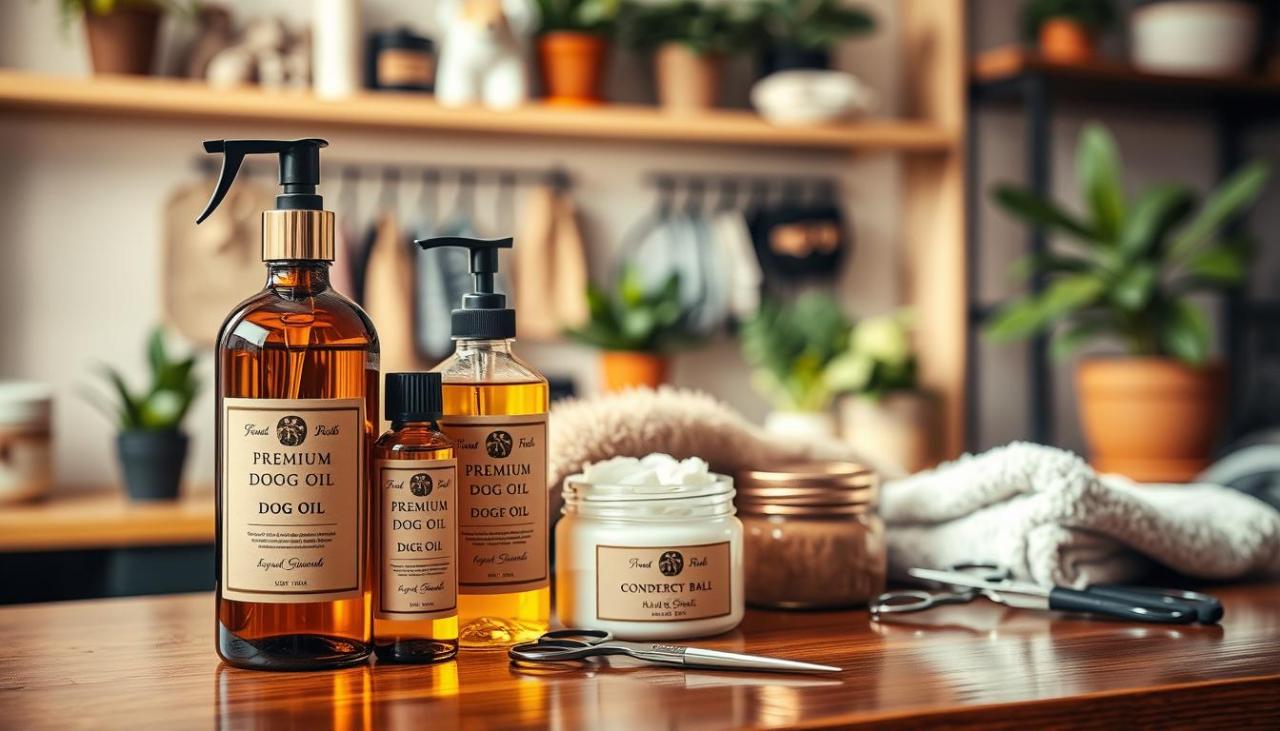
A canine’s skin can lose moisture up to three times faster than human skin. This fast dehydration can cause dull fur and ongoing itching, so owners seek relief. A consistent topical grooming routine helps maintain a healthy, bright coat.
Products for internal use differ from products made for external use. Supplements like CBD are popular, but this guide focuses on specialized topical solutions. The right dog oil for hair growth can improve texture, shine, and hydration.
Choose high-quality ingredients that soothe dry patches and reduce excess shedding. Consult your veterinarian about sudden changes in your companion’s skin health. Proper care keeps your furry friend comfortable and looking their best each day.
Key Takeaways
- Topical treatments provide immediate moisture to dry, brittle fur.
- External applications differ significantly from ingestible wellness supplements.
- Regular grooming helps manage shedding and improves natural luster.
- Always verify ingredient safety before applying new products to your pet.
- Professional veterinary advice is essential for persistent skin conditions.
Understanding the Importance of Dog Hair Growth
Maintaining your pet’s coat is more than grooming; it offers clues about their health. A shiny coat often shows a balanced diet and strong immune system. Changes in texture or thickness tell us to watch our furry companions closely.
Why Coat Health Matters for Dogs
A healthy coat gives dogs a protective barrier against sun, wind, and debris. It also affects a dog’s comfort. Matted or dry fur can irritate skin, causing scratching and distress.
Regular grooming helps us bond with pets and check for skin problems. Adding a natural dog oil may keep skin moist and fur looking healthy. However, oil supports care but cannot cure whole-body health problems.
| Condition | Potential Cause | Recommended Action |
|---|---|---|
| Dull Fur | Nutritional Deficiency | Consult Vet/Diet Change |
| Dry Skin | Environmental Factors | Use Natural Dog Oil |
| Patchy Shedding | Allergies or Parasites | Professional Diagnosis |
Common Reasons for Hair Loss in Dogs
Hair loss, or alopecia, can have many internal and external causes. We may use a natural dog oil to soothe dry skin, but lasting thinning may signal deeper problems. Find the root cause before relying on a topical treatment.
Hair loss may result from these common triggers:
- Allergies: Reactions to food, pollen, or flea bites.
- Parasites: Mites, ticks, or fleas causing intense itching.
- Hormonal Imbalances: Issues like hypothyroidism or Cushing’s disease.
- Nutritional Deficiencies: Lack of essential fatty acids in the diet.
If you see sudden or severe hair loss, consult your veterinarian immediately. A natural dog oil may hydrate skin, but it cannot replace treatment for infections or hormonal shifts. Always follow professional advice when your dog’s health is at stake.
Types of Dog Oils for Hair Growth
Knowing different oils helps you choose a healthier, shinier coat for your canine companion. Pet stores carry products that promise miraculous results, so knowing what you apply is essential for safety and well-being.
Natural Oils vs. Synthetic Options
Many pet owners prefer a natural dog oil because it often lacks harsh chemicals found in mass-produced alternatives. Popular choices include virgin coconut, flaxseed, salmon, and argan oils because they contain many nutrients. These oils often provide fatty acids that support the skin barrier and hair follicle health.
Synthetic or heavily processed products may contain artificial fragrances, stabilizers, or preservatives that irritate sensitive skin. An organic dog oil may seem safest, but “natural” does not mean safe for every dog. Always check the ingredient list for hidden additives that could trigger an allergic reaction.
“The quality of the ingredients you choose directly reflects the health of your pet’s skin and coat, making informed selection a vital part of grooming.”
Best Essential Oils for Dog Coat Care
Essential oils are highly concentrated plant extracts, so use them with extreme caution around pets. Some people support their use, but many varieties can poison dogs or cause severe irritation. Tea tree and wintergreen oils, for instance, are dangerous and should never enter your grooming routine.
If you choose a natural dog oil with essential components, ensure it is made for dogs and properly diluted. A high-quality organic dog oil will clearly state its concentration levels and provide usage instructions. When unsure, consult your veterinarian before introducing any new concentrated oil to your dog’s coat care routine to prevent accidental toxicity.
Key Ingredients to Look for in Dog Oils
Checking active ingredients helps owners choose the best canine oil for hair growth. These ingredients can support your pet’s skin health and coat strength.
Omega Fatty Acids and Their Benefits
Omega-3 fatty acids often lead high-quality coat supplements. These essential fats come from salmon oil or flaxseed oil and support the skin’s moisture barrier.
With enough omega fatty acids, your dog may show several visible improvements:
- Increased softness and silkiness of the fur.
- Reduced dryness and flakiness of the skin.
- Improved comfort for dogs with sensitive or itchy skin.
Vitamins and Minerals Essential for Hair Growth
Vitamin E protects skin cells from oxidative stress, making it common in premium canine oil for hair growth.
Argan oil is popular for its conditioning effects. It nourishes hair follicles and adds shine without making the coat greasy.
These ingredients condition the coat, but they support the natural growth cycle, not instant regrowth. Choosing a canine oil for hair growth helps your dog receive balanced skin and coat care.
Top Recommended Dog Oils for Hair Growth
We reviewed popular products to help you find the best dog hair growth oil. The right choice depends on your dog’s skin type and dietary needs. Each dog may react differently to supplements.
Review of Popular Brands and Products
When owners seek a reliable pet oil for hair growth, many choose high-quality salmon oil. Brands like Grizzly Salmon Oil earn praise for their Omega-3 fatty acids, which support a shiny, strong coat. These oils often come from wild-caught fish for purity and strength.
Unrefined coconut oil offers another popular topical and dietary choice. Its natural antifungal properties may soothe dry, itchy skin. Salmon oil nourishes from within, while coconut oil adds moisture to brittle hair.
Effectiveness Based on Customer Feedback
Many users report better coat texture after using these oils regularly. Owners often see less shedding and more hair luster within a few weeks. These reports show how quality oils may support a daily care routine.
Results can vary based on the cause of hair loss. These products cannot replace veterinary care when a medical condition exists. Watch your dog closely to see how they respond to the supplement.
| Product Type | Primary Benefit | Best For |
|---|---|---|
| Salmon Oil | Omega-3 Rich | Overall Coat Shine |
| Coconut Oil | Antifungal/Moisturizing | Dry, Itchy Skin |
| Flaxseed Oil | Plant-based Omega | Sensitive Stomachs |
Choosing the best dog hair growth oil means matching your pet’s needs with proven ingredients. Select a pet oil for hair growth that fits your dog’s health profile. This choice can help maintain a vibrant, healthy coat for years.
How to Apply Dog Oil for Best Results
How you apply dog oil for hair growth to your pet’s coat can affect the final results. Proper technique helps nutrients reach the skin and hair follicles without leaving a greasy residue.
Application Techniques for Optimal Absorption
Place a small amount of product in your palms. Rub your hands together to warm the oil and spread it evenly across your dog’s fur.
Gently massage the oil into dry areas, especially where the coat looks thin or brittle. Your fingertips can reach the skin, helping blood flow and healthy growth.
After massaging, use a soft-bristle brush to spread the oil from roots to tips. This helps each strand receive hydration and protection.
“Consistency in your grooming routine is far more important than the quantity of product used. A little bit of care applied regularly yields the best transformation for your pet’s coat.”
Frequency of Use for Maximum Benefits
How often to use dog oil for hair growth depends on your pet’s skin type and coat condition. Start with weekly use, then watch how your dog responds.
For a very dry coat, twice-weekly applications may work better. Dogs with naturally oily skin may need treatment every ten days to prevent buildup.
| Coat Condition | Application Frequency | Recommended Amount |
|---|---|---|
| Dry and Brittle | Twice Weekly | Moderate |
| Normal/Healthy | Once Weekly | Small |
| Oily/Sensitive | Every 10-14 Days | Very Small |
Check your pet after each session to ensure the skin stays clear and comfortable. Adjust your schedule based on these observations to maximize your chosen dog oil for hair growth.
Signs Your Dog Needs Hair Growth Oil
Watching your dog’s skin and fur can reveal clues about overall health and nutritional needs. A shiny coat often shows vitality, but changes in texture or density may signal a need for extra support. Monitor these changes closely to keep your companion comfortable and healthy.
Identifying Thinning or Bald Spots
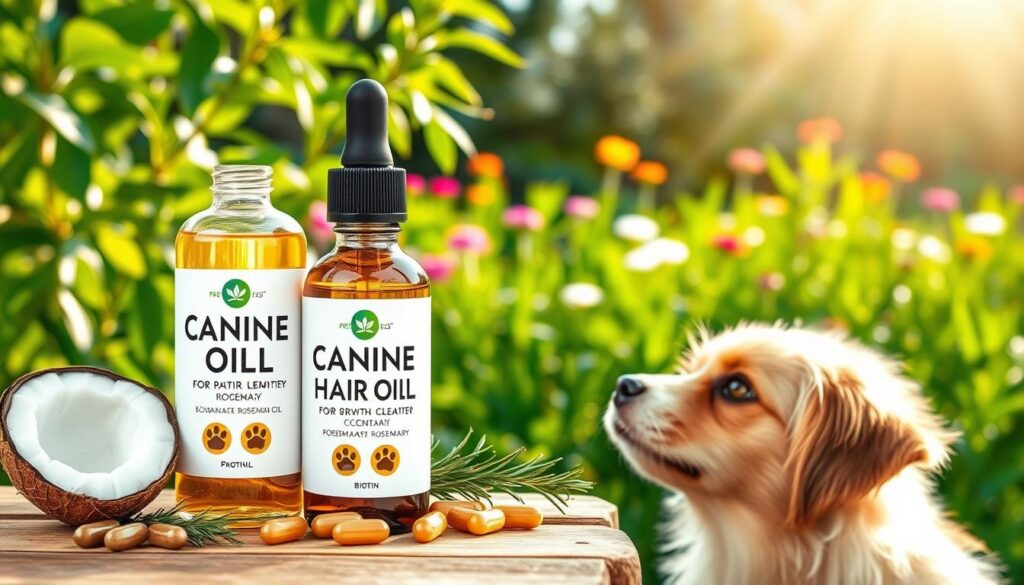
Thinning patches are a common sign your pet might benefit from a canine oil for hair growth. Fur may look sparse where it once grew thick, including along the back or near the tail. Small, circular bald spots can also appear and often need closer attention.
Check these spots for irritation or redness. Natural oils may soothe skin, but they cannot replace veterinary care when hair loss is sudden or widespread. Get a diagnosis before any new regimen to rule out allergies or infections.
Other Symptoms of Poor Coat Health
Other signs can show that your dog’s coat needs help. Fur may feel brittle or dry, or lose its natural shine. Shedding beyond seasonal changes can signal a need for better nutritional support.
When considering dog hair growth remedies, remember that flaky skin or ongoing scratching may accompany a dull coat. These signs suggest a damaged skin barrier that needs moisture. Early care may prevent discomfort and help restore your dog’s natural luster.
| Condition | Visual Sign | Recommended Action |
|---|---|---|
| Dry, Flaky Skin | White flakes on fur | Use hydrating oils |
| Dull, Brittle Fur | Lack of natural shine | Check diet and supplements |
| Localized Thinning | Small, sparse patches | Consult vet and use remedies |
| Excessive Shedding | Heavy hair loss | Grooming and oil treatment |
DIY Dog Oil Recipes for Hair Growth
DIY coat care requires a careful balance of natural ingredients and safety. Many owners want good care, but your dog’s health should come before complex mixtures. Keep recipes simple to help prevent accidental harm.
Simple Recipes Using Common Ingredients
When choosing a reliable pet oil for hair growth, unrefined, organic coconut oil is often the safest starting point. It moisturizes naturally and lacks additives found in many human products. Check labels carefully because some human lotions or oils contain xylitol, which is highly toxic to dogs.
For a basic topical treatment, gently warm a small amount of coconut oil between your palms until it melts. Apply it sparingly to dry patches or thinning coat areas. This is one of the most effective dog hair growth remedies because it limits irritation from chemical additives.
| Oil Type | Primary Benefit | Best Use Case |
|---|---|---|
| Coconut Oil | Deep Hydration | Dry, flaky skin |
| Olive Oil | Coat Shine | Dull, brittle fur |
| Almond Oil | Soothing | Itchy, irritated skin |
Safety Precautions When Making Your Own Oil
Before making homemade blends, consult your veterinarian. Professional guidance helps ensure ingredients suit your dog’s skin type and health history. Never assume a natural product is safe because it is organic or food-grade.
Avoid concentrated essential oils because they may overwhelm or harm a dog’s sensitive nose and skin. Monitor your pet closely after application to prevent excessive licking. If your dog consumes too much oil, it may cause digestive upset or unwanted weight gain.
Always perform a small patch test on a tiny skin area before applying any mixture to the entire body. Use these dog hair growth remedies carefully to support your pet’s coat health. A pet oil for hair growth should supplement, not replace, proper veterinary care.
Nutritional Support for Coat Health
Your pet’s fur reflects the nutrients they consume every day. People often seek quick fixes, but your dog’s internal health forms the foundation for a vibrant, thick coat. Without proper building blocks, even expensive treatments may struggle to show visible results.
Importance of a Balanced Diet
A high-quality diet must provide enough protein, the main component of hair strands. Without enough protein, a dog’s body supports vital organs before hair growth, causing a dull or brittle coat. Complete nutrition also needs balanced essential fatty acids and minerals to protect skin integrity.
Calories also support overall health. An unbalanced diet may lack energy for the skin to repair itself. When choosing an organic dog oil, remember it works best with a diet supporting the body’s natural regenerative processes.
Supplements That Complement Hair Growth Oil
Sometimes, a standard diet needs extra help to reach peak performance. Many owners choose dog hair growth supplements, such as salmon or flaxseed oil, for extra Omega-3s. These additions may reduce inflammation and improve fur texture from the inside out.
However, approach these additions with caution. It is essential to consult your veterinarian before adding a supplement to your pet’s routine. They can determine the correct dosage and check whether it interferes with your dog’s existing nutritional plan or medications.
“Proper nutrition is the silent partner in every grooming routine, providing the necessary fuel for a healthy and resilient coat.”
Grooming Tips to Enhance Oil Effectiveness
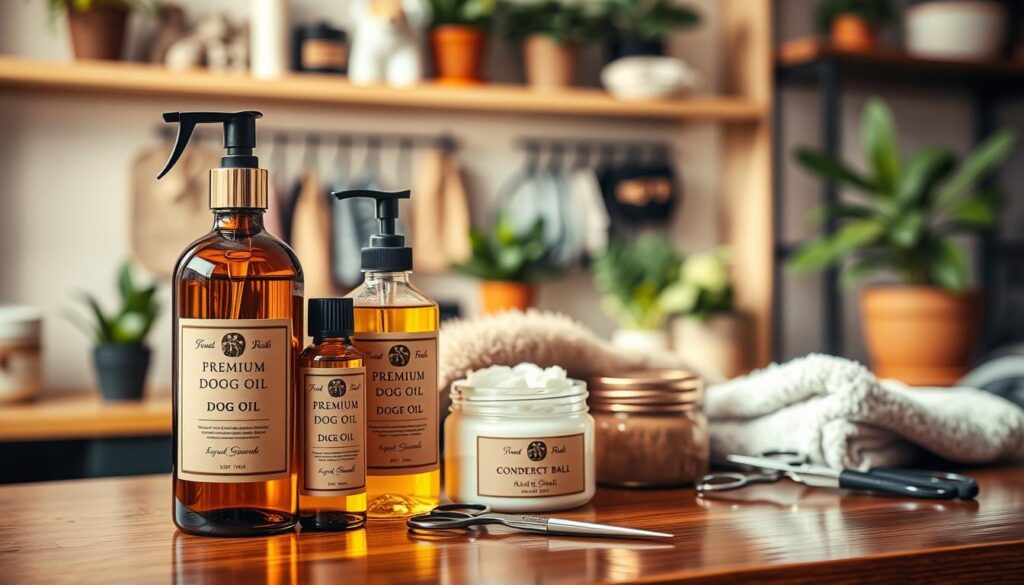
A healthy coat depends on how you add oils to daily grooming sessions. High-quality dog hair care products provide nutrients, while grooming helps those ingredients reach the skin. A steady routine spreads natural and added oils evenly across the body.
Brushing Techniques for Healthy Coats
Gentle brushing moves oil from the skin down each hair shaft. Use a soft-bristled brush or grooming glove right after applying treatment. This keeps oil from collecting in one place and causing a greasy or matted appearance.
Brush in the direction hair grows to prevent discomfort or breakage. If excess oil collects on the surface, gently wipe it away with a clean cloth. Even coverage helps your dog hair care products reach the skin instead of coating only the outer fur.
Bathing Tips That Work with Oils
Bathing should support oil treatments, not remove them. Use a mild, soap-free cleanser made for canine skin. Avoid hard scrubbing because it can irritate follicles and remove beneficial oils.
Massage shampoo gently into the coat, then rinse thoroughly with lukewarm water. Let your dog’s skin guide how often you reapply oils after bathing. If the skin feels dry, apply a little oil to slightly damp fur to lock in moisture.
| Grooming Tool | Primary Benefit | Best Use Case |
|---|---|---|
| Soft-Bristle Brush | Even oil distribution | Daily maintenance |
| Rubber Grooming Glove | Massages skin/follicles | Post-application |
| Microfiber Cloth | Removes excess oil | Preventing greasy spots |
| Wide-Tooth Comb | Detangles long fur | Before oil application |
Common Myths About Dog Hair Growth Oils
Separating marketing hype from biology helps owners provide better pet care. Many owners try dog hair care products to fix thinning fur, but topical solutions have limits.
Debunking Misconceptions
Many people believe oil will make hair follicles grow new fur, whatever the cause. Oils are useful for conditioning the fur and moisturizing dry skin, but they cannot cure whole-body problems. Hormone imbalances, parasites, and severe allergies need more than topical oils.
“True coat health is a reflection of internal wellness, not just the surface-level application of oils or lotions.”
Another myth says all oils are equal because of how manufacturers process them. Unrefined oils are not always better; product safety and effectiveness depend on source quality and the exact formula. Choose products made for canine skin pH, not human alternatives.
Understanding the Science Behind Hair Growth
Dog hair growth is a complex process shaped by genetics, nutrition, and overall health. Topical oils mainly form a barrier. This barrier prevents moisture loss and protects hair shafts from environmental damage. Oils cannot start the growth cycle in dormant follicles.
When you use dog hair care products, you support the existing coat by reducing breakage and improving texture. Consistency is key, but pair it with a balanced diet and regular veterinary checkups. Knowing these limits helps you choose wisely and support your pet’s long-term coat health.
Monitoring Progress After Using Dog Oils
We recommend a simple plan to track how your dog responds to new treatments. When using dog hair growth supplements or topical oils, you may forget how the coat looked a few weeks earlier. Keep a steady log to make informed choices about your pet’s wellness journey.
What to Look for in Changes
Record details in a notebook or digital app to track changes. Focus on the texture and appearance of the fur, including softness and natural shine. Also track shedding patterns, since many owners find that high-quality fish oil for dogs helps stabilize the coat cycle.
Watch the skin beneath the fur for less redness, flaking, or ongoing itching. For thin areas, take photos every two weeks and compare hair density over time. Consistent documentation best verifies whether your dog hair growth supplements work.
When to Consult a Veterinarian
Although many natural oils are safe, dogs can react differently to diet or grooming changes. Contact your veterinarian immediately if you see hives, swelling, or excessive scratching. These signs may show an allergy or sensitivity to an ingredient.
If irritation worsens or new hot spots develop, seek professional advice. After months using dog hair growth supplements, a vet can check persistent bald spots. Your pet’s comfort is the top priority, so seek guidance to rule out hormonal or thyroid issues.
Conclusion: Choosing the Right Dog Oil for Your Pet
Improving your pet’s coat requires thoughtful product choices. The right dog oil for hair growth can support your grooming routine when chosen carefully.
Evaluating Quality and Safety Standards
Choose products that list natural, non-toxic ingredients on the label. Avoid harsh chemicals and artificial fragrances that may irritate sensitive skin. The best dog hair growth oil should match your breed’s needs and skin sensitivities.
Building a Sustainable Care Routine
Consistency remains the most important factor for visible results. Pair your topical treatment with a balanced diet and regular brushing. If problems continue or progress stops, contact your veterinarian for professional guidance.
Watch your pet closely during application. Informed choices today can support a healthier, shinier coat in the long run. Start your search for the best dog hair growth oil with transparency and proven results.
Effective care involves more than one bottle of dog oil for hair growth. It requires commitment to your pet’s overall wellness and happiness. We hope this guide helps you make the best choices for your furry friend.