Did you know that an animal’s skin is the largest organ in its body? It often shows signs of internal distress first. We think knowing the basics of grooming and nutrition is the first step to your pet’s health. A healthy pet coat is key to their overall wellness.
Sticking to daily habits is crucial for a happy life. Proper nourishment and regular brushing support the body. This helps spot issues early, before they get worse.
By focusing on these simple routines, we keep our pets comfortable and active. Getting a healthy pet coat strengthens our bond with them. Let’s see how these small steps lead to big benefits for our pets.
Key Takeaways
- Skin health serves as a primary indicator of internal well-being.
- Consistent grooming habits prevent future medical complications.
- Nutrition plays a critical role in maintaining fur quality.
- Proactive care helps identify hidden health issues early.
- Daily attention fosters a stronger bond with your animal.
Understanding the Importance of a Healthy Pet Coat
The state of your pet’s skin and hair tells us a lot about their health. We often forget that the skin is the biggest organ in the body. Keeping it healthy is key to our pets’ well-being.
Benefits of a Shiny Coat
A shiny coat for pets is more than just looks. It shows that the hair is smooth and well-nourished. This shine is a sign that your pet is getting the nutrients they need.
A healthy coat also protects your pet from the outside world. It helps keep their body temperature right and keeps the skin safe from harm. When your pet’s coat looks great, it means they’re doing well inside too.
Indicators of Coat Health
To check if your pet is healthy, look beyond the surface. A good coat feels soft and not rough. Regular touch tests can spot problems early.
Watch for these signs to see how your pet is doing:
- Texture: The fur should be smooth and even, not tangled or too dry.
- Skin Surface: Healthy skin is clear and pink, without redness, bumps, or flakes.
- Odor: A healthy pet coat smells neutral; a strong smell might mean an infection.
- Shedding: Some shedding is okay, but too much or bald spots are warning signs.
If your pet’s fur is dull or oily, it’s time to check their diet or grooming. Getting a shiny coat for pets takes effort and attention. By watching closely, we can keep our pets happy and healthy.
Essential Nutrients for Your Pet’s Coat
The skin is the body’s largest organ and needs constant nourishment. Skin cells replace themselves quickly, so pets need a steady supply of nutrients. Focusing on pet nutrition for coat health helps provide the necessary building blocks for a strong and shiny coat.
A balanced diet does more than just improve appearance. It also helps the liver and kidneys work less hard. By choosing high-quality ingredients, we support the systems that keep the skin and fur healthy. This is the key to a truly healthy pet coat.
Key Vitamins for Healthy Fur
Vitamins are crucial for skin repair and hair growth. Vitamin A is very important as it helps control skin cell production and prevents dryness. Without enough of these nutrients, the skin can become flaky and the coat may lose its shine.
B-complex vitamins, including biotin, are key for strong hair follicles. These vitamins help keep the skin barrier strong against environmental stress. By making sure these vitamins are in your pet’s food, you help them stay healthy for a long time.
Role of Omega Fatty Acids
Omega-3 and Omega-6 fatty acids are essential for skin and coat health. These healthy fats reduce inflammation, which can cause itching and irritation. Pet nutrition for coat health is not complete without these essential oils, as they nourish the skin from the inside.
Adding these fatty acids to your pet’s diet helps create a natural barrier that keeps moisture in. This makes your pet’s fur softer and easier to manage. A consistent intake of these nutrients is the best way to keep your pet’s coat healthy and strong.
Grooming Techniques to Enhance Coat Health
We think regular grooming is key for a healthy pet coat. Doing pet grooming often helps get rid of dead skin and spreads natural oils. This keeps the skin moist and the coat shiny.
Best Tools for Grooming
Choosing the right tools is crucial. For pets with long or curly hair, a slicker brush is best. It gets deep into the undercoat. Metal combs are great for detangling tough knots, like those near the ears and armpits.
For pets with short, smooth coats, a rubber curry brush is perfect. It removes loose hair. These tools help keep our homes dander-free. Always pick tools that fit your pet’s hair type for a comfy grooming session.
Frequency of Grooming Sessions
The grooming schedule depends on your pet’s breed and coat length. Dogs with long, silky, or curly coats need daily brushing. This prevents tangles and mats that can hurt.
For pets with shorter hair, weekly grooming is enough. A regular routine helps spot skin issues or parasites early. This keeps our pets comfortable and tangle-free all year.
The Role of Diet in Coat Quality
A shiny coat begins with a good diet, not just grooming. Pet nutrition for coat health is key. A balanced diet helps your pet’s body focus on a strong, shiny coat.
A bad diet can make your pet’s coat dull and dry. It can also cause too much shedding. Good food gives your pet the right stuff for healthy skin and fur.
Recommended Dog and Cat Foods
Choosing the right food is crucial for your pet’s health. It matters whether your pet is a puppy, an adult, or a senior. High-quality proteins and healthy fats keep the coat from looking dull.
Look for foods with whole meat as the first ingredient. These premium foods are like the best pet coat products. They nourish the skin deeply. If you’re unsure, ask your vet to check if the food is right for your pet.
Importance of Hydration
Water is as important as food for a healthy coat. It keeps the skin moist and prevents dryness. A hydrated pet has softer fur.
Make sure your pet always has fresh water. If they don’t drink much, try wet food or a pet water fountain. Keeping them hydrated boosts their health and looks.
Seasonal Care Tips for Your Pet’s Coat
When the seasons change, it’s time to think about pet coat maintenance again. The weather affects our pets’ skin and fur all year. By adjusting our grooming to the weather, we keep them comfortable and healthy.
Summer Coat Care Essentials
As it gets warmer, pets shed their thick winter coats. This can cause hair clumps that need regular brushing to avoid mats. Regular grooming in summer helps remove loose fur and keeps the skin cool.
Summer also brings special challenges. Here are some tips to help your pet stay cool:
- Brush your pet daily to manage heavy shedding cycles.
- Check for ticks and fleas more frequently during outdoor play.
- Ensure your pet stays hydrated to support skin elasticity and overall health.
- Use pet-safe sunscreen on exposed areas if your companion has thin fur.
Winter Coat Maintenance
In winter, our homes can get very dry. This dry air often causes dry, itchy skin in pets. Good pet coat maintenance in winter means keeping the skin moist and protected.
Here are ways to protect your pet from winter’s harsh air:
- Use a humidifier in rooms where your pet spends the most time.
- Limit the frequency of baths to prevent stripping natural oils from the skin.
- Incorporate omega-3 fatty acids into their diet to support a healthy skin barrier.
- Wipe paws after walks to remove salt or ice-melting chemicals that cause irritation.
By paying attention to these seasonal changes, we give our pets the best care. Regular pet coat maintenance keeps their fur shiny and their skin moist all year.
Common Coat Issues and Solutions
Dealing with skin problems in pets often needs more than just grooming. We aim to keep their coats looking great but must watch for signs of health issues. Regular grooming tips for healthy pet coat care helps us catch these signs early.
Identifying Skin Conditions
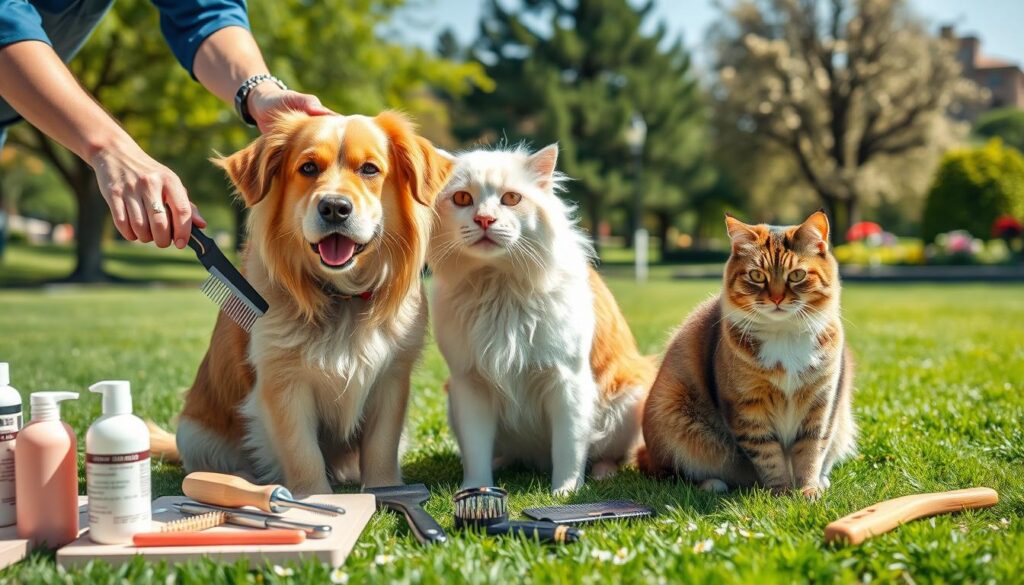
Many pets face allergic skin diseases or seborrhea, affecting their quality of life. These issues cause itching and change skin oil production, leading to greasy or flaky coats. Watching your pet closely is key to spotting these problems early.
“The health of a pet’s skin is often a direct reflection of their internal well-being and overall vitality.”
If your pet scratches a lot, shows redness, or smells bad, it’s time to see a vet. Many skin conditions improve with proper treatment. While grooming tips for healthy pet coat care helps, it’s not a replacement for medical treatment for chronic conditions.
Dealing with Shedding Problems
Excessive shedding can be a sign of health issues, not just a seasonal change. While some hair loss is normal, unusual bald spots or sudden shedding are red flags. Keep an eye on your pet’s behavior for signs of excessive scratching.
To tackle shedding, try these steps:
- Use a high-quality de-shedding tool to remove loose undercoat.
- Maintain a balanced diet rich in essential fatty acids.
- Schedule regular check-ups to rule out hormonal imbalances.
By being proactive with grooming tips for healthy pet coat routines, we protect our pets’ long-term comfort. Remember, your efforts are the first line of defense for your furry friend’s well-being.
Natural Remedies for a Lustrous Coat
Getting your pet to look radiant can start with simple, natural ingredients. We think natural pet care is key for long-term skin health. Choosing gentle solutions helps avoid harsh chemicals found in many grooming products.
Homemade Coat Conditioners
Using soothing botanicals is great for sensitive skin. An aloe and oatmeal shampoo is good for regular baths. It calms irritation and brings back natural moisture.
These ingredients hydrate hair follicles from the outside. For more tips on keeping your pet’s fur shiny, check out these dog coat shiny healthy tips. Here are some benefits of natural conditioning:
- Aloe Vera: Hydrates and cools dry, itchy patches.
- Colloidal Oatmeal: Locks in moisture and protects the skin.
- Gentle Cleansing: Removes dirt without stripping natural oils.
“Nature offers the most effective tools for maintaining the integrity of a pet’s skin barrier, provided we use them with consistency and care.”
Herbal Supplements to Consider
Topical treatments are important, but true luster comes from within. Adding pet coat supplements to your pet’s daily routine is key. These supplements provide essential fatty acids for a shiny coat for pets.
When looking for the best pet coat products, choose formulas with high-quality, plant-based ingredients. Many owners see a big difference in texture and shine by adding specific herbs or oils to their pet’s diet. Always talk to your vet before adding new supplements to make sure they’re right for your pet.
Regular Veterinary Check-ups for Coat Health
Your pet’s coat is like a mirror, showing their health and any hidden problems. While grooming is important, the real state of their fur shows their internal health. Professional veterinary care is key to keeping your pet’s coat vibrant and healthy.
Signs Your Pet Needs to See a Vet
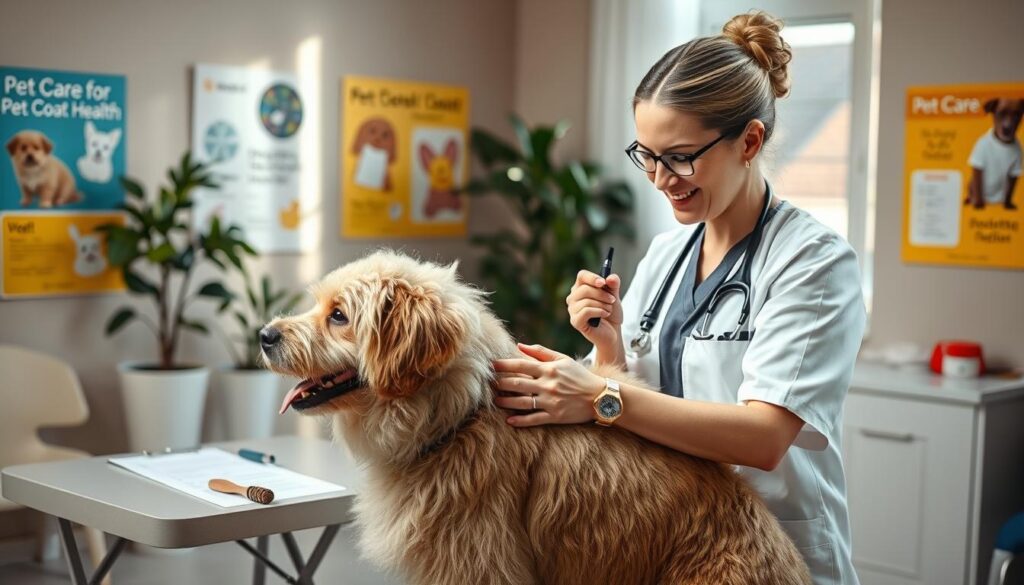
A dull coat can mean internal health issues that need a vet’s help. Look for persistent dandruff, an unusual smell, or sudden hair texture changes. These signs can point to problems like hypothyroidism or stress.
While natural pet care can help with minor issues, it’s not a substitute for a vet visit. Hair loss or inflamed patches need a vet to check for infections or parasites. Using pet coat supplements without a vet’s advice might hide deeper health problems.
Vaccinations and Skin Health
Keeping up with vaccinations is crucial for your pet’s immune system and skin health. A strong immune system fights off infections that can harm the skin. Always talk to your vet about your pet’s needs during routine visits.
| Symptom | Potential Concern | Recommended Action |
|---|---|---|
| Persistent Dandruff | Dry skin or metabolic imbalance | Veterinary blood panel |
| Unusual Odor | Bacterial or yeast infection | Clinical skin scraping |
| Sudden Hair Loss | Hormonal or stress issues | Professional diagnosis |
| Dull, Brittle Fur | Nutritional deficiency | Dietary review and supplements |
Being proactive ensures your natural pet care is safe and works well. Always check with your vet before adding new pet coat supplements. Consistent monitoring and expert advice keep your pet looking and feeling great.
Building a Routine for Optimal Coat Care
Being consistent makes grooming a special time for you and your pet. Breaking tasks into short, frequent intervals helps avoid stress. It keeps your pet calm during grooming.
Daily and Weekly Care Checklist
Begin your day with a quick brush to remove loose hair and debris. This simple habit helps maintain your pet’s coat by spreading natural oils. Set aside one afternoon each week for a deeper check of the ears, paws, and undercoat. This helps catch any issues early.
Incorporating Play and Exercise
Make grooming fun by using treats or favorite toys. A tired pet is usually more relaxed, making grooming a joy for all. Quality time is key to strengthening your bond with your pet. Keep these moments fun to make your pet look forward to the next session.