Did you know that nearly 40% of all vet visits in the U.S. are for skin and fur issues? Your pet’s coat is a vital window into their health. Proper nutrition and grooming lead to a vibrant, shiny coat.
We think consistent care is key for a happy pet. By using dog coat strengthening methods, we can catch problems early. This keeps your pet comfortable and looking great every day.
Our guide offers expert tips for canine wellness. By following these simple steps, you can strengthen your dog’s coat and improve their mood. Let’s make your pet’s life better with better habits.
Key Takeaways
- Skin and fur health show your pet’s overall health.
- Good nutrition is essential for a soft, strong coat.
- Regular grooming spots health issues early.
- Emotional wellbeing is tied to your pet’s physical comfort.
- Proactive care makes your pet happier and more vibrant.
Understanding Dog Coat Types
Knowing your dog’s coat type is key to keeping their coat healthy for a long time. Each breed has its own hair type. This affects how their skin makes and spreads natural oils.
Understanding these differences helps us give our pets the care they need. Canine coat care varies greatly. Each coat type needs a special grooming routine.
The Importance of Knowing Your Dog’s Coat
Knowing your dog’s fur needs helps avoid problems like mats and dryness. Different coats protect dogs from the weather. Keeping them healthy supports their overall well-being.
Consistency is crucial in caring for their coat. Whether your dog has a thick undercoat or a smooth topcoat, the right care keeps them happy and healthy all year.
Common Coat Types and Their Needs
We’ve grouped common dog coat types to make caring for them easier. Each type needs a specific care plan for the best canine coat care and coat health for dogs.
| Coat Type | Texture Description | Grooming Frequency | Primary Need |
|---|---|---|---|
| Smooth/Short | Very short, close to skin | Weekly | Natural oil distribution |
| Double Coat | Soft undercoat, harsh topcoat | Daily/Bi-weekly | Undercoat shedding control |
| Curly/Wavy | Dense, tight curls | Frequent | Preventing painful mats |
| Wire-Haired | Coarse, bristly texture | Regular stripping | Maintaining texture integrity |
Nutritional Insights for a Strong Coat
We believe that true dog coat strengthening starts from the inside with good nutrition. A shiny coat shows a healthy body. By choosing the right food, you help your pet’s coat from the inside out.
Essential Nutrients for Healthy Fur
Some nutrients are key for strong skin and hair. Omega-3 fatty acids are crucial for keeping skin moist and reducing inflammation. Zinc helps the thyroid and prevents brittle hair.
Biotin, a B-vitamin, strengthens hair. When these nutrients work together, they protect against harm from the outside. Consistent intake of these nutrients leads to a shiny coat.
“The quality of a dog’s coat is a mirror reflecting the quality of their nutrition; feed them well, and they will shine.”
Best Foods for Coat Strengthening
Choosing the right food is key for a strong coat. Foods with high-quality proteins like salmon or chicken are best. Look for these proteins as the first ingredient in commercial diets.
The table below shows important foods for a healthy coat:
| Nutrient | Primary Benefit | Food Source |
|---|---|---|
| Omega-3 | Reduces dryness | Fish Oil |
| Zinc | Skin repair | Lean Meats |
| Biotin | Hair strength | Egg Yolks |
Supplements That Can Help
Even with a balanced diet, sometimes more is needed for a healthy coat. Supplements can help with shedding or dullness. Always talk to your vet before adding new supplements.
Adding fish oil or skin-support chews can greatly improve your dog’s coat. These supplements provide extra fatty acids that regular food might not offer. With the right nutrition, your pet’s coat will look much better.
Grooming Techniques for Coat Health
Learning how to care for your dog’s coat can make them feel better and look great. Regular grooming is key to keeping your dog’s fur in top shape. It also helps you keep an eye on their skin health.
Brushing: Tools and Techniques
Brushing helps spread natural oils, which is good for your dog’s coat. Choose a brush that fits your dog’s fur type. For long hair, use a slicker brush. For short coats, a rubber curry brush works best.
Brush in the direction of hair growth to avoid irritation. This way, you remove loose fur and debris before it causes problems.
Bathing Best Practices
Don’t wash your dog too often, as it can dry out their skin. Most dogs need a bath every three months unless they get dirty.
When you do bathe them, use a dog-specific shampoo. Make sure to rinse well to avoid skin irritation.
When to Consult a Groomer
At times, you might need a professional groomer to keep your dog clean. Look for signs like matting, red skin, or bad smells. It’s time to see a groomer then.
They have the right tools and know-how to handle tough coat problems. A pro can keep your dog safe and comfortable during grooming.
| Grooming Task | Recommended Frequency | Primary Tool |
|---|---|---|
| Daily Brushing | Every 1-2 days | Slicker or Pin Brush |
| Deep Bathing | Every 3 months | Canine-specific Shampoo |
| Nail Trimming | Every 4-6 weeks | Safety Clippers |
| Professional Grooming | As needed/Seasonal | Professional Shears |
Environmental Factors Impacting Coat Strength
Many of us don’t think about how our pets’ surroundings affect their looks and health. Nutrition is key, but where your dog lives matters too. Environmental stressors quietly affect a pet’s fur shine and strength.
Seasonal Changes and Coat Care
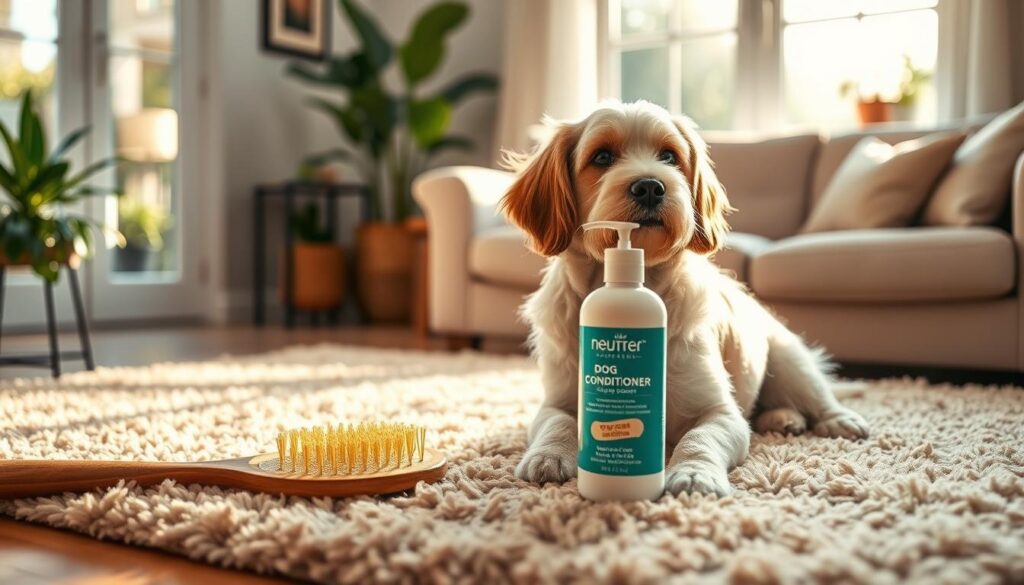
When seasons change, dogs adjust to stay warm or cool. This can lead to more shedding or texture changes. Keeping up with canine coat care helps them handle these changes well.
Big changes like moving or going on vacation can stress dogs. This stress can make their coat look dull or brittle. Keeping a regular routine helps your pet feel secure and keeps their coat healthy.
Protecting Your Dog from Harsh Elements
Extreme weather, dry air, and too much sun can dry out your dog’s skin. It’s important to protect their skin to avoid irritation. Using a humidifier can help keep their coat moist.
In winter, salt and cold winds can harm their paws and skin. Clean their paws after walks and use safe balms to keep them moist. Taking care of these issues keeps your dog comfortable and their coat strong all year.
Common Coat Problems and Solutions
Skin health is key to a shiny coat. Knowing how to spot problems is crucial. By watching closely, we can keep our pets comfy all year. Catching signs early helps avoid pain.
Identifying Skin Issues
Many skin problems come from outside factors. Fleas and ticks can cause itching, redness, and hair loss. Yeast infections show up with a bad smell and oily, inflamed skin.
Look for these signs:
- Persistent scratching or biting at specific areas.
- Visible dandruff or flaky skin patches.
- Unusual redness or swelling around the belly and paws.
- Patches of hair loss or thinning fur.
How to Treat Dry and Itchy Skin
For dry skin, use hair care for dogs that adds moisture. Oatmeal-based shampoos help soothe without drying out. Make sure your dog drinks plenty and eats omega-3s.
“Healthy skin is the mirror of a dog’s internal well-being; when the skin is nourished, the coat naturally follows suit.”
If itching won’t stop, see your vet. They can check for allergies or other health issues. Sometimes, a simple change in grooming or environment helps a lot.
Dealing with Shedding
Shedding is normal, but too much can mean a health issue. Know the difference between seasonal shedding and abnormal loss. Regular brushing helps manage loose fur.
If you see sudden hair loss, get advice from a vet. Good hair care for dogs means keeping up with grooming to support skin and coat health.
Importance of Regular Veterinary Check-Ups
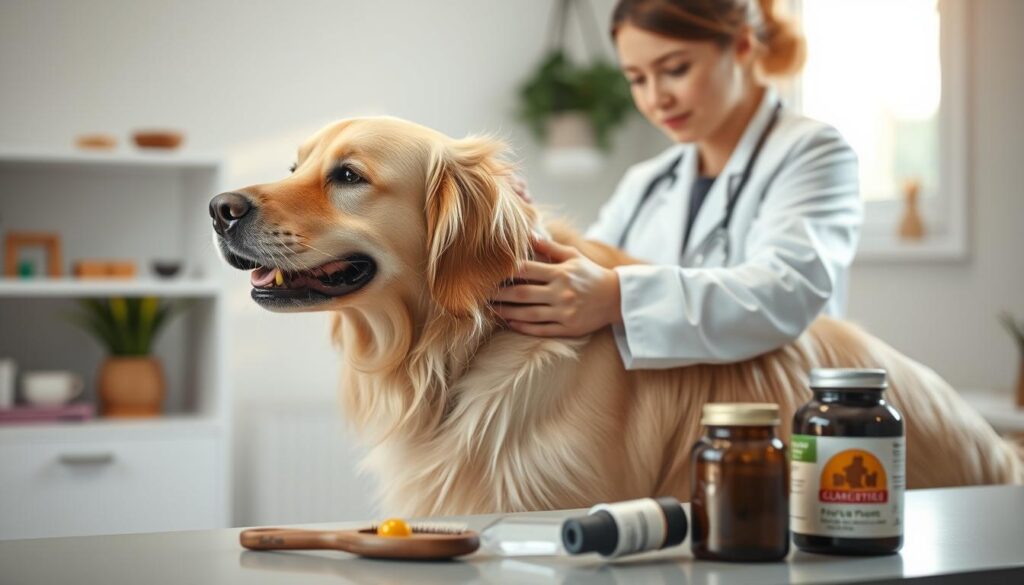
We think that getting regular vet checks is key for your dog’s coat health. Daily grooming and a good diet are important. But, some health issues need a vet’s help to find and fix.
If your dog’s fur looks dull or is breaking, it’s time to see a vet. Learning about your pet’s skin and coat is just the start of keeping them healthy.
What to Discuss with Your Vet
At your vet visit, talk about your dog’s health history and any new behaviors. Tell your vet if you think there might be hormonal imbalances, like thyroid issues. These can make your dog’s fur look bad.
Your vet can do blood tests to check for health problems that affect dog skin protection. Tell them about your grooming routine and what products you use. This helps your vet give advice that fits your dog’s needs.
Signs to Watch For
Watch your dog for signs that they might need to see a vet. If you see any of these, make an appointment right away:
- Persistent bald patches or thinning fur that doesn’t get better.
- Chronic itching that makes the skin raw or inflamed.
- A sudden change in the coat’s texture or smell.
- Visible sores, bumps, or ongoing redness under the fur.
Finding these problems early is crucial for dog skin protection. By being proactive, you help your dog keep a healthy, shiny coat for years to come.
Lifestyle Changes for Coat Improvement
A healthy coat comes from a balanced lifestyle. It’s not just about shampoos or supplements. Daily habits are key for long-term fur quality. Small changes in your dog’s routine can lead to a natural, radiant shine.
Exercise and Its Effects on Coat Health
Regular exercise boosts your dog’s health. It increases blood circulation, delivering nutrients to hair follicles. This keeps the skin nourished and the coat strong.
Exercise also helps maintain a healthy weight. This prevents skin irritation and infections. Activities like walks or fetch games are essential for a shiny coat. Dogs that exercise regularly shed less and have softer fur.
Stress Reduction Techniques
Mental wellbeing is crucial for a healthy coat. Stress can lead to shedding and dull fur. A calm environment supports optimal skin health.
Here are simple ways to reduce stress:
- Consistent Routine: Dogs love predictability, which reduces anxiety.
- Mental Stimulation: Puzzle toys or scent games keep them engaged.
- Quiet Zones: A peaceful space helps when they feel overwhelmed.
When your dog is relaxed, they can focus on coat health. The table below shows how lifestyle factors affect fur condition.
| Lifestyle Factor | Impact on Coat | Recommended Frequency |
|---|---|---|
| Daily Walking | Improves circulation | 30-60 minutes daily |
| Mental Play | Reduces cortisol | 15-20 minutes daily |
| Quality Sleep | Supports tissue repair | 10-14 hours per day |
| Social Interaction | Boosts mood | Regular daily engagement |
DIY Dog Coat Treatments
We think that caring for pets starts with simple, natural things you have at home. By focusing on pet fur fortification, we can keep our dogs’ skin healthy. Collagen makes the skin firm and strong.
Supporting skin health from the outside adds extra care. It helps reduce dryness and flakiness. These DIY methods are easy and gentle, making our dogs look their best.
Homemade Remedies for Shiny Fur
One great way to help pet fur fortification is with simple, nutrient-rich treatments. A diluted apple cider vinegar rinse can balance the skin’s pH. This is key for a shiny coat.
An oatmeal-based mask is also popular. Oatmeal is naturally soothing and keeps moisture in. Just grind oats, mix with warm water, and apply to your dog’s coat before rinsing.
Natural Oils for Coat Conditioning
Using high-quality fats is key for pet fur fortification. Natural oils give essential fatty acids to hair follicles. This makes the hair soft and shiny. Check out 14 dog coat oils to find the right one for your dog.
Coconut oil is a favorite because it’s deeply hydrating and fights off germs. Use it sparingly to prevent dryness and add shine. Always start with a small amount to check if your dog likes it.
Professional Products for Coat Strengthening
Getting a shiny, strong coat needs the right care and top-notch products. Using premium items in your routine gives your dog the support they need. This helps make their coat stronger and healthier.
Top-Tier Shampoos and Conditioners
Choosing the right shampoo is key for your dog’s hair health. Brands like Earthbath and TropiClean make formulas that moisturize and soften. These products keep your dog’s coat strong by keeping it moist after each bath.
Essential Grooming Tools
Good grooming tools make caring for your dog easier. A top-notch slicker brush from Chris Christensen gently removes loose fur. It also prevents damage and helps oils spread evenly.
The Impact of Professional Care
Supplements like Grizzly Salmon Oil add vital Omega-3 fatty acids for skin health. Share your dog’s progress on social media. Regular care keeps your pet looking great for many years.