Did you know that nearly one-third of all vet visits in the U.S. are for skin problems? Many pet owners see their pets suffer from constant itchiness. This makes their skin break, letting bad bacteria and yeast in.
We think proactive care is key to making your pet comfortable again. By finding out why they’re uncomfortable, we can use dog skin nourishment to help them. Our aim is to help you deal with these issues confidently.
Acting fast stops more infections and keeps your pet joyful. Let’s look at how to improve your pet’s health with dog skin nourishment and daily care.
Key Takeaways
- Veterinary data shows that dermatological problems are a leading cause of clinic visits.
- Constant scratching compromises the natural protective barrier of your pet.
- Early identification of the root cause is vital for successful treatment.
- Proper hydration and nutrition play a major role in maintaining a healthy coat.
- Consistent care routines help prevent secondary bacterial or yeast infections.
Understanding Dog Skin Health
A healthy coat begins deep within your dog’s skin. By taking a holistic approach to dog skin care, we support our pets at all stages of life. This method goes beyond the surface to find and fix the root causes of irritation and discomfort.
Common Skin Issues in Dogs
Many things can cause skin irritation in dogs. Environmental allergens like pollen, mold, and dust mites often make them itchy. Flea bites also cause a lot of discomfort, even with little exposure.
Food sensitivities are another big factor in skin health. When dogs react to certain proteins or additives, their skin shows it first. Finding these triggers early is a key dog skin health tip.
Signs Your Dog’s Skin Needs Attention
Pets can’t tell us when they’re in pain, so we must look for signs. If they’re shaking their ears or chewing their paws a lot, it’s a sign of trouble. These actions are usually their way of trying to soothe an itch or irritation.
Also, check the skin for any physical changes. Look for redness, inflammation, or areas where the skin has become thickened or leathery. These signs often mean chronic irritation that needs a vet’s help.
Spotting problems early is crucial to avoid secondary infections. By sticking to a holistic approach to dog skin care, we keep our pets comfortable and happy. Following these dog skin health tips helps us catch issues before they get worse.
The Importance of Dog Skin Nourishment
We think the key to a shiny coat and healthy skin is in your dog’s diet. Giving them dog skin nourishment daily keeps them comfy and avoids skin problems. It’s all about what they eat to keep them healthy inside and out.
Benefits of Healthy Skin for Dogs
Healthy skin is like a shield against bad stuff like allergens and cold weather. When dogs eat right, their skin stays flexible and shiny. This helps keep moisture in, which is key for dogs with dry skin.
A well-fed coat means your dog is doing great inside. You’ll see less scratching and flaking. For extra help, try dog skin nourishment oils to soothe their skin.
How Nutrition Impacts Skin Health
Nutrition is key for skin repair. Good food reduces inflammation, which can cause itchy skin. Foods rich in omega-3s help skin cells grow back strong.
Here’s how different nutrients help your dog’s skin:
| Nutrient | Primary Benefit | Skin Impact |
|---|---|---|
| Omega-3 Fatty Acids | Reduces Inflammation | Calms itchy, irritated skin |
| Vitamin E | Antioxidant Support | Protects against cell damage |
| Zinc | Skin Repair | Promotes faster healing |
| Biotin | Coat Quality | Enhances shine and texture |
Putting dog skin nourishment first in their diet is smart. Feeding them good proteins and fats makes them happy and comfortable for years.
Choosing the Right Dog Food for Skin Health
Many of us don’t think about how our dog’s food affects their skin. The right nourishing food for dog skin can greatly improve their comfort. Good nutrition helps prevent skin problems and keeps their skin healthy.
Key Ingredients for Skin Nourishment
When checking food labels, look for nutrients that help repair skin. High-quality proteins are key because skin and hair are mostly made of protein. Omega-3 and Omega-6 fatty acids also help by reducing inflammation and keeping skin oils balanced.
Zinc, Vitamin E, and Biotin are also important for skin health. They help strengthen hair follicles and prevent dryness. Finding the best dog skin care products often means looking for these ingredients in their food.
Grain-Free vs. Grain-Inclusive Diets
Some think all grains are bad for a dog’s skin. But, many dogs do well on whole grains like brown rice or oats. These provide fiber and energy. Grain-free diets are only needed if a dog has a grain allergy.
The quality of carbs is more important than whether they are grains. We suggest choosing digestible, nutrient-dense ingredients over avoiding grains. Always talk to a vet before changing your dog’s diet.
Popular Dog Food Brands for Skin Issues
Many trusted brands offer special formulas for sensitive pets. These are often seen as the best dog skin care products because they’re backed by research. Brands like Royal Canin, Hill’s Science Diet, and Purina Pro Plan offer nutrition for skin issues.
| Dietary Focus | Primary Benefit | Key Nutrient |
|---|---|---|
| Limited Ingredient | Reduces Allergy Risk | Novel Protein |
| Omega-Rich | Decreases Inflammation | Fish Oil |
| Hydrolyzed Protein | Prevents Immune Reaction | Broken-down Protein |
| High-Fiber | Supports Gut Health | Whole Grains |
Finding the right nourishing food for dog skin takes time and observation. By watching how your dog reacts to different ingredients, you can adjust their diet. Good, consistent nutrition is key to a healthy, itch-free life for dogs.
Supplements for Enhanced Skin Health
Looking beyond the food bowl is key to your pet’s wellness. High-quality kibble is a good start, but dog skin supplements provide extra nutrients. They help repair damaged skin and soothe irritation.
Omega-3 Fatty Acids and Their Benefits
Omega-3 fatty acids are top for dog skin health. Found in fish oil, they reduce inflammation in the body. This calms the immune system, reducing redness and itching.
These fats also make the skin stronger. A strong skin barrier keeps moisture in, which is great for dogs with dry skin. Regular use of these dog skin supplements can make your dog’s coat shinier and softer in a few weeks.
Skin-Care Supplements to Consider
There are other natural additives that help too. Sea Buckthorn oil is rich in fatty acids that help skin heal faster. Zinc and biotin also support skin health and hair growth.
Always choose high-quality dog skin supplements. Talk to your vet before adding new products to your dog’s diet. They can guide you on the right dosage and ensure safety.
Remember, consistency is key when using these products. Some dogs improve fast, while others need more time. Watch for any changes in behavior or digestion when starting a new supplement.
Grooming Practices for Healthy Skin
Keeping your dog’s skin healthy starts with good grooming. Regular care removes irritants before they cause problems. This creates a shield for your pet’s sensitive skin.
The Role of Regular Baths
Bathing your dog is key to removing pollen, dust, and grass allergens. These can make your dog itch and get red. But, don’t bathe too much, as it can dry out their skin.
Choosing the Right Shampoo
Choosing the right shampoo is crucial for a healthy coat. Look for fragrance-free, oatmeal-based shampoos that soothe the skin. Harsh chemicals can dry out and irritate the skin.
“A healthy coat is the mirror of a dog’s internal well-being, and grooming is the brush that keeps that mirror clear.”
Brushing and Its Impact on Skin
Brushing does more than just clean your dog; it’s good for their skin. It spreads natural oils, protecting against the elements. It also lets you check for skin problems early.
By sticking to these grooming habits, your pet stays comfortable all year. Using the best dog skin care products makes grooming even better. A regular routine is the best way to keep your dog’s skin healthy.
Natural Remedies for Dry or Itchy Skin
We often look to our kitchen pantries for natural remedies for dog skin issues. These gentle, home-based solutions provide immediate relief for dogs with dry or itchy patches. They are great for managing mild discomfort but should be used temporarily while you find the cause of the irritation.
Coconut Oil for Dog Skin Care
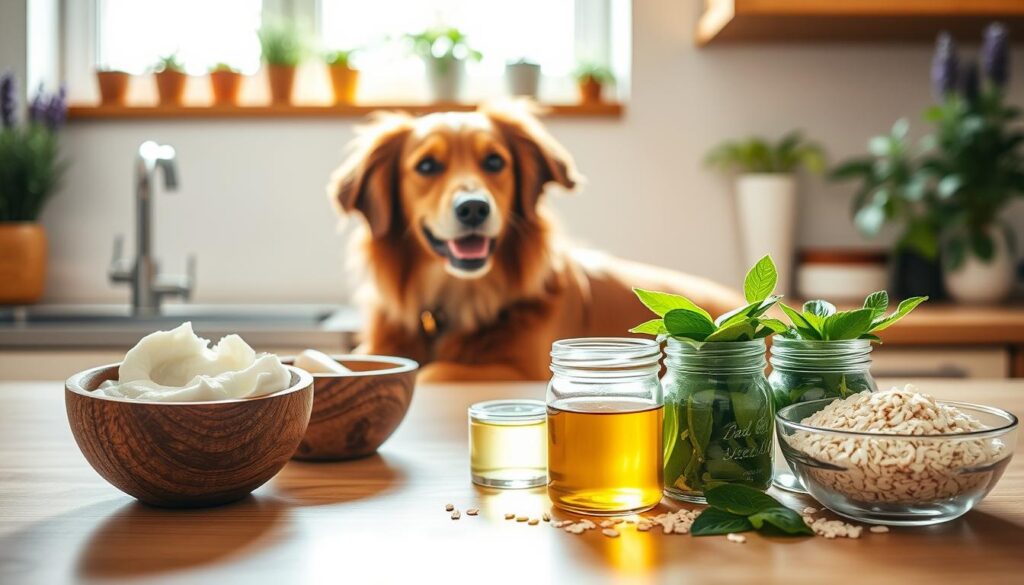
Coconut oil is a popular choice for moisturizing dry skin. It has natural fatty acids. To use it, warm a small amount in your palms until it melts.
Gently massage the oil into your dog’s affected skin. Make sure it reaches the base of their fur.
Be mindful that your dog might try to lick the oil off. While small amounts are safe, too much can upset their stomach or cause weight gain. Always watch your pet closely after applying to prevent them from eating too much.
Oatmeal Baths: A Soothing Solution
Oatmeal baths are a classic way to calm inflamed or itchy skin. To make one, grind plain, unsweetened oats into a fine powder. Use a blender or food processor.
Mix the powder into warm bathwater until it turns milky and soothing. Let your dog soak for about ten minutes to let the oats work on their skin. Rinse them well with clean, lukewarm water afterward to remove any leftover oatmeal. This simple technique is one of the most effective natural remedies for dog skin issues when your pet is feeling uncomfortable.
| Remedy | Primary Benefit | Best Use Case |
|---|---|---|
| Coconut Oil | Deep Moisturization | Localized dry patches |
| Oatmeal Bath | Anti-Itch Relief | Full-body irritation |
| Aloe Vera | Cooling Sensation | Sunburn or hot spots |
Recognizing Allergies and Sensitivities
Understanding what causes skin irritation is key to your pet’s comfort. Chronic itching often means there’s an underlying sensitivity. By recognizing skin allergies in dogs, you can improve their life quality.
Common Allergens Affecting Dog Skin
Dogs face many substances that can set off an immune reaction. Environmental allergens like pollen, mold spores, and dust mites are common. These tiny irritants can settle on the skin or be inhaled, causing inflammation and intense scratching.
Food sensitivities also affect skin health. Proteins like beef, chicken, or dairy often trigger reactions. While natural remedies for dog skin issues can help, finding the exact dietary allergen is crucial to stop irritation.
How to Manage Allergies in Dogs
Managing allergies needs a multi-faceted approach. Start by thoroughly cleaning your home to reduce dust and dander. Washing your dog’s bedding and vacuuming carpets can also help lower their exposure to common irritants.
If lifestyle changes aren’t enough, your vet may suggest treatments. This could include veterinary-approved antihistamines or special diets to avoid food triggers. While natural remedies for dog skin issues might offer temporary relief, professional advice ensures your dog gets the right care.
| Allergen Type | Common Examples | Management Strategy |
|---|---|---|
| Environmental | Pollen, Grass, Dust | Wipe paws after walks |
| Food-Based | Beef, Dairy, Wheat | Elimination diet |
| Parasitic | Flea Saliva | Monthly prevention |
| Household | Cleaning products | Switch to hypoallergenic |
Preventive Care for Optimal Skin Health
We believe that the secret to a happy pet lies in consistent, preventive care routines. By staying ahead of potential issues, you can ensure your companion remains comfortable throughout the year. Implementing effective dog skin health tips is the most reliable way to protect your pet from unnecessary irritation and discomfort.
Regular Veterinary Checkups
Routine exams are essential for catching subtle changes in your dog’s coat or skin before they become major problems. During these visits, your veterinarian can identify early signs of inflammation, parasites, or hormonal imbalances that might affect the skin. Consistency is key when it comes to monitoring your dog’s overall wellness.
Beyond professional exams, we recommend maintaining a clean home environment to support these efforts. Simple habits can significantly reduce the risk of skin flare-ups:
- Wash your dog’s bedding weekly to remove dust mites and dander.
- Vacuum carpets and furniture regularly to minimize allergen accumulation.
- Maintain a strict, year-round flea control program to prevent allergic dermatitis.
Vaccinations and Skin-Related Diseases
Many owners do not realize that keeping up with vaccinations plays a vital role in maintaining skin integrity. When a dog’s immune system is strong, they are better equipped to fight off infections that often manifest as skin lesions or rashes. Preventive care is not just about avoiding illness; it is about building a foundation for long-term vitality.
Some skin-related diseases are secondary to systemic issues that vaccines help manage. By following your vet’s recommended schedule, you provide an extra layer of defense for your pet’s largest organ. Utilizing these dog skin health tips will help you keep your furry friend feeling their best for years to come.
Environmental Factors Affecting Dog Skin
Many common skin issues in dogs come from environmental stressors. Our pets are always in touch with their surroundings, making their skin prone to damage. A holistic approach to dog skin care helps us prepare for these changes and keep our pets safe.
Seasonal Changes and Skin Sensitivity
Each season brings its own challenges for a dog’s skin. In spring and autumn, pollen and mold can cause allergic reactions. This leads to persistent itching and redness. Keep an eye on your dog during these times to spot any discomfort early.
Winter is another challenge for pet owners. The cold air can dry out your dog’s coat. By staying ahead, you can keep your pet comfortable, no matter the weather.
How Temperature and Humidity Impact Skin
Temperature changes and humidity levels affect your dog’s skin health. Indoor heating in winter makes the air dry. This dry air often causes flaky, dry skin and scratching in many dogs.
To fight this, use a humidifier in your dog’s favorite rooms. A holistic approach to dog skin care means making your home environment better for your pet. Keeping the indoor climate balanced helps your dog stay comfortable and itch-free all year.
Hydration and Its Role in Skin Health
Keeping your dog well-hydrated is as crucial as giving them nourishing food for dog skin. Many owners spend a lot on topical treatments. But, water intake is key for health and skin vitality. Simple, consistent habits often work best for your pet.
The Importance of Fresh Water
Every dog needs clean, fresh water, no matter their breed or age. Water carries vital nutrients to all parts of the body. This ensures the skin stays healthy and strong. Combining constant water access with nourishing food for dog skin fights dryness well.
To keep your dog hydrated, try these easy steps:
- Place multiple water bowls in different areas of your home.
- Clean and refill bowls daily to prevent bacterial buildup.
- Watch your dog’s water intake, more so in hot weather.
How Dehydration Affects Skin
Dehydration shows first in the skin. It can make the skin tight, flaky, or brittle. This lack of moisture worsens sensitivities, making repair harder.
“Water is the primary medium for all metabolic processes, and its absence is quickly reflected in the condition of the skin and coat.”
Dehydration also affects digestion. Proper water intake helps digestion, letting the body absorb nutrients better. If your dog is always dehydrated, their digestion may suffer. This can harm their skin health over time.
When to Consult a Veterinarian
Knowing when to see a vet is key to maintaining healthy dog skin. Minor dryness or occasional itching can usually be handled at home. But, if problems persist, it might mean a serious health issue that needs a vet’s help.
Watch your pet closely for any signs that don’t get better with home care. Catching issues early can stop them from becoming serious and painful infections.
Identifying Serious Skin Conditions
Some signs are clear that your dog needs a vet. Look out for thickened, leathery skin, open sores, or a bad smell. Also, if your dog can’t sleep or eat because of scratching, it’s time to see a vet.
Problems like hormonal imbalances or autoimmune diseases often show up in the skin. If your dog’s skin issues don’t get better with diet or grooming, a vet can run tests to find the cause.
| Symptom Type | Mild (Home Care) | Severe (Vet Visit) |
|---|---|---|
| Itching | Occasional scratching | Constant, frantic biting |
| Skin Texture | Slightly dry/flaky | Thickened, crusty, or leathery |
| Odor | Natural dog scent | Strong, yeasty, or foul smell |
| Lesions | Minor redness | Open sores or bleeding |
Preparing for Your Vet Visit
For an accurate diagnosis, bring a detailed history of your dog’s symptoms. Keep a log of when the itching started and any recent changes in diet, environment, or cleaning products.
Be ready to talk about your current skin care routine for maintaining healthy dog skin. Bring a list of your dog’s current supplements and food brands. This helps the vet quickly check for allergens. Clear communication is key to getting the right treatment plan for your pet.
Conclusion: Maintaining Your Dog’s Skin Health
Your dedication to your pet’s comfort greatly improves their life. We think that caring ahead of time makes a big difference. It changes how your dog sees the world every day.
Summary of Essential Care Strategies
Keeping your dog’s skin healthy needs a mix of things. Adding dog skin supplements to their diet is a good start. Then, gentle grooming keeps them comfortable all year round.
Building Consistent Habits
Being consistent is key to healthy dog skin. Simple daily steps like watching for signs of irritation or making sure they drink enough water are crucial. Always be ready to meet your dog’s special needs.
You have the power to keep your pet happy and free from itching. By sticking to these habits, your dog will live a lively and active life with you.