Did you know that skin and fur issues are a big reason for vet visits in the U.S.? Your pet’s look can show how they’re feeling inside. When they look great, it’s a sign they’re doing well.
Keeping your pet’s coat healthy is key. Good food and grooming can stop problems early. Our guide shows you how to keep your pet happy and healthy every day.
Good pet coat care is the base for a long, happy life. We’ll show you what makes your pet’s coat shine. Simple changes can make a big difference in their life.
Key Takeaways
- Skin and fur health is a primary indicator of overall physical well-being.
- Proactive grooming and nutrition prevent many common veterinary issues.
- A consistent routine helps maintain a vibrant and shiny appearance.
- Small daily adjustments lead to significant long-term benefits for your pet.
- Understanding your companion’s needs is the first step toward better vitality.
Understanding Your Pet’s Coat Health
Keeping your pet’s coat healthy is more than grooming. It shows their overall health. A shiny, soft coat is a sign of good health inside and out. Paying attention to these signs helps us care for our pets better.
The Importance of a Healthy Coat
A healthy pet fur is not just for looks. It protects from the weather and shows if your pet is getting the right food. The right diet keeps their skin soft and hair strong.
But, a pet’s coat also shows their mood. Stress can make a dog’s coat look dull. Big changes, like moving or getting a new family member, can make their fur thin or dull.
Common Coat Problems in Pets
Even with good care, pets can face skin and hair issues. Pests like fleas and ticks can irritate the skin and make pets scratch a lot. This can damage their healthy pet fur.
Also, things like dry air or chemicals can harm their skin. We need to watch for signs of problems that need a vet’s help.
| Condition | Healthy Coat Signs | Warning Signs |
|---|---|---|
| Texture | Soft and smooth | Brittle or coarse |
| Appearance | Shiny and vibrant | Dull and flaky |
| Skin State | Clear and pink | Red or inflamed |
| Shedding | Seasonal and light | Excessive or patchy |
Ingredients for a Vibrant Coat
Good animal nutrition is key for a healthy pet fur. Giving pets top-notch ingredients helps their skin from the inside. This is the best way to keep their coat looking great.
Essential Nutrients for Healthy Fur
Omega-3 and omega-6 fatty acids are vital for a shiny coat. They help strengthen the skin and fight inflammation. Adding these to your pet’s food stops dryness and flakiness early on.
“The quality of your pet’s diet is the single most important factor in maintaining a coat that glows with vitality and health.”
It’s important to use balanced sources of these fatty acids. This keeps the skin hydrated, making the fur softer and easier to manage. Regular animal nutrition is crucial for lasting results.
Natural Oils for Coat Shine
Some owners also use special supplements for extra shine. A good shiny coat oil for dogs can add moisture and boost fur shine. These oils are packed with nutrients that support a shiny coat.
- Supports skin elasticity and hydration.
- Reduces shedding by strengthening hair follicles.
- Promotes a soft, manageable texture for all breeds.
Choosing the right ingredients is important for a shiny coat. By focusing on these, you’re caring for your pet’s health and happiness.
Choosing the Right Pet Food
We think the key to a shiny coat is in your pet’s food. Good animal nutrition is essential for healthy skin and fur. Choosing the right food can help keep your pet looking and feeling great.
High-Quality vs. Commercial Pet Food
Not all pet foods are created equal. High-quality foods have better protein and fatty acids for shiny fur and less shedding. Commercial diets might use fillers that don’t provide the nutrients needed for healthy skin.
Choosing premium food is a simple way to boost cat wellness and canine health. Pets fed with top-notch vitamins and minerals can focus on growing a thick, healthy coat. Look for brands that use whole ingredients instead of additives.
Reading Pet Food Labels for Coat Health
Understanding pet food labels is crucial. Look for named proteins like chicken or salmon as the first ingredient. These provide the amino acids for strong hair follicles.
Check for minerals like zinc and copper, which are key for skin health. Steer clear of vague “meat by-products” and too many artificial preservatives. A clear ingredient list is a sign of quality animal nutrition.
Supplements to Consider
Even a balanced diet might need a boost. We often use natural supplements to fill in nutritional gaps. Omega-3 fatty acids, for example, are great for dry skin and shiny fur.
Always talk to your vet before adding new supplements. They can make a big difference in cat wellness and coat health. Adding high-quality natural supplements is a smart move for long-term health and beauty.
Grooming Tips for a Shiny Coat
We think that good grooming is key for pet owners who want a shiny coat. It’s not just about looks. It also checks your pet’s health. Regular grooming keeps your pet happy and looking great all year.
Regular Brushing Benefits
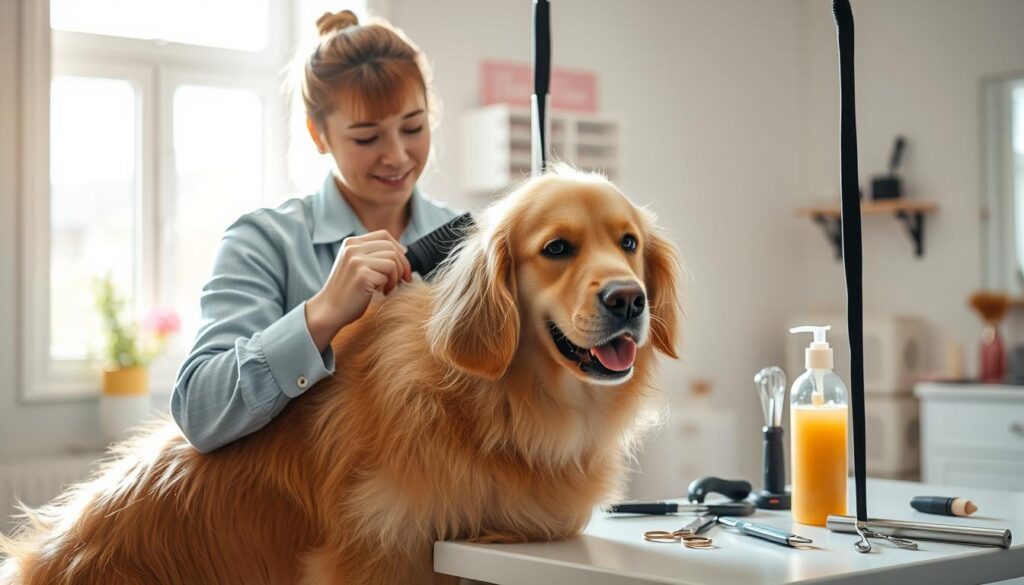
Brushing your pet often is the best way to keep them looking good. It helps spread natural oils in their fur. This makes their fur look naturally lustrous and healthy.
Brushing also helps remove dead hair and dirt. This stops painful mats that can hurt your pet’s skin. Keeping their coat free of tangles helps their skin breathe better, which is good for their health.
Bathing Best Practices
When bathing your pet, use special pet grooming tips to protect their skin. Always pick gentle, pH-balanced pet products. Human shampoos can dry out their fur and skin.
Try to keep their skin’s natural moisture during baths. Rinse well to avoid soap residue, which can cause itching. If you’re not sure what products to use, ask a professional.
Tools for Effective Grooming
Choosing the right tools is crucial for good grooming. Whether you groom at home or go to a grooming salon in Maryland, the right brush matters. Here’s a table to help you pick the best tools for your pet’s coat type.
| Coat Type | Recommended Tool | Primary Benefit |
|---|---|---|
| Short/Smooth | Rubber Curry Brush | Removes loose hair and massages skin |
| Long/Silky | Pin Brush | Detangles without damaging hair |
| Double/Thick | Undercoat Rake | Reduces shedding and prevents mats |
| Curly/Wavy | Slicker Brush | Smooths coat and prevents knots |
Good tools make grooming easier and fun for your pet. Remember, being consistent is key. With these tips, you’ll keep your pet’s coat healthy and shiny, showing their inner beauty.
The Role of Hydration in Coat Health
Drinking enough water is key for your pet’s skin and coat care. Many owners focus on shampoo and brushes. But, how much water your pet drinks is just as important for a healthy look.
Dehydration can make your pet’s fur dry and brittle. It loses its natural shine. By making sure your pet drinks enough, you avoid these problems. This helps their body work at its best.
Daily Water Requirements for Pets
Every pet needs different amounts of water. It depends on their size, how active they are, and where they live. A good rule is for a healthy pet to drink about one ounce of water for every pound of body weight each day. Keeping fresh, clean water available is the easiest way to meet this need.
If your pet’s coat looks dull or flaky, they might not be drinking enough. Watch their water bowl to see if they’re drinking enough. Make sure their water is clean and easy to get to. This helps them drink more often, which is good for their cat wellness and dog health.
Hydration Sources Beyond Water
Sometimes, pets need extra help to stay hydrated. Adding foods that are high in moisture to their diet is a great idea. Wet food, for example, has a lot more water than dry kibble. This gives them a natural way to drink more.
You can also give them hydrating treats like cucumber slices or plain, cooked zucchini if they like them. These treats help keep your pet hydrated, even when they’re not drinking from their bowl. Making these small changes can make a big difference in your pet’s coat over time.
Environmental Factors Affecting Coat Health
Your pet’s coat reacts to the world around them. This includes changes in temperature and humidity. These factors affect how much oil the skin makes and how fast the fur sheds. By being proactive with dog care, you can keep your pet comfortable in any weather.
Climate Considerations for Pet Care
Extreme temperatures can dry out your pet’s skin, causing irritation or dullness. In dry areas, use natural pet ingredients to keep their skin hydrated. Watch your pet’s skin closely to catch dryness early.
High humidity can trap moisture, leading to bacterial growth. Good ventilation and regular grooming are key in humid months. Make sure your pet has a cool, dry spot to rest and avoid coat damage.
Seasonal Coat Changes
As seasons change, your pet’s coat adjusts for the weather. Spring brings heavy shedding, while winter can make the skin tight and dry. Aligning deworming with these changes helps remember important health tasks.
Managing these changes requires a flexible grooming schedule. Watching these changes closely helps support your pet’s coat health all year.
| Season | Primary Concern | Care Focus |
|---|---|---|
| Spring | Heavy Shedding | Frequent Brushing |
| Summer | Heat & Humidity | Cooling & Hydration |
| Autumn | Coat Thickening | Nutrient Support |
| Winter | Dry Skin | Moisturizing Treatments |
Identifying Allergies and Sensitivities
Allergies can be hidden but show up in your pet’s coat and skin. When pets have sensitivities, their fur is often the first sign. Keeping their coat health in check means watching for these subtle changes.
Recognizing Allergic Reactions in Pets
Spotting an allergic reaction early helps avoid long-term pain. Look for signs like too much scratching, red spots, or hair loss. If your pet is always licking their paws or shaking their head, it’s a sign of trouble.
“The skin is the largest organ of the body, and it serves as the primary mirror for your pet’s internal health and nutritional status.”
Keep an eye out for these symptoms to keep your pet comfy. Here’s a table showing common signs of allergies in pets:
| Symptom | Potential Cause | Impact on Coat Health |
|---|---|---|
| Persistent Itching | Environmental Allergens | Dull, brittle fur |
| Red, Inflamed Skin | Food Sensitivities | Patchy hair loss |
| Excessive Shedding | Seasonal Allergies | Thinning coat texture |
How Allergies Affect Coat Health
Allergic reactions make pets use energy to fight inflammation instead of keeping their coat shiny. This can make their fur dry and brittle. Persistent irritation leads to scratching, damaging the hair follicles and causing thinning.
To handle these issues, add special pet grooming tips to your routine. Use hypoallergenic shampoos to calm irritated skin and add moisture to fur. Always talk to your vet to create a plan that fixes the allergy problem, making your pet healthy again.
Home Remedies for Coat Issues
We think gentle, home-based solutions are great for your pet’s skin health. Many minor irritations can be fixed with simple, natural ingredients from your kitchen. By taking care of your pet’s coat at home, you can often soothe them without harsh chemicals.
Creating a calm, cage-free environment is key. Stress can make a pet’s coat dull or thin. When your pet feels secure and relaxed, they can better take care of their skin and fur.
DIY Coat Conditioning Treatments
You can easily add moisture to dry fur with kitchen staples. A rinse made from diluted apple cider vinegar can balance your pet’s skin pH. This natural approach makes their coat soft and vibrant.
Coconut oil is also great for deep conditioning. Massage a small amount into your pet’s fur before a bath to keep it hydrated. With high-quality natural supplements, these treatments give your pet a complete beauty boost.
Natural Remedies for Dandruff
Dandruff means your pet’s skin needs more moisture or a routine change. If you see white flakes, try these gentle, effective methods:
- Oatmeal Baths: Finely ground oatmeal soothes itchy, dry skin.
- Omega-3 Oils: Fish oil in their diet nourishes the skin from inside.
- Regular Brushing: Brushing spreads natural oils, preventing buildup.
Consistency is crucial for any home remedy. A steady routine keeps your pet comfortable and their coat healthy. Always watch how your pet reacts to new treatments to make sure they’re at their best.
Professional Help for Severe Coat Problems
Persistent skin and coat problems often signal underlying health issues that require a veterinarian’s expertise. While many minor irritations respond well to home remedies, some conditions are deeply rooted in your pet’s internal physiology. Recognizing the boundary between routine dog care and medical necessity is vital for your pet’s long-term comfort.
When to Consult a Veterinarian
You should schedule a professional evaluation if you notice systemic symptoms alongside coat changes. Signs such as lethargy, unexplained weight fluctuations, or sudden changes in behavior often indicate that the issue is more than just a topical problem. These symptoms frequently point toward hormonal imbalances, such as thyroid dysfunction or adrenal hyperfunction.
Do not wait for the condition to worsen if you observe persistent hair loss, foul odors, or open sores. Early intervention is essential to prevent secondary infections and to manage chronic discomfort. A professional diagnosis provides the clarity needed to address the root cause rather than just the visible symptoms.
Understanding Veterinary Treatments
Veterinarians utilize a variety of diagnostic tools to determine the exact cause of your pet’s distress. This process often begins with comprehensive blood work to check for metabolic or hormonal irregularities. Once a diagnosis is confirmed, your vet may recommend specialized dermatological therapies, such as medicated baths, targeted oral medications, or dietary adjustments.
Beyond clinical settings, you might seek advice from a reputable grooming salon in Maryland that specializes in therapeutic skin and coat care. These professionals can work in tandem with your veterinarian to provide supportive care that maintains your pet’s hygiene during treatment. Consistent communication between your vet and your groomer ensures that your pet receives the most effective, holistic approach to recovery.
Maintaining Long-Term Coat Health
Keeping your pet’s coat vibrant takes daily effort. It’s about building habits that boost skin health. A long-term approach makes your pet feel and look great for years.
Monitoring Your Pet’s Progress
Regular vet visits are key to tracking changes in your pet’s coat and skin. These visits are crucial for early detection of health issues. They help keep your pet comfortable and looking good at every stage of life.
Building a Sustainable Routine
Make grooming a weekly habit to control shedding and spread natural oils. Using top-notch tools like Furminator or Wahl makes grooming easier. A consistent routine leads to lasting benefits for your pet.
Sticking to these habits lays the groundwork for a lifetime of health. Stay vigilant and patient as you perfect your care routine. Your dedication is the greatest gift for a happy, healthy life.