Did you know that nearly 40% of pets suffer from skin dryness? This affects their coat quality. Many owners find it hard to keep their pets’ coats soft and shiny, even with regular grooming.
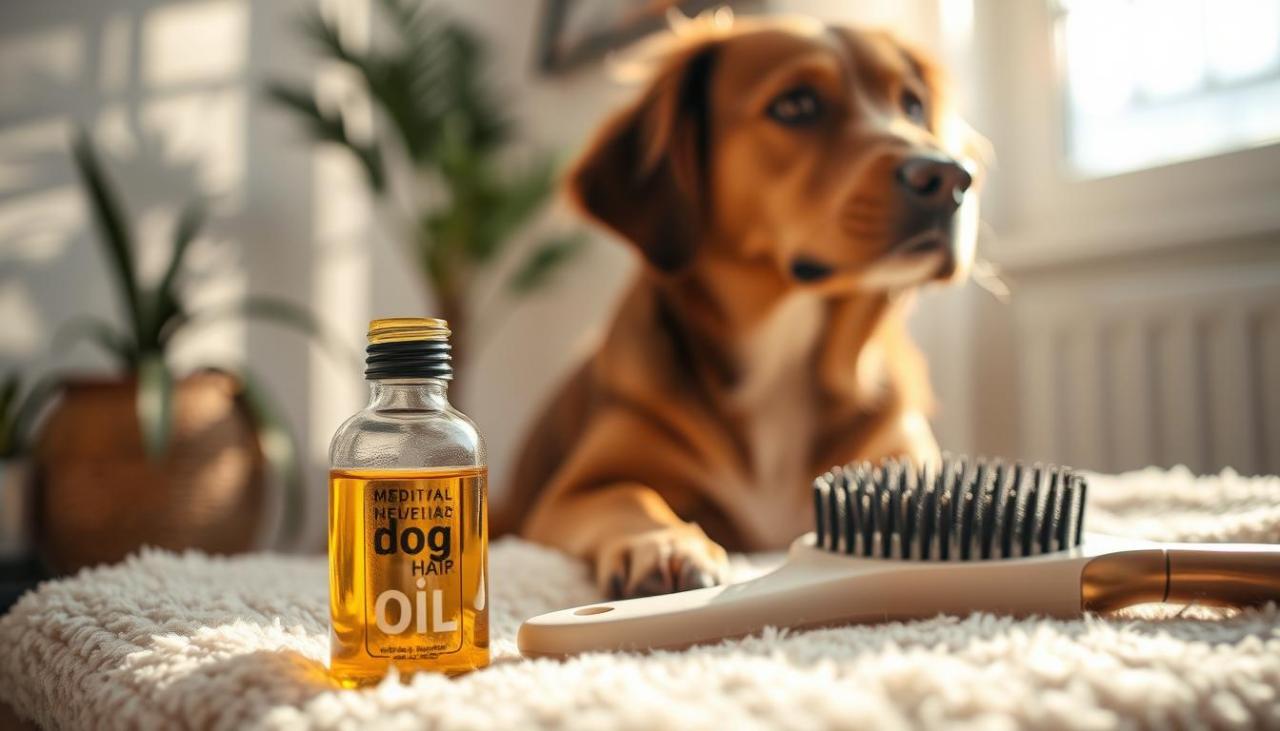
Using a medicated dog hair oil can change your pet’s grooming routine. These oils work well when you brush them regularly, feed them a balanced diet, and bathe them properly.
Remember, these products are supportive tools for grooming. They can’t replace a vet’s diagnosis if your pet has persistent itching, bad smells, scabs, or hair loss. Our guide helps you improve your pet’s skin comfort and shine safely at home.
Key Takeaways
- Topical treatments enhance natural shine and softness.
- Consistent brushing remains essential for coat health.
- Nutrition plays a vital role in skin vitality.
- Always consult a vet for signs of infection or disease.
- Safe application is key to effective results.
Understanding the Benefits of Medicated Dog Hair Oil
Adding a dog hair treatment to your pet’s care routine can make a big difference. These products are meant to support your pet’s skin health, not replace medical care. They are great for extra help when your pet’s skin is inflamed.
Promoting Coat Health
A healthy coat starts with healthy skin. Medicated oils help keep the skin moist, preventing a dull coat. Using a good dog hair treatment keeps your dog’s natural oils in, protecting them from the environment.
Reducing Skin Irritation
Lightweight oils with oleic acid are great for soothing dry skin. They go deep to ease flaky or tight skin. Regular use of a dog hair treatment can lessen discomfort from weather changes or dry air.
Enhancing Shine and Softness
It’s key to know that oils make fur look good but also improve its feel. They make the fur soft and shiny. Here’s how these treatments help your dog:
| Benefit Category | Primary Action | Expected Result |
|---|---|---|
| Moisture Retention | Seals the hair cuticle | Reduced breakage |
| Skin Soothing | Calms surface dryness | Less scratching |
| Texture Improvement | Softens coarse fur | Enhanced manageability |
Choosing the right dog hair treatment depends on your pet’s needs. Watch how your dog reacts to different oils to find the best one for their coat.
Choosing the Right Medicated Dog Hair Oil
Finding the right dog hair oil is all about knowing what’s in it. When you look for natural dog care products, the label is key. Always check the ingredients list to make sure it’s safe for your dog.
Ingredients to Look For
Good products list botanical oils that help the skin. Look for aloe vera, chamomile, or oatmeal. These are in organic dog grooming essentials because they moisturize well without irritation.
Make sure the product is made for dogs’ skin. If you’re not sure, learn more about medicated dog shampoos. Look for these on the packaging:
- Botanical extracts like lavender or jojoba oil.
- Gentle, plant-based cleaners.
- Clear instructions for use.
- Formulas tested for dogs.
Avoiding Harmful Chemicals
Not all products are safe for dogs. Avoid human hair products because they can harm a dog’s skin. Learn more about organic dog hair oil to choose wisely.
Watch out for products that leave residue and attract dirt. Harsh chemicals and unknown fragrances can dry out and itch your dog’s skin. Choose products with clean, transparent labels to keep your dog comfortable and their coat shiny.
How to Apply Medicated Dog Hair Oil
Getting a healthy coat is more than just picking the right product. It’s also about how you apply it. When using medicated dog hair oil, it’s key to make sure it gets to the skin right. This way, it won’t hurt your furry friend.
Best Practices for Application
Always do a patch test on a small skin area before using a new treatment. This step helps spot any skin issues before applying it all over. Brush your dog well before bathing to get rid of loose fur and tangles. This makes the product spread evenly.
When you apply the oil or shampoo, massage it gently to get it to the skin. Be very careful around the eyes, ears, and nose. These areas are very sensitive. After applying, rinse your dog’s coat well until there’s no slippery feel left. This stops any irritation from leftover product.
Frequency of Use
Dogs usually need a bath with good pet grooming supplies every three to four weeks. But, your dog might need more or less depending on their skin. Always talk to your vet to find the best schedule for your pet.
| Action Step | Safety Priority | Expected Outcome |
|---|---|---|
| Patch Testing | High | Prevents allergic reactions |
| Gentle Massage | Medium | Better oil absorption |
| Thorough Rinsing | High | Removes residue buildup |
| Vet Consultation | High | Optimized treatment plan |
Common Skin Conditions Treated by Medicated Oils
Knowing the difference between minor dryness and serious skin issues is key for dog owners. A good dog hair treatment can help with simple irritation. But, it’s not enough for serious problems. Always talk to your vet before starting any new treatment.
Allergies and Irritations
Many dogs have allergies that cause itchy, red skin. This can lead to a lot of scratching, which hurts the skin more. A veterinary-recommended dog oil can help calm the skin. But, it won’t get rid of the allergy itself.
Hot Spots and Dry Patches
Hot spots are sudden, painful, and inflamed areas. They can get wet and painful, needing quick care to avoid infections. While oils can help with dry patches, use them on hot spots only if a vet says it’s okay.
Fungal Infections
Fungal and yeast infections need special treatment, not just water. They often smell bad or feel greasy, which regular grooming can’t fix. A veterinary-recommended dog oil can help once the infection is treated.
| Condition | Primary Symptom | Role of Topical Oil |
|---|---|---|
| Mild Dryness | Flaky skin | Hydration and relief |
| Allergies | Persistent itching | Soothing barrier support |
| Hot Spots | Red, inflamed skin | Consult vet first |
| Fungal Infection | Musty odor/grease | Adjunct to medication |
Using a dog hair treatment is best with a vet’s advice. This way, you make sure your pet gets the right care for a healthy coat.
Natural vs. Synthetic Ingredients
When we think about the best care for our pets, we often debate between natural dog care products and synthetic ingredients. It’s important to consider how these substances affect our pets’ skin. This includes how well they absorb, any residue left behind, and how well the skin can tolerate them.
Advantages of Natural Oils
Many pet owners choose natural dog care products because they use plant-based lipids. These mimic the skin’s natural oils. For example, camellia oil is light and doesn’t leave a greasy feel.
On the other hand, oils like coconut or olive can be too heavy. They might clog pores if used too much. It’s key to remember that natural doesn’t mean completely safe. Even plant extracts can cause allergies in some dogs. Always test a small area first.
Disadvantages of Synthetic Options
Synthetic ingredients are made to tackle specific problems that natural oils can’t handle alone. They are designed to be stable, have the right concentration, and deliver exactly where needed. But, they can sometimes cause irritation if used in high amounts or if a dog is sensitive to them.
We look at these products based on their purpose, not just because they’re synthetic. Here’s a table showing the main differences between natural and synthetic ingredients:
| Feature | Natural Oils | Synthetic Ingredients |
|---|---|---|
| Absorption | Varies by oil weight | Highly consistent |
| Fragrance | Botanical/Earthy | Controlled/Neutral |
| Tolerance | Generally high | Depends on formulation |
The right choice depends on your dog’s skin type. Whether you prefer natural dog care products or synthetic ones, always watch for any signs of discomfort. This is the best way to keep your pet’s coat healthy and shiny.
The Role of Nutrition in Coat Health
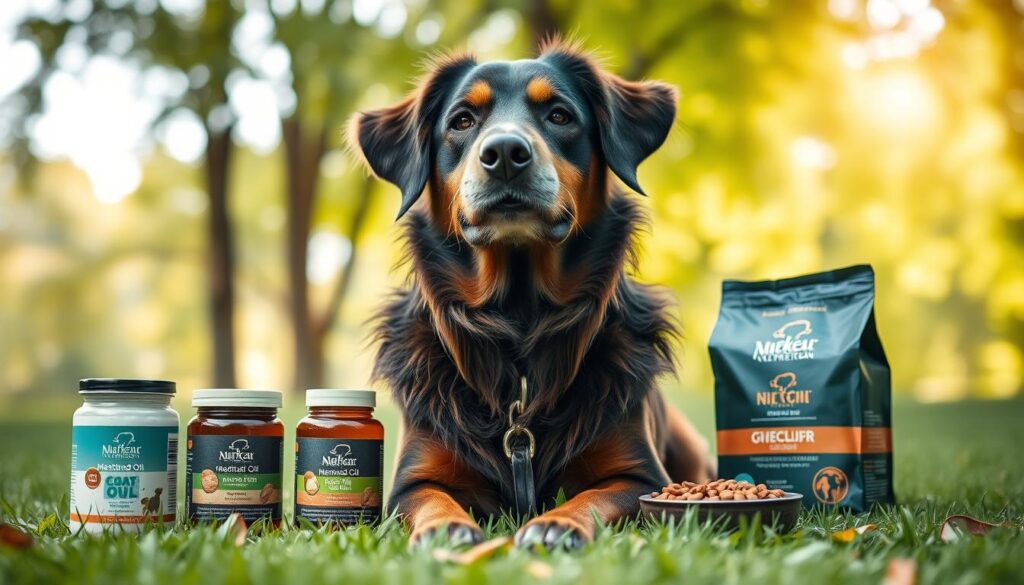
Topical treatments help, but true coat health starts from within. We think using only external oils isn’t enough. The best canine hair health solutions come from high-quality nutrition.
Importance of a Balanced Diet
A balanced diet is key for a shiny, strong coat. Dogs need enough protein for hair growth. Without it, their coat can become brittle and dull.
Omega-3 and Omega-6 fatty acids are crucial for skin health. When changing your dog’s food, do it slowly. This helps prevent stomach issues and lets their body adjust.
Supplements that Support Skin
Even with a good diet, some dogs need extra help for their skin. Biotin and zinc are important for skin and hair health.
Always talk to a vet before adding supplements. This is crucial if your dog is on medication or a special diet. A vet can make sure the supplements work well with your canine hair health solutions.
| Nutrient | Primary Benefit | Source |
|---|---|---|
| Omega-3 Fatty Acids | Reduces inflammation | Fish Oil |
| Zinc | Promotes skin repair | Meat/Legumes |
| Biotin | Improves hair texture | Egg Yolks |
| Protein | Structural growth | Chicken/Beef |
Grooming Tips for Maintaining a Healthy Coat
A beautiful coat starts with the right tools and a grooming schedule. Using pet grooming supplies daily helps prevent matting and keeps your dog’s skin healthy. Consistency is key for a happy, healthy pet.
Regular Brushing Techniques
Before water, brush your dog thoroughly. Brushing removes loose fur and debris and spreads natural oils. Choose a brush that fits your dog’s coat type, whether it’s long, wiry, or short.
Use gentle, steady strokes to avoid scratching or causing discomfort. If you find tangles, work through them slowly. Using organic dog grooming essentials can soothe the skin and make grooming more pleasant.
Bathing Best Practices
Use dog-specific shampoo for baths. Human products can dry out your pet’s skin. Make sure the water is lukewarm to avoid stress or irritation.
Rinsing well is crucial to prevent itching or flaking. After bathing, gently blot the coat to absorb moisture. Dry with a cool or low-heat setting to protect hair follicles.
| Coat Type | Recommended Tool | Frequency |
|---|---|---|
| Short/Smooth | Rubber Curry Brush | Weekly |
| Long/Silky | Pin Brush | Daily |
| Curly/Dense | Slicker Brush | Every 2-3 Days |
| Wire-Haired | Metal Comb | Weekly |
By following these steps, your pet grooming supplies will work well. Adding organic dog grooming essentials to your routine will improve your dog’s coat’s natural shine and health over time.
Customer Reviews and Experiences
We think hearing from others helps set the right expectations for your pet’s care. Many owners find success with canine hair health solutions. But remember, every dog is different. What works for one might not work for another.
Success Stories
Many pet parents share stories of how oils changed their dogs’ fur. They say their pets’ fur became softer and looked healthier. This is often because they chose the right product for their dog’s skin.
These canine hair health solutions can make our pets more comfortable. When the skin is well-hydrated, pets scratch less and are happier. But, these results vary from pet to pet.
Common Concerns
Some owners worry when they don’t see quick changes in their dog’s coat. It’s important to know that oils aren’t a fix for every problem. For example, Rosey’s owners tried oils for her thinning hair and itching.
But when Rosey didn’t get better and felt tired, her owners went to the vet. They found an internal health issue, not just a skin problem. This shows that big changes in hair health need a vet’s check.
Keep a close eye on your pet and don’t just rely on canine hair health solutions if problems don’t go away. Focus on your dog’s overall health to find the real cause of any issues. Always talk to your vet to make sure you’re doing the right thing for your pet.
Comparison of Popular Medicated Dog Hair Oils
Choosing the right medicated dog hair oil is important for our pets. The market for canine hair health solutions is vast. We need to look at specific features to find the best fit for our dog.
Brand A vs. Brand B
When comparing two top products, we look at what’s inside. Some use natural extracts, while others have synthetic compounds. The consistency of the oil is also key, as it affects how it feels on our dog’s coat.
Fragrance is another big difference. Some dogs prefer a light scent, while others do better with no smell at all. It’s also important to check how much oil we need to use.
| Feature | Brand A | Brand B |
|---|---|---|
| Primary Use | Dry Skin Relief | Fungal Defense |
| Key Ingredient | Aloe Vera | Tea Tree Oil |
| Residue Level | Low | Moderate |
Price Point Considerations
When we think about price, we want to know if it’s worth it. Sometimes, more expensive doesn’t mean better for canine hair health solutions. We should look at the cost over time, not just the upfront price.
Spending on a good medicated dog hair oil can save us money in the long run. Look for clear labels and vet recommendations. This way, we make sure our money is going towards our dog’s health and comfort.
FAQs About Medicated Dog Hair Oil
Understanding pet grooming is key to keeping your dog happy and healthy. We offer these tips to help you choose the best for your pet’s care.
What if my dog has sensitive skin?
Dogs with sensitive skin need a special dog oil. Look for one with natural ingredients. Always test a small area first. If your dog shows signs of irritation, stop using it right away.
Can I use it on puppies?
Puppies have thin skin that’s still growing. Talk to your vet before using any new products on them. Use gentle, puppy-safe products until they grow up.
How long until I see results?
You might see a shinier coat in a few days with the right dog oil. But, changes in hair or skin health take longer. If you notice problems, like hair loss or bad smells, contact your vet. Regular care is key to your dog’s health and happiness.