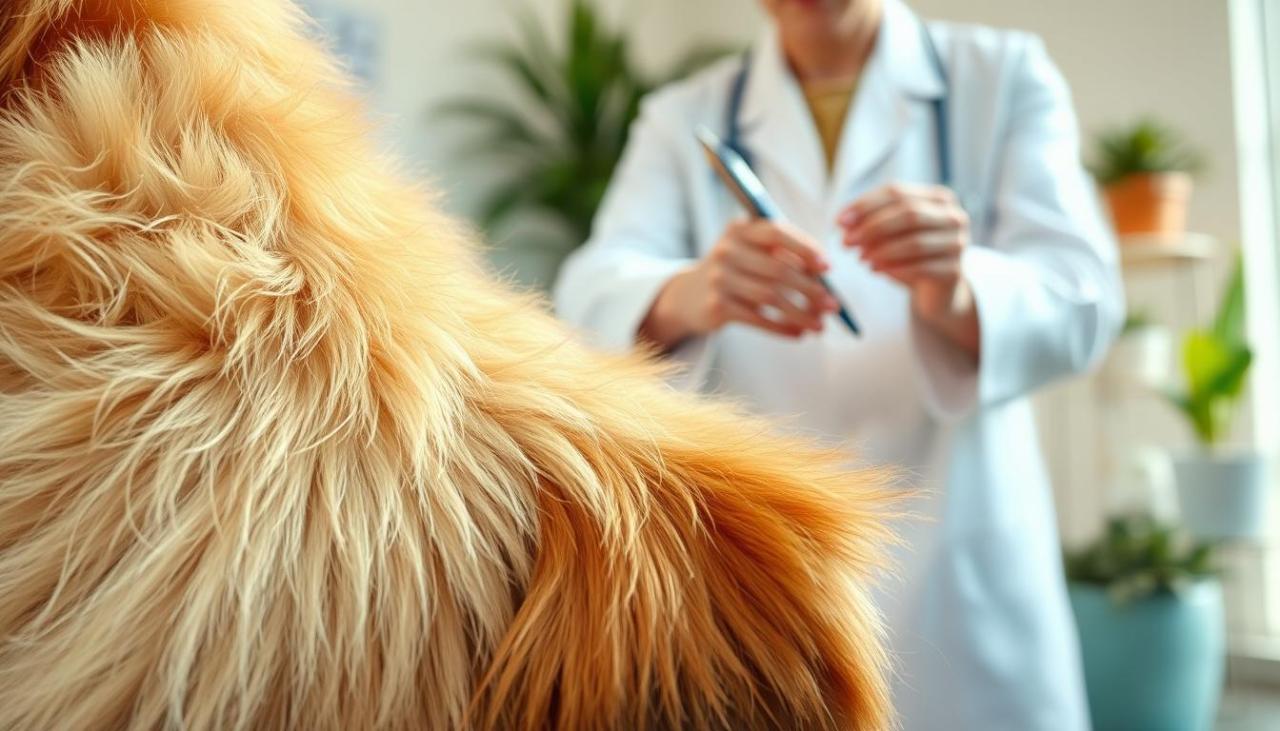
Did you know a dog’s skin is the biggest organ, making up nearly 15% of their body? When their skin gets damaged, it can show in thin patches or dull fur.
Seeing your pet lose their shine can be worrying. Our guide looks into how hair grows and when your pet might need extra care.
By using these expert tips, you can help your pet’s health. We focus on tips for regrowing dog fur safely and effectively.
Looking to regrow dog fur naturally or boost skin health? These methods can lead to success. Let’s guide you in regrowing your dog’s coat naturally with confidence.
Key Takeaways
- Understand the biological triggers behind hair loss in pets.
- Identify early warning signs of skin health issues.
- Implement safe, expert-backed strategies for coat recovery.
- Support your pet’s overall well-being through proper nutrition.
- Achieve a lush, healthy coat using proven home care methods.
Understanding Dog Coat Growth
Underneath your dog’s skin, a complex system of hair production works. Most breeds have a dense coat, with 1,000 to 9,000 hairs per square centimeter. Each hair grows from a small funnel, with one main hair and two to three secondary hairs. Grasping these biological foundations is key to regrowing your dog’s coat naturally.
The Hair Growth Cycle in Dogs
The life of a hair follicle follows a predictable pattern called the hair growth cycle. This cycle has three phases that affect the coat’s length and thickness. Knowing these stages helps owners spot when the natural process might be off.
| Phase | Description | Duration |
|---|---|---|
| Anagen | Active growth phase | Variable by breed |
| Catagen | Transition phase | Short duration |
| Telogen | Resting phase | Shedding occurs |
Factors Affecting Fur Growth
Many things can affect how well a coat grows. Sebaceous glands are key, providing essential oils for each hair. This keeps the skin and hair healthy and shiny.
But genetics, diet, and stress can mess with these cycles. Watching your pet’s skin health helps support coat growth. Consistency in care is the best way to keep these systems working well for your dog’s whole life.
Common Reasons for Hair Loss in Dogs
Thinning fur can be a sign of health problems in dogs. It’s important to look deeper to find the cause. Enhancing natural dog fur regrowth starts with knowing what triggers hair loss.
Allergies and Skin Conditions
Skin issues are a common reason for patchy coats. Allergens like pollen can make dogs itch and lose hair. Conditions like seborrhea cause oily, flaky skin.
If your dog is always licking or biting their skin, see a vet. Learn about hair loss in dogs to understand symptoms and treatments. Early action helps avoid infections.
Nutritional Deficiencies
A good diet is crucial for a healthy coat. Lack of essential nutrients can harm skin and hair. This leads to dull, brittle fur that falls out easily.
Good nutrition helps enhance natural dog fur regrowth. Focus on nutrients like omega-3 fatty acids, zinc, and vitamin A for skin health.
Stress and Anxiety
Dogs can show physical signs of stress, like excessive grooming. This can damage hair follicles and cause bald spots.
Creating a calm space is key for your dog’s health. Reducing stress helps enhance natural dog fur regrowth. Watch your dog’s behavior to catch issues early.
Natural Remedies for Dog Fur Regrowth
Looking to regrow your dog’s fur naturally? Nature’s pantry is a great place to start. A holistic approach can gently support your pet’s coat health. Skin nourishment is key for new hair to grow well.
Herbal Treatments
Herbs can soothe irritated skin and boost hair follicles. Topical applications can reduce inflammation, helping dog fur regrowth.
- Calendula: It heals dry or itchy patches.
- Chamomile: This herb is a natural anti-inflammatory for sensitive skin.
- Aloe Vera: Its gel deeply hydrates the skin, supporting hair growth.
Essential Oils for Dogs
Essential oils are powerful but must be used carefully. Always dilute them with a carrier oil like coconut or almond oil. Safety is our top priority when using these oils.
Lavender oil is known for calming dogs’ moods and skin. Always test a small area of your dog’s skin first. If your dog shows discomfort, stop using it right away.
Home-Made Fur Masks
Homemade treatments let you control what touches your dog’s skin. These masks can give essential nutrients to the follicles, helping with natural remedies for dog fur regrowth.
Try mixing biotin-rich ingredients or natural oils into a mask. Biotin improves a dog’s coat and skin health. A mix of yogurt, honey, and biotin powder can nourish thinning fur.
“Nature provides the most effective tools for maintaining the vitality of our pets’ coats when used with patience and care.”
The Role of Diet in Coat Health
A healthy coat starts from the inside out. Nutrition is key to your dog’s wellness. The right nutrients are vital for promoting dog fur regrowth and keeping skin healthy.
If a dog lacks certain nutrients, the body might focus on other important areas. This can lead to dull or thinning fur.
Key Nutrients for Healthy Fur
Proteins are the main part of hair, with fur being almost all keratin. Giving your dog high-quality animal proteins is crucial for strong hair. Omega-3 fatty acids are also key for a healthy coat and skin, helping with inflammation and keeping moisture in.
Vitamins A, E, and B-complex are important for skin health. They help the oil glands in the skin, making fur shiny and strong against damage.
Recommended Dog Food Brands
Choosing the right dog food can be tough. Look for brands with high-quality ingredients. Focus on foods with real meat as the first ingredient and balanced fatty acids. Brands like Orijen, Acana, and Royal Canin offer formulas that support skin and coat health.
Supplements for Fur Wellness
Even the best diet might need a boost. Canine fur regrowth supplements can help fill nutritional gaps. Always talk to your vet before adding supplements to your dog’s diet to make sure it’s safe.
| Nutrient | Primary Benefit | Food Source |
|---|---|---|
| Omega-3 Fatty Acids | Reduces skin inflammation | Fish Oil / Salmon |
| Zinc | Prevents dry, flaky skin | Beef / Poultry |
| Biotin | Improves hair elasticity | Eggs / Liver |
| Vitamin E | Protects skin cells | Vegetable Oils |
Bathing Practices That Favor Fur Regrowth
Having a regular bathing routine is key for stimulating dog fur regrowth and keeping the skin healthy. Washing your pet right helps protect their hair follicles. This care keeps the skin moist, which is crucial for healthy dog fur.
Choosing the Right Dog Shampoo
The shampoo you pick can either help or harm your dog’s skin. Choose pH-balanced shampoos made for dogs, as human ones are too harsh. Ingredients like oatmeal or aloe vera are good because they calm irritation and keep the skin moist for healthy hair development.
Frequency of Baths
Many think washing their dog often is best, but it’s not always true. Over-washing can make fur dry and brittle. For most dogs, bathing every three months is enough to keep them clean without harming their fur.
Techniques to Avoid Skin Damage
How you bathe your dog is as important as the shampoo you use. Make sure the water is lukewarm to avoid stressing the skin. Here are some tips for a safe and effective bath:
- Brush before bathing: Remove mats and tangles first to avoid them getting worse when wet.
- Rinse thoroughly: Leftover soap can cause itching and scratching, which hurts the hair follicles.
- Pat dry gently: Don’t rub your dog dry with a towel too hard, as it can damage fragile hairs and irritate the skin.
By improving these methods, you help your pet. Gentle, consistent care is the best way to keep your dog’s coat thick and vibrant.
Importance of Regular Grooming
Regular grooming is more than just making your dog look good. It’s a key part of keeping them healthy. These sessions are a chance to bond and help stimulate dog fur regrowth by improving their skin. Keeping up with grooming helps your pet stay comfortable and full of life all year round.
Brushing and Its Benefits
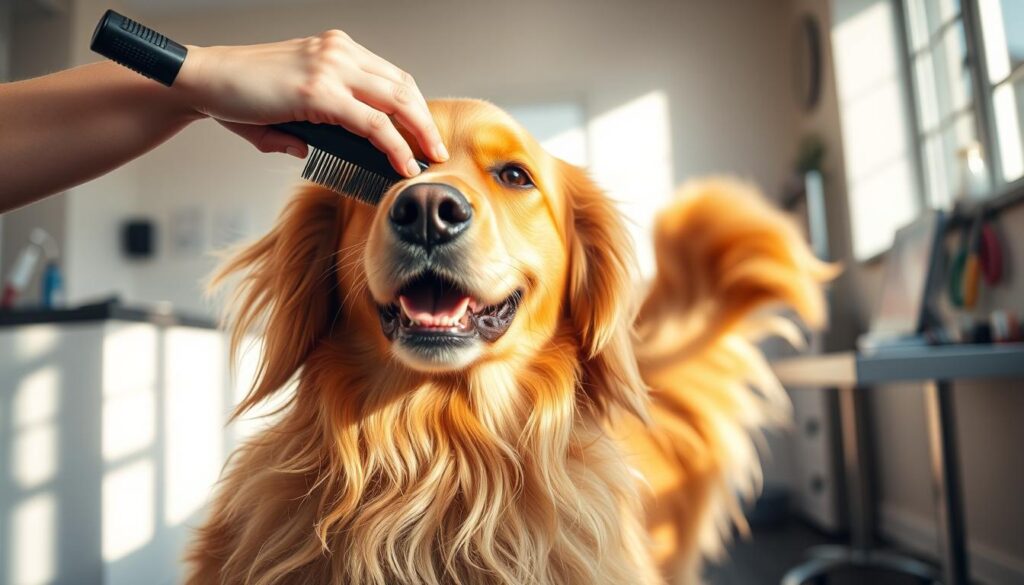
Brushing your dog every couple of days keeps their coat soft and shiny. This habit spreads natural oils, which is key for stimulating dog fur regrowth and avoiding dryness. It also removes dead hair, letting the skin breathe and reducing irritation.
“Grooming is the silent language of love between a dog and their owner, reflecting the health and happiness of the animal.”
Brushing also stops painful mats from forming. These mats can trap moisture and bacteria. Keeping the coat free of tangles lets the skin breathe better. This is crucial for stimulating dog fur regrowth and keeping the coat healthy for a long time.
Tools for Effective Grooming
Choosing the right tools is essential for good grooming. Different coats need different tools to avoid harming the skin. The right brush helps in stimulating dog fur regrowth without stressing your pet.
- Slicker brushes: Great for removing loose hair and detangling medium to long coats.
- Rubber curry brushes: Best for short-haired breeds to massage the skin and boost circulation.
- Metal combs: Ideal for reaching deep into thick undercoats to find hidden mats.
Before buying grooming tools, think about what your dog needs. Good tools make grooming easier for you and more fun for your dog. Regular use will show in your dog’s coat, making it look better over time.
Creating a Stress-Free Environment
Creating a peaceful space for your dog is key to their fur regrowth. When dogs feel safe, they can focus on growing a shiny coat. Stress makes them use energy for survival, not for hair growth.
Heavy shedding means dogs work hard to grow new fur. But stress takes away from this effort. By reducing stress, we help them grow a resilient and healthy coat.
Reducing Anxiety in Dogs
First, we need to spot stress signs in dogs. Look for signs like panting, pacing, or hiding. Then, find quiet spots in your home for them to relax.
Consistency is crucial for your dog’s well-being. Dogs like knowing what’s next. Keep their routine steady to reduce anxiety.
Activities to Promote Relaxation
Calming activities are great for your dog. Gentle massages help them relax and improve blood flow. This also spreads natural oils in their fur.
Try mental games that calm your dog, not excite them. Simple puzzles or slow training can help. These holistic approaches to dog fur regrowth help your dog thrive and keep their coat beautiful.
Regular Vet Check-ups
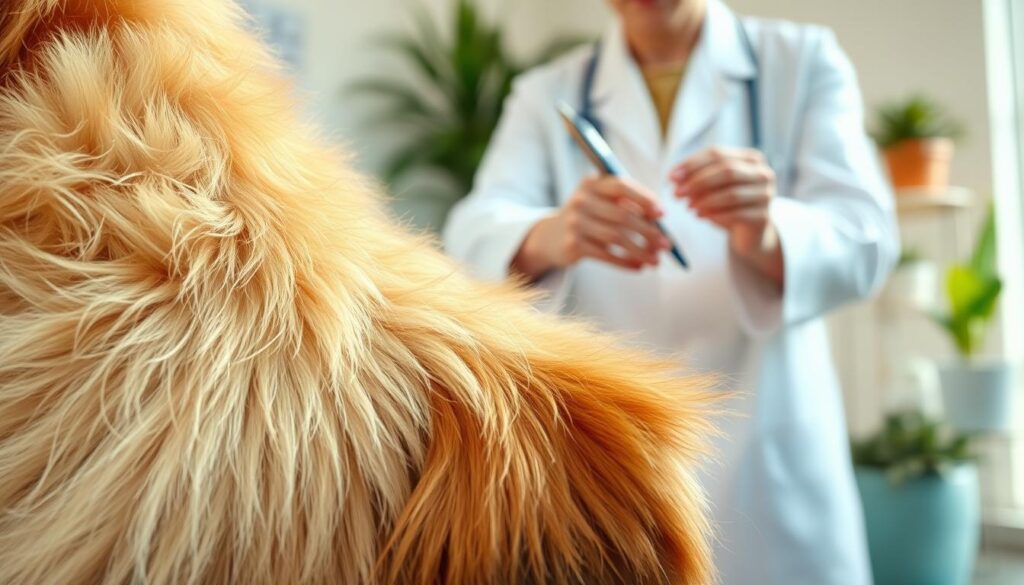
Home care is good, but vet visits are key for skin health. Sometimes, problems need a closer look at your pet’s health inside. If your dog fur regrowth efforts don’t work, it’s time for a vet check.
Importance of Professional Guidance
Vets have tools to find hidden health issues. They can spot thyroid problems, which can make a dog’s coat thin. Zinc helps the thyroid and immune system, and vets can suggest food changes or canine fur regrowth supplements.
Getting vet help means treating the real problem, not just the symptoms. They can do blood tests or skin scrapings to find hormonal or disease issues. This way, you and your pet can move forward together.
Signs That Require Veterinary Attention
Watch for changes in your dog’s look or behavior. If there are persistent bald patches, see a vet. Also, if your dog itches a lot or has red, inflamed skin, it might be an infection or allergy.
Other signs include a dull, brittle coat that sheds a lot or smells bad. If you see these, don’t wait. Early detection helps avoid serious problems and keeps your dog happy and healthy.
Hydration and Its Impact on Fur Health
Proper hydration is key for a shiny coat on your dog. Many owners focus on grooming, but water intake is crucial. Dehydration makes skin lose moisture, leading to flaky and shedding fur.
Drinking enough water helps your dog’s body work right. It’s important for natural remedies for dog fur regrowth. A hydrated dog has less dry, brittle fur.
Recommended Water Intake
How much water your dog needs depends on their size, activity, and climate. Generally, dogs need about one ounce of water per pound of body weight daily. But active or warm-weather dogs might need more.
Keep an eye on your dog’s water bowl. If they drink a lot more or less, it could mean they’re sick. Always have fresh, clean water available for their skin health.
Hydration Tips for Dogs
Adding holistic approaches to dog fur regrowth means making water easy to find. If your dog is hard to get to drink, try these tips:
- Use multiple water stations: Place bowls in different spots so your dog doesn’t have to search.
- Add moisture to meals: Mix a bit of warm water or low-sodium broth with dry kibble to boost water intake.
- Clean bowls daily: Stagnant water can attract bacteria, making your dog less likely to drink.
- Carry portable water: Bring a travel bottle on walks or playtime to prevent dehydration.
By making these small changes, you help your dog’s skin stay healthy. Good hydration is the base of your pet’s overall health, keeping them comfortable all year.
Outdoor Care for Fur Regrowth
Keeping your dog safe from harsh weather is key for their fur growth all year. Dogs face many outdoor stressors that can harm their skin and hair. By changing our care, we help their fur grow and keep them comfy in any weather.
Sun Protection for Your Dog
Dogs can get sunburned, too, if they have thin or light fur. Too much sun can irritate their skin and hurt hair growth. Providing shade during peak sunlight hours is a great way to protect them.
“A healthy coat is the first line of defense against the elements, acting as a natural barrier for your dog’s skin.”
If your dog is often in the sun, use pet-safe sunscreen on their nose and ears. Healthy skin is crucial for strong hair growth.
Best Practices for Seasonal Changes
The undercoat keeps dogs warm in winter and cool in summer. As seasons change, dogs shed to adjust. We need to groom them more during these times to avoid matting and skin problems.
In spring, removing dead hair lets the new coat breathe and grow better. By keeping up with these changes, we help their fur grow all year. Regular care keeps your dog safe, no matter the weather.
Building a Consistent Care Routine
Creating a steady routine is key to caring for your pet. Dogs go through a big change when they lose their puppy fur and grow adult fur. This happens between 3 and 6 months old. Regular care helps with shedding and keeps their skin healthy.
Scheduling Grooming and Baths
Make a calendar for grooming and baths. Regular sessions prevent mats and let you watch for skin issues. For more tips on dog fur regrowth, keep a record of grooming products. This helps you find what works best for your dog.
Keeping Track of Dietary Changes
Keep a record of any new foods or supplements. Note the nutrients you add, like fish oil. This habit helps you stay on track with caring for your dog’s fur. A consistent routine leads to a shiny, healthy coat for your dog.