
Keeping a regular routine is key for your pet’s comfort and health. We see grooming as more than just looks. It’s a foundational aspect of responsible ownership that strengthens your bond with your pet.
Using the right professional pet grooming supplies helps with hygiene and spotting discomfort early. This way, we can catch health problems before they get worse.
Our guide offers detailed tips for keeping your pet in top shape. We encourage you to try these methods to make your home a place of health and happiness.
Key Takeaways
- Consistent care strengthens the emotional connection with your animal.
- Proper hygiene management prevents long-term health complications.
- High-quality tools make maintenance tasks safer and more efficient.
- Early detection of skin or coat issues is a major benefit of regular sessions.
- Establishing a routine creates a predictable and calming experience for your companion.
Understanding Why Grooming is Essential for Your Pet
Having a regular grooming routine is key to keeping your pet happy and healthy. Many owners focus on food and exercise, but grooming is just as important. It helps your pet live a long and comfortable life.
Benefits of Regular Grooming
Grooming does more than just make your pet look good. It helps prevent health problems. Brushing and cleaning your pet stops skin infections and mats that can trap bacteria. Learn more about grooming benefits by checking out the 5 essential benefits of grooming your pet.
These grooming sessions are also a chance for a hands-on health check. As you groom, you can spot:
- Unusual lumps or bumps under the skin.
- Signs of external parasites like fleas or ticks.
- Redness, irritation, or dry patches that require attention.
- Changes in coat texture or excessive shedding patterns.
Mental Health and Well-being
Grooming is not just for looks; it’s also for emotional support. The time spent grooming builds a deep sense of trust and security. For many pets, grooming is a calming ritual that reduces anxiety.
When your pet feels clean and itch-free, they often seem more relaxed and confident. By making grooming a part of your weekly routine, you’re boosting their mental health and happiness. A well-groomed pet is usually a happier family member.
Key Grooming Tools You Need at Home
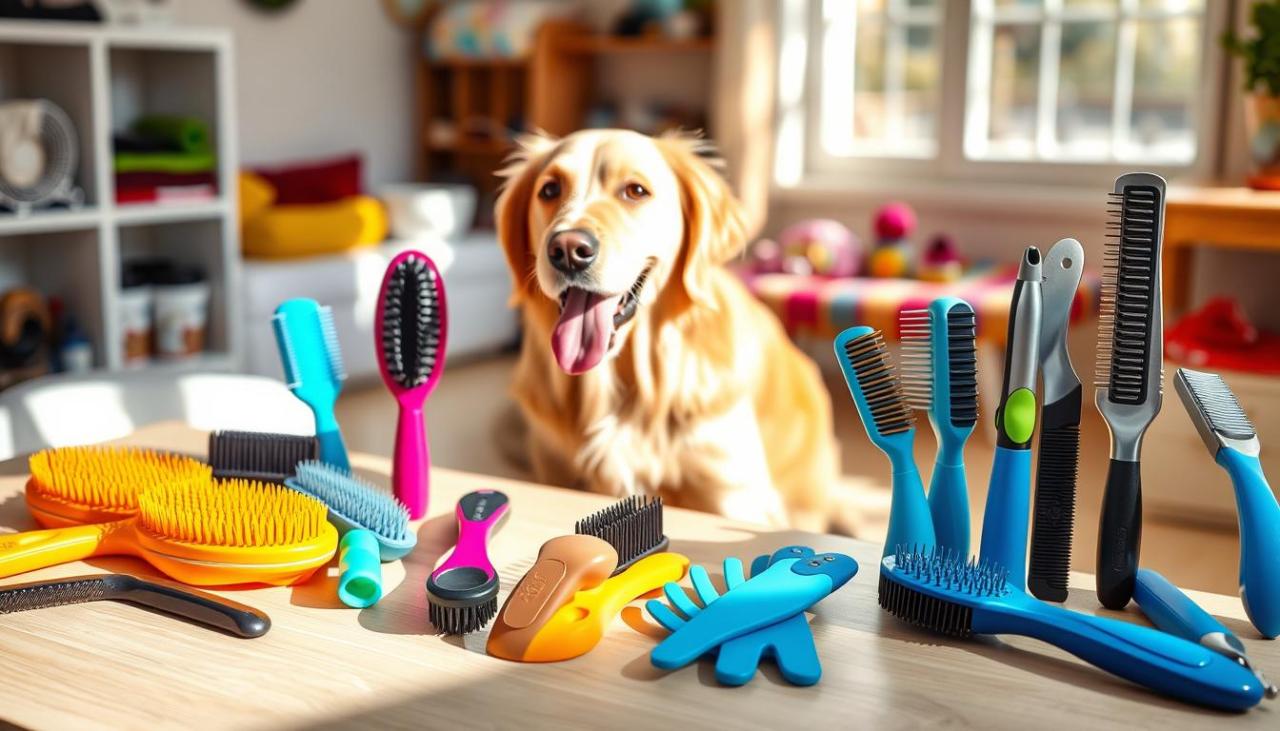
Getting top pet grooming tools is a smart move. It keeps your pet comfy and clean between vet visits. The right tools make grooming safer and more effective for you and your pet. Start with a pet grooming kit that fits your pet’s coat and size.
Brushes and Combs: What to Choose
Choosing the right brush is key for a healthy coat and to avoid painful mats. Long-haired pets need a slicker brush or metal comb to remove tangles. Short-haired pets do well with a rubber curry brush to spread oils.
Nail Clippers: Keeping Claws in Check
Trimming your pet’s nails is crucial to avoid pain and injury. Use high-quality clippers made for your pet’s size for a clean cut. Always have styptic powder ready in case you cut too close to the quick.
Bathing Supplies: Shampoos and Conditioners
Using the best pet grooming products is key for your pet’s skin. Choose shampoos and conditioners made for your pet’s species to avoid irritation. These essential pet grooming supplies keep your pet’s coat shiny and healthy, and your home smelling good.
| Tool Category | Primary Benefit | Frequency of Use |
|---|---|---|
| Slicker Brush | Removes loose fur and mats | Daily or Weekly |
| Nail Clippers | Prevents overgrown claws | Every 3-4 weeks |
| Pet Shampoo | Cleanses and moisturizes skin | Monthly or as needed |
| Detangling Spray | Eases brushing process | During grooming sessions |
Grooming Essentials for Dogs vs. Cats
Every pet is different, and so is their grooming needs. The right top pet grooming tools make grooming a breeze. This keeps your pet healthy and happy.
Dog Grooming Tools and Techniques
Dogs with thick coats need special care. Short-coated dogs don’t need much brushing, but long-haired ones do. Consistency is key for their grooming.
Look for high-quality dog grooming products. The right brush prevents pulling and skin issues. Always brush in the direction of hair growth.
Cat Grooming Must-Haves
Cats are naturally clean, but they still need gentle grooming. Cat grooming must-haves include soft brushes or gloves. These mimic a cat’s tongue.
Patience is essential when grooming cats. Keep it short and positive to build trust. This turns grooming into a special bonding time.
How Often Should You Groom Your Pet?
Having a regular grooming routine is key to your pet’s health. Every pet is different, but finding the right balance keeps them happy and comfortable. We suggest bathing your pet every 4 to 6 weeks. But, if they spend a lot of time outside or get very dirty, they might need more frequent baths.
Factors Affecting Grooming Frequency
Several things affect how often you should groom your pet. Breed type is a big factor. Long-haired pets need daily grooming to avoid painful mats. Short-haired pets might only need a quick weekly grooming to remove loose fur.
Your pet’s activity level and where they live also matter. Pets that are active and go outside a lot will need more baths than those that stay indoors. Having the right cat grooming must-haves makes grooming easier for both of you.
Signs Your Pet Needs a Grooming Session
At times, your pet will show you they need a grooming session. Look out for these signs:
- A noticeable, unpleasant odor coming from the coat or ears.
- Excessive scratching or biting at specific areas of the body.
- Visible tangles, mats, or debris trapped in the fur.
- Dull or greasy-looking hair that lacks its usual shine.
By watching for these signs, you can adjust your grooming schedule. The table below gives a quick guide for grooming based on coat type and lifestyle.
| Pet Type | Brushing Frequency | Bathing Frequency |
|---|---|---|
| Short-Haired | Weekly | Every 6-8 Weeks |
| Long-Haired | Daily | Every 4-6 Weeks |
| Active/Outdoor | Every 2-3 Days | As Needed |
The Importance of Bathing Your Pet
We think a clean pet is a happy pet. That’s why learning how to bathe them is key. Regular baths get rid of dirt, allergens, and loose fur. This keeps their coat clean and their skin healthy, avoiding infections and bad smells.
Remember, your pet’s skin is different from yours. Human soaps can dry out and irritate their skin. Using the best pet grooming products helps keep them comfortable during baths.
Choosing the Right Pet Shampoo
Finding the right shampoo is crucial for a good grooming session. Look for products made for your pet’s type, whether dog or cat. These specialized formulas avoid harsh chemicals and fragrances that can cause allergies.
When looking for the best pet grooming products, choose natural ingredients like oatmeal or aloe vera. These soothe the skin and clean the coat well. Always check the label for parabens and sulfates, which can be harmful.
| Shampoo Type | Best For | Key Benefit |
|---|---|---|
| Oatmeal Based | Dry or Itchy Skin | Calming Relief |
| Hypoallergenic | Sensitive Pets | Reduces Irritation |
| Deodorizing | Active Pets | Neutralizes Odors |
How to Bathe Your Pet Effectively
Getting ready is key for a stress-free bath. Start by brushing their coat to remove tangles before getting them wet. This prevents mats from getting tighter. Use a wet washcloth to gently wipe their face, avoiding their eyes and ears.
When bathing, apply shampoo from the neck down. Massage it into the fur but be gentle around sensitive areas. Thorough rinsing is crucial; leftover residue can cause itching or skin issues.
After rinsing, dry your pet with a clean towel instead of rubbing them. If they have long hair, use a cool setting on a blow dryer to prevent dampness. Following these steps with the best pet grooming products will keep your pet feeling fresh and comfortable.
Nail Care: Tips for Trimming Your Pet’s Claws
Healthy paws start with regular nail care. Long claws can make your pet walk oddly, causing joint stress and chronic pain. The right essential pet grooming supplies help you do this safely at home.
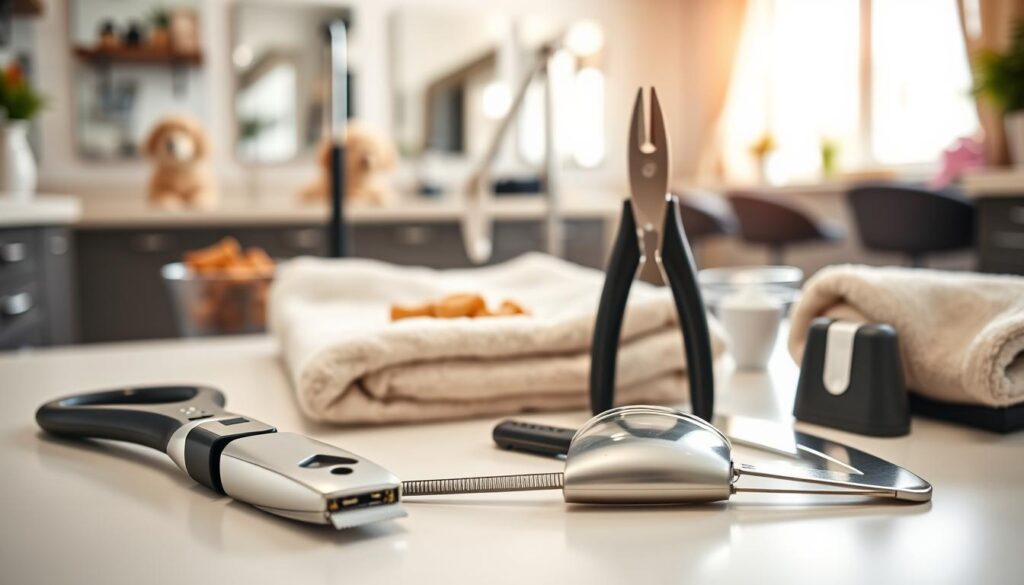
“A pet’s comfort is directly linked to the health of their feet, making consistent maintenance a non-negotiable part of responsible ownership.”
How to Calm Your Pet for Nail Trimming
Many pets get anxious at the sight of clippers. So, it’s key to create a calm space. Begin with short, positive sessions where you just handle their paws without cutting.
This builds trust in your grooming process. Using high-value treats can also help. They distract your pet and make grooming a positive experience.
If your pet gets restless, try these steps:
- Choose a quiet room with minimal distractions.
- Keep your voice low and soothing throughout the session.
- Take frequent breaks if your pet shows signs of agitation.
Alternatives to Traditional Nail Clippers
If your pet is sensitive to clippers, consider other pet grooming accessories. Electric nail grinders are great. They file the nail down slowly, reducing the risk of cutting the quick.
Grinders give a smoother finish and are less scary for nervous pets. Make sure you have the right tools to keep your pet comfortable and mobile for years.
Brushing Techniques for Different Coat Types
The right brushing technique can greatly improve your pet’s coat health. The method you choose depends on your pet’s fur texture and length. By mastering these skills, you ensure that natural oils are distributed evenly. This promotes a vibrant and healthy appearance.
Long-Haired Breeds
Pets with long fur need daily attention to stay comfortable. Without regular care, their fur can develop painful tangles and mats. A slicker brush or metal comb helps prevent these issues by reaching the hair base.
Short-Haired Breeds
For pets with smooth, short coats, grooming is simpler. They only need a thorough brushing once a week. Start with a rubber brush to loosen dead hair, then use a soft bristle brush to smooth the coat and remove dirt.
Curly-Coated Pets
Curly-coated breeds are prone to matting if not groomed correctly. They need specific grooming essentials for dogs to keep their unique texture. Use a wide-tooth comb to gently work through curls, ensuring you reach the roots to prevent hidden mats.
| Coat Type | Frequency | Primary Tool |
|---|---|---|
| Long-Haired | Daily | Slicker Brush |
| Short-Haired | Weekly | Rubber/Bristle Brush |
| Curly-Coated | Daily/Every Other Day | Wide-Tooth Comb |
Dealing with Shedding: Tools and Strategies
Seasonal changes affect your pet’s coat and shedding. Dogs and cats grow thick fur in cold weather to stay warm. When it gets warmer, they shed this fur, leaving more hair around your home.
Managing this process needs patience and the right tools. Using top pet grooming tools helps keep pets comfortable and reduces hair on furniture.
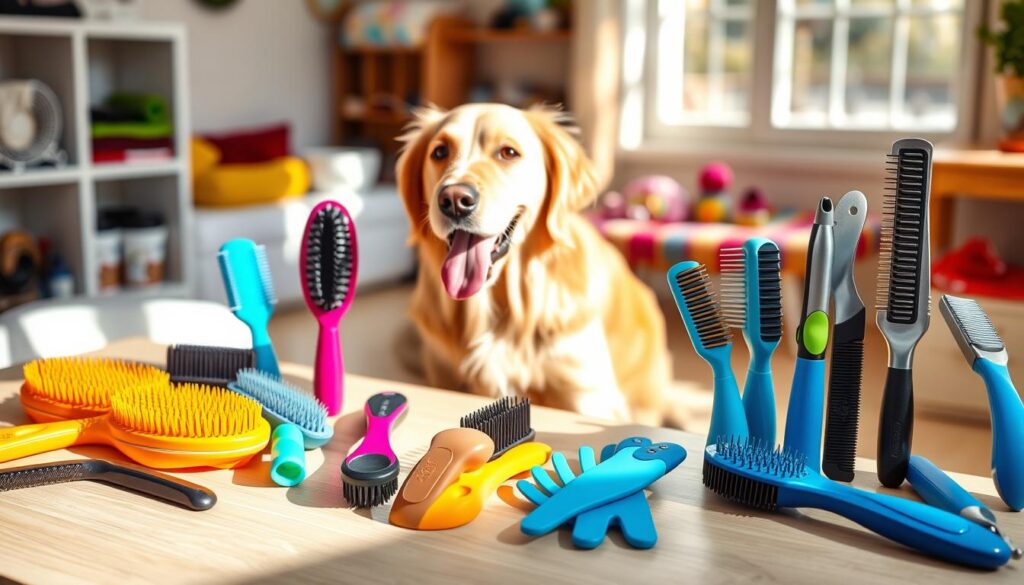
Best Tools for Pet Shedding
The right tool depends on your pet’s fur type. A deshedding rake is best for thick fur. A slicker brush is great for removing loose hair from the topcoat.
Regular use of these tools keeps your pet’s coat healthy. Using the right pet grooming accessories prevents hair from getting on carpets or clothes. Here’s a quick guide to choosing the right tool:
| Tool Type | Best For | Primary Benefit |
|---|---|---|
| Deshedding Rake | Double-coated breeds | Removes deep undercoat |
| Slicker Brush | Long and curly hair | Prevents painful mats |
| Rubber Curry Brush | Short-haired pets | Massages skin and removes hair |
| Metal Comb | Finishing touches | Detects remaining tangles |
Seasonal Shedding Patterns
Most pets shed heavily in spring as they lose their winter coats. This can last weeks and needs more grooming. Daily brushing can cut down on indoor hair.
Shedding is a natural biological process and not a health issue. But, if you see bald spots or too much scratching, see a vet. Regular grooming keeps pets happy and your home clean all year.
Pet Grooming and Skin Care
Your pet’s skin is a key to their health. Regular skin checks can help find problems early. Look for any changes in texture, color, or behavior.
Identifying Skin Issues
Hot spots are common skin problems. They look red, moist, and irritated. You’ll often see them on a dog’s head, hip, or chest.
If your pet scratches or licks too much, check their skin. This could mean they have allergies, parasites, or infections. Catching these early can stop them from getting worse.
Selecting Pet-safe Skin Care Products
Choosing the right skin care is crucial. Look for best pet grooming products made for animals. Human soaps can dry out their skin.
Always check the labels for safe ingredients. Use soft-bristled brushes to keep their skin healthy. Gentle products help your pet stay comfortable and healthy.
DIY Grooming Techniques for Pet Owners
Learning to groom your pet at home can make your bond stronger. Keep essential pet grooming supplies handy. This way, you can keep your pet clean and watch their health between salon visits.
Basic Grooming Steps to Follow
Creating a grooming routine is key to your pet’s comfort. A well-organized pet grooming kit makes daily grooming quick and easy.
Focus on these basic steps to keep your pet happy:
- Regular Brushing: It removes loose fur and prevents tangles.
- Ear Cleaning: Wipe the outer ear to avoid infections and buildup.
- Paw Maintenance: Check between the pads for debris to ensure comfort.
“Grooming is not just about looks; it’s a health check that spots problems early.”
When to Seek Professional Help
Home care is great for upkeep, but some tasks need a pro. Use professional pet grooming supplies and skills for tough jobs.
Call a pro if you see:
- Severe Matting: Cutting tight mats at home can hurt your pet’s skin.
- Breed-Specific Cuts: Some breeds need special styling that’s hard to do at home.
- Anxious Pets: If your pet gets very stressed or aggressive, a groomer can be safer.
Knowing when to ask for help shows you care about your pet’s safety. This makes grooming a positive experience for them.
Creating a Positive Grooming Experience
Turning grooming into a shared activity can strengthen your bond with your pet. Patience is key when using a pet grooming kit at home.
Strategies for Calm Interactions
Keep grooming sessions short to avoid overwhelming your pet. Speak softly and steadily to keep the atmosphere calm. This helps your pet feel safe and makes grooming easier.
Rewarding Success
Give high-value treats or extra love right after grooming. This positive feedback teaches your pet that being cooperative is rewarding. Soon, even the most hesitant pets will look forward to these moments.
Having the right cat grooming tools is important. Being consistent helps your pet understand the routine and feel less anxious. Start small and celebrate each success as you work towards a better life together.