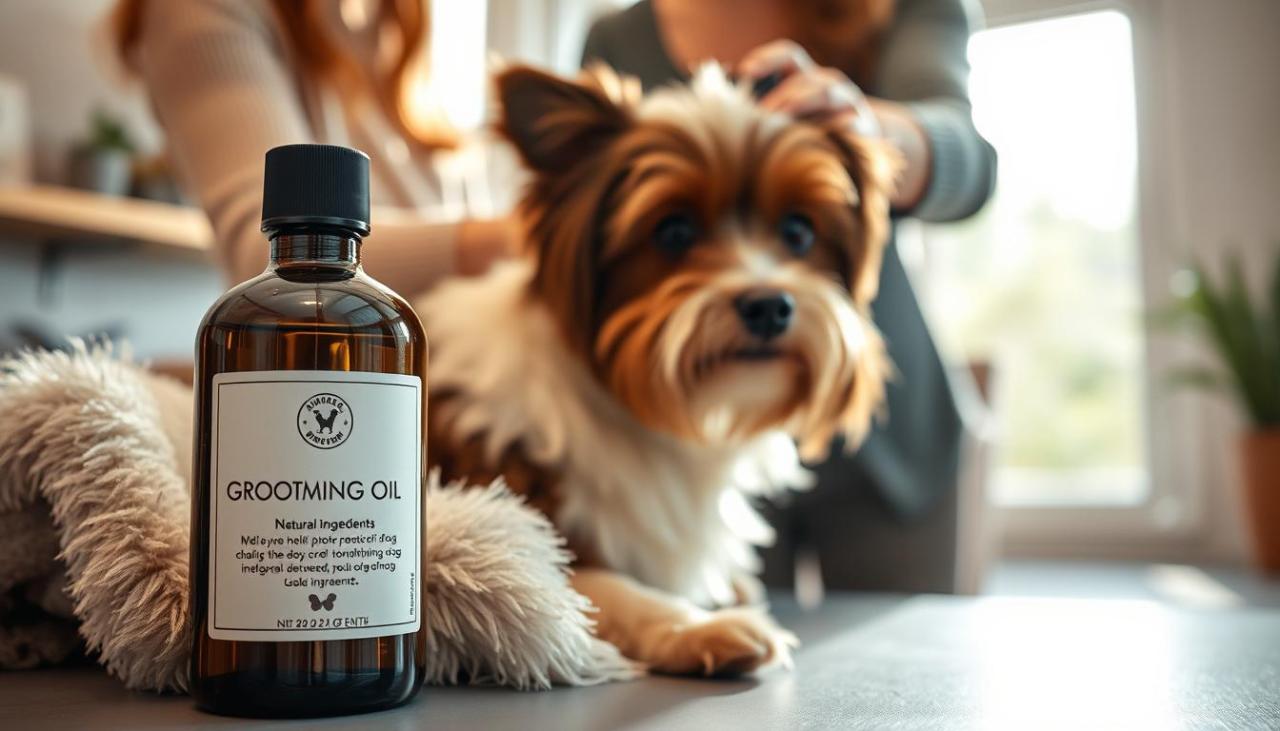
Did you know a pet’s skin is the biggest organ, making up almost 24% of their body weight? It’s not just for looks; it protects them from the outside world and keeps their body temperature right. When a dog’s fur is dry, brittle, or tangled, it’s a sign their skin needs help.
Dog coat conditioning oil is a great way to make their fur shiny and easy to brush. It adds moisture to dry hair, making grooming a breeze. But, if their fur looks dull all the time, it could mean they have allergies or need better food. Always check with a vet if your dog’s skin keeps getting irritated or their fur changes suddenly.
In this guide, we’ll show you how to use conditioning oil for dog’s fur safely. We’ll help you pick the best products and show you how to use them for a healthy, shiny coat.
Key Takeaways
- Skin health is critical for overall immunity and temperature regulation.
- Topical treatments help manage tangles and restore natural shine.
- Persistent dryness may indicate underlying medical or dietary issues.
- Always prioritize professional veterinary advice for chronic skin concerns.
- Proper application techniques ensure maximum absorption and comfort.
What is Dog Coat Conditioning Oil?
Conditioning oils help keep your dog’s skin and fur healthy. They can be applied directly or mixed into their food. These oils help keep the skin hydrated and protect it from the environment.
Some oils are used as topical treatments to make the hair smooth and fix dry spots. Others are dietary supplements that give your dog important nutrients from the inside. Choosing the right best dog coat conditioner depends on your dog’s skin needs.
Definition and Purpose
A conditioning oil is a special mix of lipids and nutrients made to add moisture. While some moisturizers make the coat shiny and easy to comb, others strengthen the skin from the inside.
Using both types of oils can make your dog’s coat healthier and shinier. It helps keep the coat strong and beautiful.
Key Ingredients to Look For
When looking for an organic coat moisturizer for dogs, choose products with clear labels. Stay away from “oil blends” without specific ingredients, as they might not be effective.
Here are some good ingredients to find on the label:
- Omega-3 and Omega-6 fatty acids: They help reduce inflammation and keep the skin flexible.
- Fish and Flaxseed oils: They are full of healthy fats that make the coat soft and shiny.
- Coconut-derived components: They are great for natural moisture and calming irritated skin.
- Biotin and B Vitamins: They are important for hair growth and keeping the skin strong.
Make sure to check the ingredient list for specific fatty-acid content. Good oils will list their exact composition, so you know what you’re using on your pet’s coat or feeding them.
Benefits of Using Dog Coat Conditioning Oil
A high-quality coat conditioning treatment for dogs is a secret to a vibrant, healthy look. Regular baths clean the fur but can take away natural moisture. A special oil helps bring back this moisture, making your pet look and feel great.
Enhances Shine and Softness
The main benefit of dog coat conditioning oil is how it makes fur feel and look better. Ingredients rich in omega help lock in moisture, giving a healthy shine. These treatments also support the skin, reducing dryness and inflammation that can make fur dull and brittle.
Reduces Shedding
Using a coat conditioning treatment for dogs regularly makes grooming easier. Hydrated hair is more elastic and less likely to break. Brushing after applying oil helps remove loose hair, reducing fur on furniture.
“A well-conditioned coat is the first line of defense against environmental damage and skin irritation for our canine companions.”
Helps with Matting
While oil is great, it’s not a substitute for regular brushing or professional grooming. It helps prevent new knots by smoothing the hair cuticle. But, if your dog has severe mats, you should get professional help, not just use dog coat conditioning oil.
| Benefit | Primary Action | Result |
|---|---|---|
| Shine | Locks in moisture | Glossy appearance |
| Shedding | Strengthens hair | Less loose fur |
| Matting | Smooths cuticles | Easier detangling |
When to Use Dog Coat Conditioning Oil
Many pet owners wonder when to use conditioning oils in their pet care routine. Knowing the right time is key to keeping your dog’s coat healthy and shiny.
Ideal Times for Application
Using a coat conditioning treatment for dogs is best when your dog’s skin or fur looks dry. Here are some times to use these products:
- After bathing: It helps keep moisture in that shampoo might take out.
- Seasonal changes: Dry winter air or hot summer weather can make fur brittle and dull.
- Post-grooming: After brushing out mats or tangles, oil can make the coat shine again.
Remember, bathing too much can take away skin oils. Conditioning should help keep your dog’s skin healthy, not just fix dryness from too much washing.
Frequency of Use
How often to use depends on your dog’s coat type, skin, and the product’s instructions. Dogs with dry, sensitive skin might need it more often. Those with oily coats might need it less.
If you’re thinking about giving your dog an internal supplement, talk to your vet first. Size, health, and meds all affect safe amounts. Always get vet advice to keep your pet’s fat intake healthy.
How to Apply Dog Coat Conditioning Oil
Applying dog coat conditioning oil the right way makes grooming a spa experience for your pet. Using an organic coat moisturizer for dogs correctly ensures it goes deep into the fur and skin. It doesn’t just sit on the surface.
Recommended Techniques
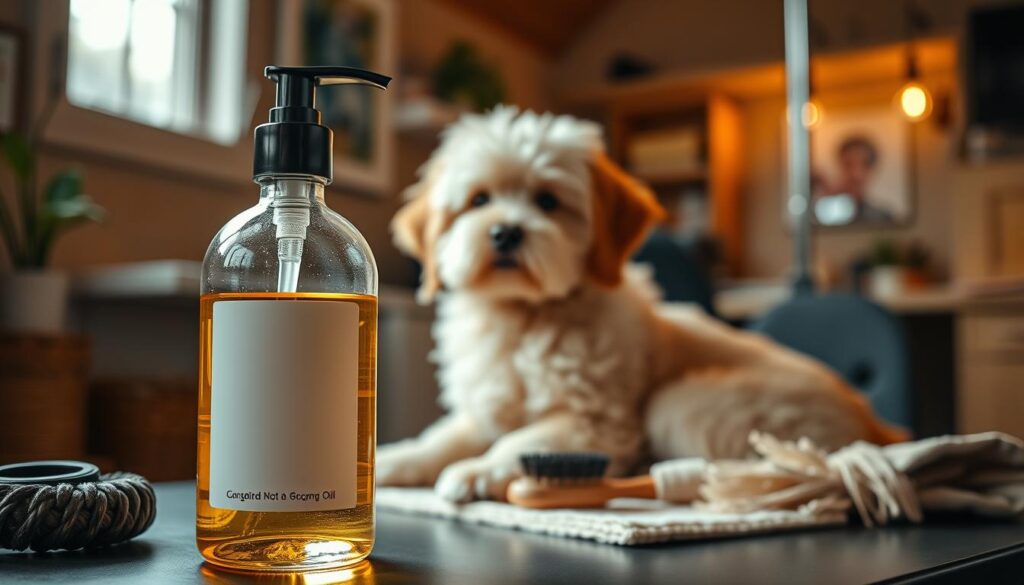
First, do a patch test on a small, hidden area of your dog’s skin. This checks for any irritation. After confirming it’s safe, put a small amount of dog grooming oil in your hands.
Warm the oil by rubbing your hands together for a few seconds. Gently part the fur to expose the skin. Then, massage the product into the base of the hair. This way, the nutrients get to the follicles where they’re most needed.
Tips for Best Results
Pay extra attention to dry or brittle areas of the coat, like elbows or the base of the tail. Be very careful around the sensitive eye and mouth areas.
If you’re going to bathe your dog, let the oil soak in for at least 30 minutes first. This lets the product work its magic and makes rinsing easier.
Lastly, wash your hands thoroughly after grooming. If your dog likes to lick, give them a long-lasting treat to keep them from licking off the oil before it absorbs fully.
Types of Dog Coat Conditioning Oils
Choosing the right nourishing oil for dog’s coat is key. It’s about finding a mix of natural ingredients and scientific know-how. Knowing what’s in these products helps keep your pet’s skin and fur healthy.
Natural Oils vs. Synthetic Options
Many pet owners like natural conditioning oil for dogs for its pure ingredients. Fish oil is great because it’s full of EPA and DHA. These help from the inside out. On the other hand, plant-based oils like flaxseed oil have omega-3s, but dogs might not use them as well as marine sources.
Topical uses differ a lot too. Coconut oil is good for its antimicrobial and moisturizing effects. But, synthetic oils are made for quick absorption and detangling. They give a sleek look that some natural oils can’t match without being greasy.
Popular Brands and Products
When picking products, don’t just look at what they say. A good nourishing oil for dog’s coat should be clear about what’s in it and have third-party tests. Choose brands that check for bad stuff and make sure their products are safe for vets to recommend.
The table below shows the main differences between common oils. It helps you pick the best for your grooming needs.
| Oil Type | Primary Benefit | Absorption Rate | Best Use Case |
|---|---|---|---|
| Fish Oil | Omega-3 (EPA/DHA) | High (Internal) | Skin & Coat Health |
| Coconut Oil | Antimicrobial | Moderate (Topical) | Dry Skin Relief |
| Flaxseed Oil | Plant-based Omega-3 | Moderate (Internal) | General Maintenance |
| Synthetic Blend | Detangling/Shine | Fast (Topical) | Show Grooming |
Special Considerations for Different Dog Breeds
Every dog’s fur is different, so your grooming needs to match. Knowing your dog’s fur type is key. This helps you tailor your grooming for the best results.
Long-Haired Breeds
Long-haired dogs need extra care to avoid tangles and skin problems. Start by carefully sectioning their fur. This helps the product spread evenly and prevents dirt buildup.
“A healthy coat is the mirror of a dog’s overall well-being, reflecting the care and attention provided by their human companions.”
Brushing often is crucial for these dogs. It spreads oils and keeps the fur healthy. Always check the skin under the fur for any signs of irritation.
Short-Haired Breeds
Short-haired dogs don’t need to be brushed as much. But they still need moisture to stay healthy. They can get dry skin and allergies, which can be helped by the right products.
- Focus on areas prone to dryness, such as the back and flanks.
- Use minimal amounts to prevent product buildup on the skin.
- Massage the oil gently to support healthy circulation and skin elasticity.
The aim is to make your dog’s coat shine without overdoing it. Watch how your dog reacts to different treatments. This will help you perfect your grooming routine.
Common Misconceptions About Coat Conditioning Oils
Many pet owners have misconceptions about grooming products. They think a dog coat conditioning oil can solve all skin and fur problems. But, using these oils to treat serious health issues can delay getting vet care.
Myths Debunked
Some believe that using more product makes a dog’s coat healthier and shinier. But, too much oil can make your dog feel greasy and attract dirt. This can upset the skin’s natural balance. Moderation is key when using any dog coat conditioning oil for the best results.
Another myth is that adding lots of oil to a dog’s diet will instantly improve their health. But, there are risks:
- Digestive upset, including diarrhea or nausea.
- A noticeable fishy breath odor.
- Reduced appetite or lethargy.
Always talk to your vet before starting any new supplement, like oil. This is crucial if your dog has pancreatitis or clotting disorders. These conditions need careful management to avoid serious health issues.
FAQs
We get many questions from pet owners wanting to improve their dog’s look. Here are answers to some common questions about dog coat conditioning oil:
Does oil help reduce shedding? These products make hair texture and strength better. But, they don’t stop shedding. They mainly moisturize the skin and prevent hair breakage.
Can I apply coconut oil directly to my dog? Yes, many use organic, unrefined coconut oil on their dogs. But, always do a small test first to check for allergies.
How long does it take to see results? Consistency is key. Most owners see a softness and shine improvement in two to four weeks with regular use.
Integrating Conditioning Oil into Grooming Routines
Adding a nourishing oil for a dog’s coat to your weekly routine has many benefits. It keeps your dog’s coat soft, manageable, and healthy. By adding these products to your schedule, your dog stays comfortable and looks great all year.
Pairing with Bathing
Bathing is key for hygiene, but it must be gentle. Use gentle, dog-specific shampoos to avoid dryness. Avoid over-bathing to prevent skin problems.
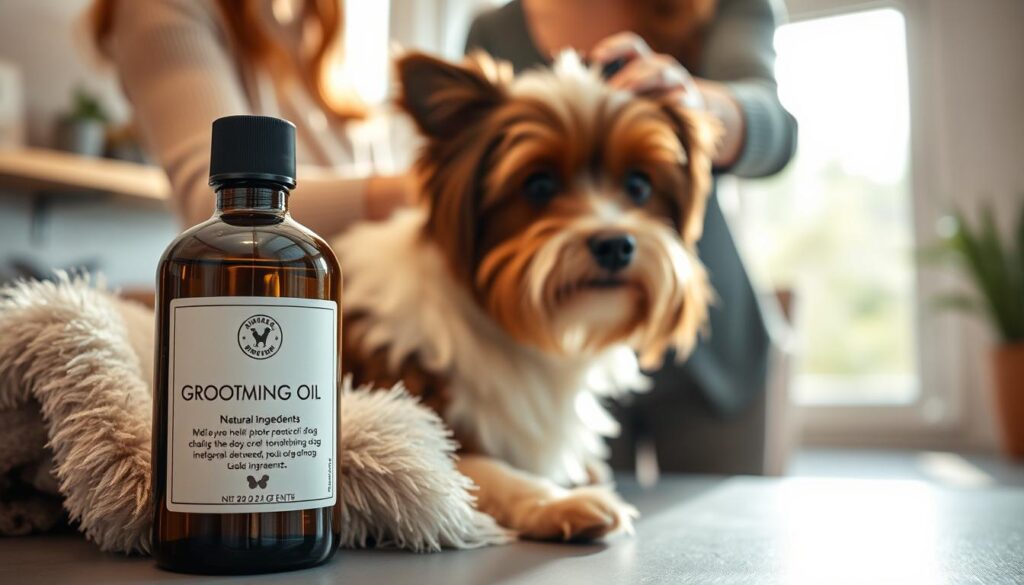
Apply a dog grooming oil after a bath to keep moisture in. This makes the fur smooth and shiny. Make sure to rinse the shampoo well before using oil to avoid buildup.
Combining with Other Products
Adding oils needs careful thought, considering other supplements or treatments. Always check for overlapping ingredients to avoid skin issues. Watch your dog’s fat intake if using both oral and topical products.
Brushing is key with oil treatments. It spreads the oil and removes tangles. If using parasite prevention, talk to your vet to avoid timing conflicts.
Your dog grooming oil should be part of a complete care plan. Listen to your dog’s needs and your vet’s advice. Consistency and quality products lead to the best results for your pet.
Customer Reviews and Success Stories
We often look to the success stories of others when deciding on the best care for our furry companions. While individual results vary, hearing from fellow pet parents provides helpful context for using a dog coat conditioning oil. At our organization, we believe that understanding these experiences helps you set realistic expectations for your own grooming routine.
Before and After Comparisons
When you review visual evidence of a coat conditioning treatment for dogs, consistency is key. To get an accurate assessment, look for photos taken under similar lighting conditions and grooming intervals. Changes in texture or shine are often subtle at first, making it difficult to spot differences without a controlled environment.
It is helpful to keep a realistic timeline in mind when tracking progress. You might notice the following milestones:
- Weeks 3–4: Early improvements in hair texture and softness often begin to emerge.
- Weeks 5–8: More visible shine and a noticeable reduction in shedding typically develop during this phase.
Testimonials from Pet Owners
Many owners report that a high-quality dog coat conditioning oil helps manage stubborn tangles and dry skin. But remember, these testimonials are individual experiences, not guaranteed medical outcomes. Every dog has a unique coat type and skin sensitivity that influences how they respond to a specific coat conditioning treatment for dogs.
“After a few weeks of consistent use, my golden retriever’s coat felt significantly softer and looked much healthier than before.”
If you notice that your dog’s skin issues persist or worsen despite regular grooming, please consult your veterinarian. Tracking your pet’s progress allows you to make informed decisions about their health. Always prioritize professional advice when dealing with persistent skin or coat concerns.
Where to Buy Dog Coat Conditioning Oil
Choosing the right products for your pet is important. Look for brands that are open about their ingredients and have third-party tests. These products are key to keeping your pet healthy.
Digital Marketplaces
Chewy and Amazon have lots of grooming supplies. Check what other buyers say and look for EPA or DHA labels. Make sure you can return items if they’re not what you expected.
Neighborhood Pet Boutiques
Local shops often have high-quality items you can see in person. Petco and independent stores can help find the best products for your dog. Always check the expiration dates to keep the oil effective.
After buying, keep the oil in a cool, dark spot. Some need to be refrigerated, so follow the instructions. If your dog shows signs of irritation, see a vet right away. They can help with skin problems or dryness.