Did you know that nearly 40% of skin-related vet visits are due to bad coat care? Many owners just bathe their dogs. But, for a shiny coat, you need a holistic approach to health.
A healthy lifestyle is key, with good food and water. Dog grooming oil is a great add-on to your brushing routine.
Remember, topical products can’t fix all problems. If your dog’s fur changes suddenly, sheds too much, or gets irritated, it might mean stress, parasites, or infections. In these cases, see a vet. This guide will help you pick and use dog grooming oil safely at home to make your dog look great.
Key Takeaways
- Maintain a balanced diet to support skin health from the inside out.
- Use topical treatments as a supplement, not a replacement for routine care.
- Consult a veterinarian if you notice sudden changes in coat texture.
- Always prioritize safety when selecting products for your pet.
- Consistent brushing helps distribute natural moisture across the fur.
What is Dog Grooming Oil?
Learning about topical conditioners is key to a healthier coat for your dog. A good dog grooming oil makes your pet’s fur softer and shinier. It also makes grooming easier.
These products are for looks and care, not for health problems. They don’t fix issues like yeast infections or hair loss. If your dog has ongoing skin issues, talk to your vet before using any treatments.
Understanding the Purpose of Dog Grooming Oil
These oils create a barrier to keep moisture in and prevent hair breakage. They smooth the hair cuticle, making brushing easier and preventing painful mats. Regular use makes your dog’s coat shine and feel silky.
Choosing natural dog grooming products means finding ones that don’t leave a greasy feel. They work best as part of a regular grooming routine. They’re great for keeping long or double-coated breeds’ hair healthy.
Key Ingredients to Look for in Grooming Oils
Good grooming oils use carrier oils like coconut, jojoba, or argan. These oils deeply hydrate the hair. Many natural dog grooming products also add aloe vera or chamomile to calm the skin.
Be careful with essential oils for dog grooming. Some can be too strong and irritate your pet’s skin. Make sure any essential oil product is safe for dogs, as human versions are too strong.
Benefits of Using Dog Grooming Oil
Many of us know that a shiny, easy-to-manage coat comes from using a good dog grooming oil. While we all know the basics of what is dog grooming, adding oil can elevate your grooming routine. Remember, these oils are meant to enhance, not replace, a healthy diet, enough water, and regular vet visits.
Promotes Healthy Skin and Coat
Topical oils create a barrier that keeps moisture in, great for dogs with dry skin. Unlike fish oil, which works from the inside, a good dog grooming oil works on the outside. This combo keeps your pet’s skin soft and strong against the environment.
Reduces Shedding and Dander
Brushing your dog regularly is key, and oil makes it better. It makes brushing easier by reducing slip in the fur. This helps:
- Loosen undercoat to prevent shedding.
- Reduce dander in your home.
- Spread natural oils evenly.
Enhances Shine and Softness
If your dog’s fur feels hard or looks dull, a bit of dog grooming oil can fix it. It smooths each hair, making it reflect light and look healthier. Regular use makes the coat softer and easier to care for between groomings.
Keep in mind, these products are great but can’t fight parasites or skin infections. If your dog’s skin looks off or itches a lot, talk to your vet.
How to Choose the Right Dog Grooming Oil
Choosing the best grooming product starts with knowing your dog’s coat and skin needs. Every dog is different, and what works for one might not work for another. By understanding your pet’s specific needs, you can make grooming comfortable and effective.
Considering Your Dog’s Skin Type
Before buying any dog grooming oil, check if your dog has dry, oily, or sensitive skin. Dogs with dry skin need deep-conditioning formulas to keep moisture in. On the other hand, oily dogs might do better with light, non-greasy sprays to prevent matting.
Also, think about your dog’s fur density. Thick fur needs deep-penetrating products, while short fur does better with light sprays. Always watch how your dog’s skin reacts to the weather, as it can change their skin’s moisture levels.
Safe Ingredients for Sensitive Skin
When looking for an organic dog grooming oil, make sure the ingredients are listed fully. Some products might claim to be natural but still have harmful additives. Be careful with essential oils for dog grooming as they can be toxic if not diluted right.
Don’t apply oils near sensitive areas like eyes, nose, or mouth. If your dog has allergies, test a small area first. Safety is our top priority when introducing new products to your pet’s routine.
Reading Labels and Certifications
Look beyond the front of the bottle. Check the pH balance, testing certifications, and usage directions. Products vetted by veterinarians are usually safer and more effective.
| Skin Condition | Recommended Oil Type | Key Benefit |
|---|---|---|
| Dry and Flaky | Heavy, Nutrient-Rich | Deep Hydration |
| Oily and Dull | Light, Balancing | Sebum Control |
| Sensitive/Allergic | Hypoallergenic/Organic | Soothing Relief |
| Normal/Healthy | Light Conditioning | Enhanced Shine |
Make sure the dog grooming oil you choose is free from harsh chemicals. Reading labels ensures you’re using the best organic dog grooming oil for your pet. Even with essential oils for dog grooming, transparency from the brand is key to a reliable product.
Best Practices for Applying Dog Grooming Oil
Learning how to use dog grooming oil can change your pet’s grooming routine. The right techniques ensure your pet enjoys the oil’s benefits without any hassle or discomfort.
Timing Your Application for Best Results
The best time to apply oil depends on the product and your dog’s coat. Always check the label first. Some oils work best on clean, damp fur, while others are for dry hair.
Applying oil after a bath can keep moisture in, which is great for dry or brittle hair. For daily use, a light coat application can tame flyaways and add shine.
Techniques for Application and Massage
Start by warming a small amount of oil in your palms. This makes it easier to spread evenly over your dog’s fur.
Work the oil into the coat, focusing on tangles or dry spots. Be careful around the eyes and mouth to avoid irritation.
Use your fingertips for a gentle massage. This helps the oil penetrate the skin without tangling the fur. Then, use a soft brush or comb from your dog grooming supplies to spread it evenly.
Recommended Frequency of Use
How often you apply oil depends on your dog’s breed and coat type. Long or thick hair needs more treatments, while short-haired dogs might only need a weekly touch-up.
Watch for signs of too much oil, like residue or skin irritation. If your dog’s coat feels greasy, cut back on the amount or frequency of application.
By following these steps regularly with the right dog grooming supplies, your pet will always look their best. Consistency is key to a soft, shiny, and healthy coat.
DIY Dog Grooming Oil Recipes
Exploring homemade dog grooming oil lets you choose what touches your dog’s skin. These oils are great for conditioning but don’t replace vet care. Always use clean containers and test small areas first.
Natural Ingredients for Homemade Oils
When making your own natural dog grooming products, choose high-quality base oils. Coconut, almond, or jojoba oil are good choices. They moisturize without making the fur greasy.
You can also add botanical extracts for extra benefits. Aloe vera soothes irritated skin, while neem and hibiscus make coats shiny. Make sure these ingredients are pure and free from harmful additives.
Popular Formulas and Their Benefits
Making an organic dog grooming oil at home means using the right amounts. Avoid using essential oils, as they can be toxic to pets. Stick to safe, hydrating blends.
If your dog shows signs of irritation after use, stop right away. Keep them from licking the treated area to avoid stomach problems. Below is a table of common ingredients and their benefits for your dog’s coat.
| Ingredient | Primary Benefit | Best For |
|---|---|---|
| Coconut Oil | Deep Hydration | Dry, brittle fur |
| Aloe Vera | Soothing Relief | Sensitive or itchy skin |
| Sweet Almond Oil | Natural Shine | Dull, lackluster coats |
| Neem Extract | Cleansing Support | Maintaining skin health |
Top Dog Grooming Oil Brands to Consider
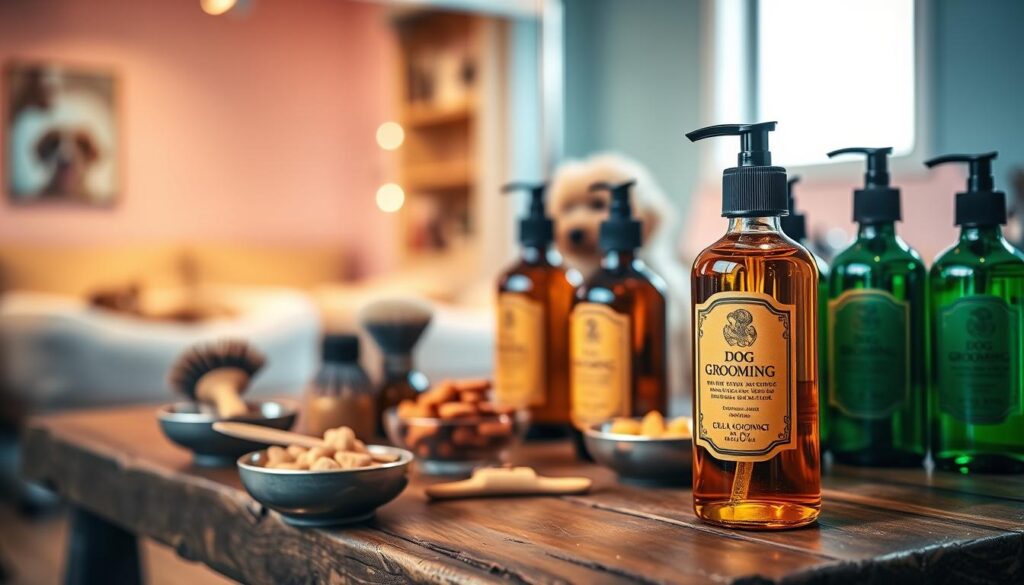
When it comes to grooming, quality is key, not fancy packaging. Many luxury dog grooming products look great but don’t always deliver. Look for oils that are pure and for brands that are open about what they use.
Reviews of Leading Brands
Choosing the best dog grooming oil means looking at what’s inside. Top brands use oils like argan, jojoba, and coconut. These oils go deep into the hair, not just sitting on the surface.
Good brands avoid harsh chemicals and synthetic smells. They also test their products to make sure they’re safe. This is important for keeping your dog healthy and happy.
Comparing Prices and Ingredients
When comparing prices, think about what you get for your money. Luxury dog grooming products might cost more but can last longer. On the other hand, professional dog grooming essentials often come in bigger sizes, which can be better value if you use them a lot.
| Brand Category | Key Ingredient Focus | Best For | Value Rating |
|---|---|---|---|
| Premium Boutique | Organic Argan/Jojoba | Sensitive Skin | High |
| Professional Grade | Essential Fatty Acids | High-Volume Salons | Excellent |
| Budget-Friendly | Natural Coconut Oil | Daily Maintenance | Good |
The best dog grooming oil is one that fits your dog’s needs and is safe. Always test a small amount first. This way, you can choose the best for your dog’s health and looks.
Common Mistakes to Avoid with Dog Grooming Oil
Getting a healthy coat is more than just using a product. It’s about avoiding common mistakes. Dog grooming oil can make a coat shine, but wrong use can cause problems. We want your pet to be comfortable and clean during grooming.
Overuse of Oil
It’s easy to want to use more oil for a quick shine. But, using too much is a big no-no. Too much dog grooming oil makes fur greasy and attracts dirt. This makes grooming hard and might make your dog lick it too much.
If your dog’s coat feels sticky or looks matted after oil use, you’ve used too much. Start with a little oil and work it in slowly. If it’s still oily, wash it with a gentle shampoo.
Neglecting Other Grooming Essentials
Many think oil can replace a full grooming routine. But, dog grooming oil is just one part of keeping your dog healthy. Don’t forget these important steps:
- Regular Brushing: Oil can’t replace brushing to remove loose fur and tangles.
- Proper Bathing: Use a good dog shampoo to clean the skin before oil treatment.
- Hygiene Checks: Don’t forget nail trimming, ear cleaning, and dental care.
- Environmental Care: Keep your dog’s bedding clean to avoid skin problems.
Remember, these products can’t fix all health problems. If you see signs of infection like redness or a bad smell, stop using products. These signs need a vet’s check to make sure your dog gets the right care.
Dog Grooming Oil for Different Breeds
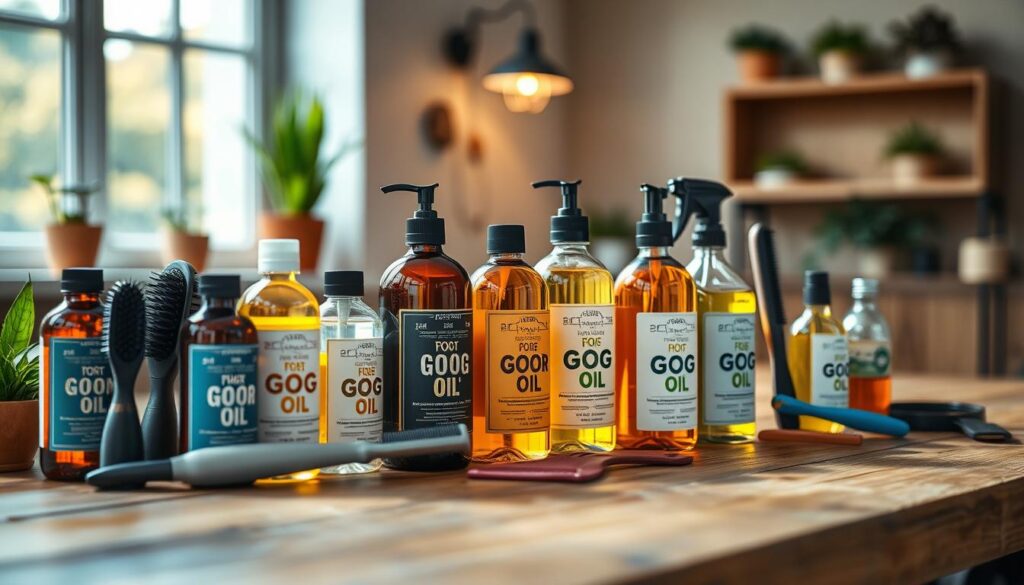
Every dog has a unique coat that needs special care. Using the right dog grooming supplies can greatly improve their look and feel.
Tailoring Your Choice Based on Coat Type
Short-coated dogs usually don’t need much oil because their fur is naturally healthy. But a light oil can add shine without making it greasy.
Long-coated dogs face issues like matting and tangles. A detangling oil with extra slip makes brushing easier and less painful.
Double-coated breeds, like Huskies or Golden Retrievers, need special care for their undercoat. Use moisturizing products that won’t weigh down their fur. Curly-coated dogs do well with light, water-based oils that keep their curls bouncy.
Breed-Specific Grooming Considerations
Choosing the right oil is just the start. You also need professional dog grooming essentials for regular care. Brushing is key to distribute oils and prevent hair loss.
Be gentle when applying products around sensitive areas like the face and ears. If skin problems or mats persist, it’s best to see a pro for your dog’s health.
Grooming is also a chance to check for fleas. Adding flea control to your routine keeps your dog’s coat beautiful and pest-free.
| Coat Type | Oil Texture | Application Focus |
|---|---|---|
| Short Coat | Lightweight | Surface shine |
| Long Coat | Rich/Detangling | Ends and tangles |
| Double Coat | Non-greasy | Skin hydration |
| Curly Coat | Water-based | Curl definition |
Frequently Asked Questions About Dog Grooming Oil
Understanding dog skincare is key to keeping your pet safe and happy. Many people ask about the best ways to use dog grooming oil for a healthy coat.
Frequency of Grooming Sessions
Healthy adult dogs usually need a bath every four to six weeks. Your dog’s activity level, coat type, and skin condition affect this schedule. Always follow the product label’s recommended use.
Safety of Human Products
Never use human oils on your pet. Human and dog skin have different pH levels, which can cause irritation. Dog grooming oils are made to be safe for animals, avoiding bad reactions.
Managing Skin Sensitivities
Keep an eye out for signs of discomfort like redness, itching, or hair loss. If you see swelling or digestive issues, stop the product right away. Talk to your vet to check for allergies or health problems.
Choosing the right care for your dog greatly improves their life. By picking the best supplies and watching your pet’s health, you’ll have a happy, shiny dog for years.