Did you know that nearly 40% of pet owners struggle with their furry friend’s dull or brittle fur during the winter months? Keeping their fur healthy is more than just making them look good. It’s crucial for their overall health. We often use topical solutions to add moisture and softness to their skin.
A dry dog coat oil is for grooming outside. It’s different from supplements that pets eat for health. Our guide will help you pick the right ingredients and use them safely to make your pet look better.
We’ll talk about homemade recipes and compare professional products. Remember, if your pet keeps getting irritated, see a vet right away. Professional care is the best way to fix serious health problems.
Key Takeaways
- Topical grooming products help restore natural moisture and shine.
- External treatments are distinct from internal dietary supplements.
- Proper ingredient selection is essential for sensitive skin types.
- Always seek veterinary advice for chronic or worsening skin conditions.
- Consistent application techniques ensure the best aesthetic results.
Understanding the Benefits of Dry Dog Coat Oil
Choosing the best dog coat oil can change your pet’s grooming routine a lot. Many owners just shampoo their dogs, but oil adds a vital layer of protection. It’s key to keep your pet happy and healthy through regular care.
Moisture Retention and Hydration
These oils help keep the skin barrier strong by keeping moisture in. If your dog has dry or flaky skin, oil can help soothe it. Remember, these oils are cosmetic conditioners, not medical treatments.
If your dog has serious skin problems, see a vet first. The best dog coat oil should work with your vet’s advice, not replace it. Keeping the skin hydrated makes it strong against the environment.
Enhancing Shine and Softness
These oils also make your dog look better. They smooth the hair, making it softer and easier to manage. A little oil can make your dog’s coat shine brightly.
Be careful not to use too much oil, as it can make your dog’s coat greasy. Too much oil might also make your dog lick their fur, which isn’t good. Use just enough oil to get the benefits without the mess.
| Coat Condition | Primary Benefit | Application Frequency |
|---|---|---|
| Dry and Brittle | Deep Hydration | Twice Weekly |
| Dull and Lifeless | Enhanced Shine | Once Weekly |
| Sensitive Skin | Soothing Relief | As Needed |
| Healthy Coat | Maintenance | Monthly |
Key Ingredients to Look For
When you start shopping for a natural dog coat oil, the ingredient list is key. Your pet’s skin is their biggest organ. What you put on it can really affect their health. Knowing how these ingredients work with your pet’s body is as important as knowing how their diet affects their coat.
Natural Oils and Extracts
The base oils in a product are crucial. Look for coconut, flaxseed, salmon, and argan oils. They have essential fatty acids that help the skin. Unrefined oils are better because they keep more nutrients and antioxidants.
Coconut oil fights off microbes, while salmon oil adds shine with Omega-3s. Flaxseed oil helps dry fur, and argan oil hydrates without weighing it down. A natural dog coat oil with these oils gives your dog the best care.
Vitamins and Nutrients
Good formulas have vitamins for skin health. Vitamin E is a top choice because it fights off environmental damage. It works well with essential fatty acids to strengthen hair follicles.
Look for products with these nutrients. A balanced oil improves coat appearance and soothes irritation. Consistent use makes fur softer and more resilient.
Avoiding Harmful Chemicals
Not all products are safe for dogs. Check labels for synthetic fragrances, artificial sweeteners, or chemical preservatives. Some essential oils for humans can harm dogs, so make sure the product is pet-safe.
If you can’t find an ingredient, it’s best to skip that product. A natural dog coat oil without harsh additives keeps your dog safe from allergies or skin problems. Always choose simple, transparent grooming supplies for your pet.
How to Choose the Right Dry Dog Coat Oil
Choosing the right organic dog coat treatment starts with knowing your pet. Each dog is different, and what works for one might not work for another. It’s important to consider these differences to give your dog the best care.
Assessing Your Dog’s Coat Type
Before buying a product, check your dog’s fur type and condition. A light oil is good for fine or oily coats. But, a richer oil is better for coarse or dry hair. Think about these things when picking a product for your dog:
- Length: Long hair needs more detangling.
- Texture: Coarse fur needs deep hydration to prevent breakage.
- Shedding: Dogs that shed a lot might need oils that help follicles.
- Dryness: Flaky skin needs intense, moisture-locking ingredients.
Understanding Your Dog’s Skin Sensitivity
Your dog’s skin is very sensitive. If it’s red, itchy, or smells bad, avoid regular products. An organic dog coat treatment is safer for sensitive pets. But, still watch for any bad reactions.
“Always prioritize the health of the skin barrier over the aesthetic shine of the coat. If symptoms like lesions or inflammation persist, professional veterinary guidance is essential to rule out underlying allergies or infections.”
Do a small patch test on your dog’s skin before using a new oil. Look for any signs of discomfort or increased scratching in the next 24 hours. By choosing a high-quality organic dog coat treatment that fits your dog’s needs, you can keep them comfortable and healthy.
Application Tips for Maximum Effectiveness
Getting a healthy coat is more than just picking the right product. It’s about how you apply it too. Using a top-notch dog coat moisturizing oil means paying attention to how you use it. We want you to get the best results and keep your pet happy and comfortable.
When to Apply the Oil
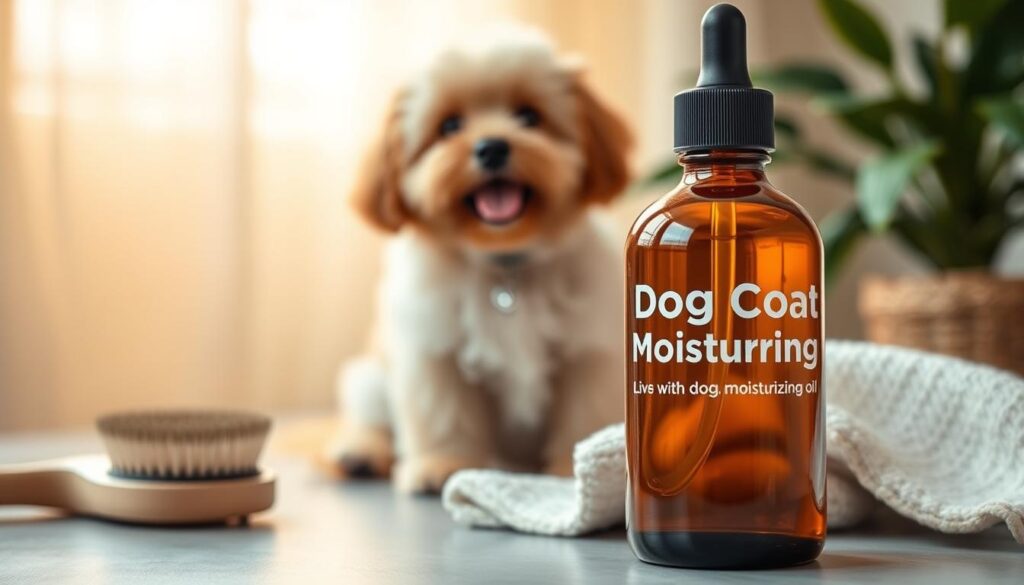
Timing is key in grooming. Apply the treatment to a clean, dry coat for best absorption. Make sure your dog is calm and relaxed for an easier application.
If your dog is fidgety, wait until after a walk or playtime. This is when they are most relaxed. Using dog coat moisturizing oil during these moments can strengthen your bond.
Proper Application Techniques
Start by warming a small amount of oil in your palms. This makes it easier to spread evenly. Use your fingertips to massage the oil into dry spots or brittle ends.
Then, use a soft brush to spread the oil from roots to tips. Always watch your dog for any signs of discomfort or upset. If you see any issues, stop using it and talk to your vet to keep your pet safe.
DIY: Making Your Own Dry Dog Coat Oil
Making your own coat oil lets you choose what goes on your dog’s skin. Many commercial products are great, but making your own can give you peace of mind. At our guide to pet care, we think knowing what you’re using is key to your dog’s health.
Recommended Ingredients
Choose high-quality, food-grade carrier oils like coconut, almond, or jojoba oil. These oils help keep your dog’s coat shiny and healthy. But, be careful with essential oils for dog coats. Many can be harmful or cause skin problems.
“Natural does not always mean safe. Always research the specific botanical profile before introducing any new scent or extract to your dog’s grooming routine.”
Here’s a table to help you pick safe ingredients and avoid harmful ones.
| Ingredient Type | Examples | Safety Status |
|---|---|---|
| Carrier Oils | Coconut, Jojoba, Almond | Safe for Topical Use |
| Essential Oils | Tea Tree, Wintergreen | High Risk – Avoid |
| Soothing Additives | Aloe Vera, Vitamin E | Safe for Skin |
Step-by-Step Instructions
Start with a small batch to see if your dog likes it. Mix two tablespoons of carrier oil with a tiny bit of safe botanical extract. Always do a patch test first.
Watch the area for 24 hours for any signs of trouble. If your dog seems uncomfortable, stop using it right away. Never use these oils on open wounds or infected skin, as it can make things worse.
Tips for Storage
Storing your oil right is important. Use a dark glass bottle to keep it fresh. Store it in a cool, dry place, away from kids and pets.
Label your bottle with the date and ingredients. If it smells or looks off, throw it away. For ongoing skin problems, talk to your vet before trying more DIY treatments.
Popular Brands in the Market
When looking for a top-rated dog coat oil, don’t just trust the marketing. Check the ingredients, fragrance, and oil amount. Make sure it fits your pet’s needs.
Results can differ based on your dog’s breed, skin, and coat health. Always check the label and talk to your vet about ingredients you’re unsure about.
Honest Paws
Honest Paws is known for using high-quality, natural ingredients. Their products aim to moisturize dry skin and add shine.
PetLuxe
PetLuxe makes it easy to apply their solutions. Many see it as a top-rated dog coat oil because it hydrates without being greasy. It’s great for daily grooming.
TropiClean
TropiClean uses natural extracts for lasting moisture. Their products are loved for their nice scents and ability to detangle fur. This keeps your dog’s coat soft and easy to manage.
| Brand | Key Focus | Scent Profile |
|---|---|---|
| Honest Paws | Organic Purity | Mild/Natural |
| PetLuxe | Non-Greasy Finish | Light/Fresh |
| TropiClean | Botanical Extracts | Tropical/Floral |
The right choice depends on your dog’s needs. By comparing these brands, you can find a top-rated dog coat oil that meets your safety and performance standards.
How Often Should You Use Dry Dog Coat Oil?
Finding the right time to use dry dog coat oil depends on your dog’s needs. A weekly application is a good start, but every dog is unique. Always check with your vet if you’re not sure what’s best for your pet.
Frequency of Application Based on Coat Type
The length and texture of your dog’s coat affect how often they need oil. Dogs with long hair might need more oil to avoid tangles and keep their coat shiny. Short-haired dogs might only need a little oil to keep their skin soft.
For detailed tips on improving your dog’s coat and skin, think about how the weather affects them. Always follow the product’s instructions, as some oils are for daily use and others are more concentrated.
Signs Your Dog Needs More Moisture
Watch your dog closely for signs of dry skin. Look out for dandruff, flaking, or a lot of itching. You might also notice bad smells, small scabs, or hair loss in certain spots.
Keep an eye on your dog’s coat over time. If you see these signs, it might mean they need more than just oil. Always get your vet’s advice if you think your dog has a skin problem or infection.
User Testimonials: Real Experiences
Clinical studies give us data, but real stories from dog owners show us how a nourishing dog coat oil works in everyday life. Hearing from others helps us know what to expect from our grooming routines. But, remember, these stories are personal and can’t replace what a vet says.
Positive Feedback from Dog Owners
Many dog owners see big changes after using a nourishing dog coat oil. They say their dog’s fur gets softer and looks healthier for days. Owners of long-haired dogs find it easier to detangle, making grooming less stressful for both.
Some also notice less flaking and dry skin in the winter. Seeing these improvements, owners keep up with their grooming routine. They want their dogs to feel and look their best.
Addressing Common Concerns
Trying a new product can make you wonder about side effects or how to use it. Some worry about it making their dog’s fur greasy. But, most find the right amount doesn’t leave a residue.
If your dog has a sensitive stomach, pick a natural, non-toxic oil. Remember, results can differ based on your dog’s breed, diet, and where they live. If your dog acts differently or has skin issues, stop using it and talk to your vet.
| Observation | Common User Feedback | Recommended Action |
|---|---|---|
| Coat Texture | Increased softness and silkiness | Apply sparingly to ends |
| Ease of Brushing | Significant reduction in tangles | Use before daily brushing |
| Skin Health | Less flaking and dryness | Massage into skin gently |
| Product Residue | Minor greasiness if overused | Reduce the amount applied |
While testimonials are helpful, remember every dog is different. Always watch how your pet reacts to new products. If you’re unsure, get advice from a vet.
Common Myths About Dog Coat Oils
When we talk about dogs grooming oil, many myths come up. Some think these products are always safe or that more is better. But, understanding these myths helps us groom our pets safely and effectively.
Misconceptions About Greasiness
Many believe a thick layer of oil is needed for deep conditioning. But, a small amount is enough to moisturize the hair follicles. Too much oil can make the fur dirty and attract dirt.
Also, too much dogs grooming oil might make your pet lick their coat too much. This can lead to them swallowing the oil, which might upset their stomach. Start with a little oil and add more if needed.
Beliefs About Skin Irritation
Some think all natural oils are safe for dogs’ skin. But, some essential oils can irritate or even be toxic. Always check the labels and avoid harsh additives.
It’s wise to do a patch test on a small skin area before using a new product. If your dog has skin issues, talk to your vet first. This way, you avoid any bad reactions and keep your pet happy.
| Common Myth | The Reality | Best Practice |
|---|---|---|
| More oil equals better shine | Excess oil causes residue | Use sparingly |
| All oils are safe | Some oils cause irritation | Check ingredients |
| Oils work instantly | Results take consistent use | Be patient |
| No need for testing | Allergies can occur | Perform patch test |
By clearing up these myths, we can use dogs grooming oil wisely. Always choose quality and use it in moderation for your dog’s coat health.
Conclusion: Keeping Your Dog’s Coat Healthy and Radiant
To get a shiny coat, you need to care for your dog in many ways. The best dog coat oil is key, but it works best with good food and regular brushing.
Choosing the right oil depends on your dog’s skin and hair. Use it carefully to keep your dog happy and hydrated.
Watch your dog closely while grooming. If they seem dry, have red spots, or itch a lot, they might have an allergy or infection. See a vet if this happens.
Using oil is just one part of keeping your dog healthy. Mix it with daily care and top-notch products like Honest Paws, PetLuxe, or TropiClean. Share your grooming tips to help others find the best oil for their dogs.