Did you know a pet’s skin is the largest organ, making up nearly 25% of their body weight? This huge area needs constant care to stay strong and bright. A shiny coat is a sign of your pet’s health inside and out.
Keeping your dog’s coat well-hydrated is key for their skin’s health and comfort. When their fur lacks moisture, it becomes dry and loses its shine. By focusing on coat health, you can avoid problems like flaky skin or irritation, no matter the season.
Proper nourishment and regular grooming protect your pet from the outside world. Let’s dive into these expert tips to keep your furry friend happy and looking great all year.
Key Takeaways
- Skin health acts as a vital mirror for your pet’s internal wellbeing.
- Adequate moisture levels are necessary to maintain natural fur elasticity.
- Brittle hair often signals a deeper need for improved nutritional support.
- Consistent grooming routines help distribute natural oils across the body.
- Seasonal changes require adjustments to your standard maintenance strategy.
Understanding the Importance of Dog Coat Hydration
Keeping your dog’s coat hydrated is key to good pet care. Many owners forget how important it is. The right moisture balance keeps your dog comfortable and looking great.
Why Hydration Matters for Your Dog’s Fur
Water is crucial for your dog’s skin health. When they drink enough water, their skin stays soft and their fur shines.
Remember, your dog’s emotional health affects their physical health. Stress can make their coat dull. Good pet care helps reduce stress and keeps your dog looking good.
Signs of Dehydration in Pets
Spotting dehydration early is important. One way to check is by testing your dog’s skin elasticity.
If the skin doesn’t snap back quickly, your dog might be dehydrated. Look out for lethargy, dry gums, and less appetite. By watching for these signs, we can keep our pets healthy and vibrant.
Types of Dog Coats and Their Hydration Needs
Knowing your dog’s fur type is key to good dog coat care. Each breed has evolved for different climates and uses. So, their skin and hair work in special ways. By knowing your dog’s coat type, we can help keep their coat healthy and shiny.
Short-Haired Breeds
Dogs like Beagles and Dalmatians have short, sleek fur. It’s easy to manage but still needs regular care. Brushing them often helps spread skin oils, keeping their fur from getting dry and flaky.
Long-Haired Breeds
Long-haired dogs, like Huskies and Golden Retrievers, face unique challenges. Their thick undercoats keep them warm but can mat if not brushed often. Regular grooming stops heat and moisture buildup, which can irritate their skin and harm their coat.
“The secret to a radiant coat lies not just in the products you use, but in understanding the structural integrity of the hair itself.”
Curly and Wavy Coats
Dogs with curly or wavy fur hold moisture differently than straight-haired ones. Their coats can tangle easily, blocking air to the skin. We suggest using special hydrating detanglers to keep these curls soft and easy to manage.
| Coat Type | Hydration Focus | Grooming Frequency |
|---|---|---|
| Short | Oil Distribution | Weekly |
| Long/Double | Matting Prevention | Daily/Bi-weekly |
| Curly/Wavy | Detangling/Moisture | Frequent |
Best Practices for Maintaining Coat Hydration
Having a regular grooming routine is key for a healthy coat on your dog. Spending time on these habits keeps your pet comfy and avoids skin problems. Follow these pet grooming tips to manage your dog’s fur all year.
Regular Brushing Techniques
Brush your dog’s coat weekly to get rid of loose hair and dirt. This simple step does more than clean your home. It stimulates the skin and spreads natural oils. Regular dog grooming lets you catch dryness or irritation early.
Bathing Guidelines
It’s important to keep your pet clean, but don’t overdo it. Full baths should be rare to keep the coat moist. Use lukewarm water and a gentle, pH-balanced shampoo for your dog’s baths.
Using Hydrating Products
Choosing the right products is crucial for dog coat care. If your dog’s fur is brittle, try hydrating a dog’s coat without conditioner with leave-in sprays or natural oils. These help the skin and keep the fur soft between grooming.
Remember, these pet grooming tips aim to keep your dog’s skin balanced. Hydration leads to a shiny, healthy coat. Regular dog grooming is the best gift for your furry friend.
Foods That Promote Healthy Fur Hydration
For the best coat health, choose top-notch ingredients for meals. Good nutrition is key for skin and fur health, working from the inside out. It adds moisture. When your dog eats the right nutrients, their fur looks soft and healthy.
Nutritional Elements to Consider
For a shiny coat, certain foods are crucial. They help fight inflammation and keep the skin’s natural barrier strong. This prevents dryness and irritation.
- Omega-3 Fatty Acids: Found in fish oils, these are vital for reducing skin inflammation and promoting a glossy sheen.
- Omega-6 Fatty Acids: These fats support the skin’s barrier function, keeping the fur hydrated and strong.
- High-Quality Proteins: Amino acids are the building blocks of hair, ensuring that new growth is thick and healthy.
- Vitamin E and Zinc: These micronutrients protect against environmental damage and support overall skin integrity.
Best Foods for a Shiny Coat
Choosing the right diet can make a big difference in your pet’s look. In fact, 71% of Freshpet pet parents saw a shinier coat and healthier skin after better diet. This shows how fresh, nutrient-rich foods are key for coat health.
Go for whole foods that give your dog the nutrients they need. Focus on high-quality proteins and healthy fats for hydration. Regular, top-notch nutrition keeps your dog looking great all year.
The Role of Water in Coat Maintenance
Drinking enough water is key for a pet’s healthy skin and shiny coat. Instead of expensive shampoos or supplements, water is the best choice. It keeps the skin elastic, preventing dryness and dull fur.
“Water is the driving force of all nature, and it is just as essential for the vitality of our canine companions’ skin and coat health.”
Daily Water Intake Recommendations
How much water your dog needs depends on their weight, activity level, and where you live. A good starting point is one ounce of water per pound of body weight each day. But, active dogs or those in warmer places might need more.
Watching how much your dog drinks is easy to do. If they’re panting a lot or seem tired, they might need more water. Always talk to your vet to make sure you’re giving the right amount for your dog’s breed and health.
How to Encourage Your Dog to Drink
Even the best dogs might need a little push to drink enough. Start by keeping their water bowls spotlessly clean. Dogs don’t like the taste of old or dirty water. Wash bowls with mild soap every day to keep the water fresh.
Make sure water is easy for your dog to find. Put water bowls in places where your dog likes to hang out. If your dog is picky, try a pet water fountain. Many dogs prefer the taste and movement of running water.
Seasonal Coat Care
As the seasons change, your grooming routine must adapt to keep your pet comfortable. Up to 20% of Canadian dogs have skin allergies, which get worse with big environmental changes. Keeping up with pet care all year helps prevent these issues and keeps your dog happy and healthy.
Hydration in Hot Weather
Summer brings high humidity and more outdoor allergens. To keep your dog hydrated, watch them closely after playing outside. Excessive heat can dry out their skin, even when it feels damp.
Make sure your dog has shade and cool places to avoid overheating. A light, moisturizing conditioner can protect their skin from dust and pollen. This helps keep their skin moist during the hottest months.
Hydration in Cold Weather
Winter brings its own challenges, like low humidity and indoor heat. These can cause flakiness and irritation, making it tough to keep your dog hydrated. Using a humidifier at home can help add moisture back into the air.
In the cold months, focus on deep conditioning treatments to keep hydration in. Don’t over-bathe, as it can strip away the oils that protect their skin. Adjusting your routine helps support a healthy coat all year.
Grooming Tools for Hydration
The secret to a healthy coat is in the tools you use every day. Choosing the right tools is key for good dog grooming. It helps keep your pet’s fur balanced and moist.
Combs and Brushes
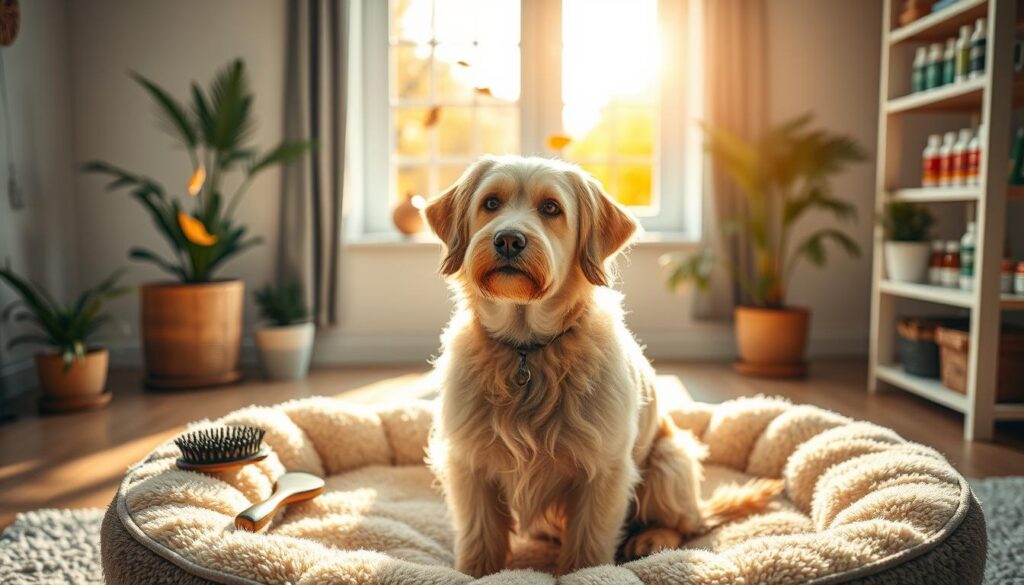
Brushing regularly spreads natural oils down to the hair tips. This keeps the coat hydrated and stops dry, brittle strands. Slicker brushes are great for detangling long or curly fur without harming the skin.
Brushing removes loose hair and debris, letting the skin breathe. It also stops mats that trap bacteria. Using these tools daily is essential for dog coat care. Make a daily grooming schedule to keep your dog comfortable and clean.
Hydrating Sprays and Oils
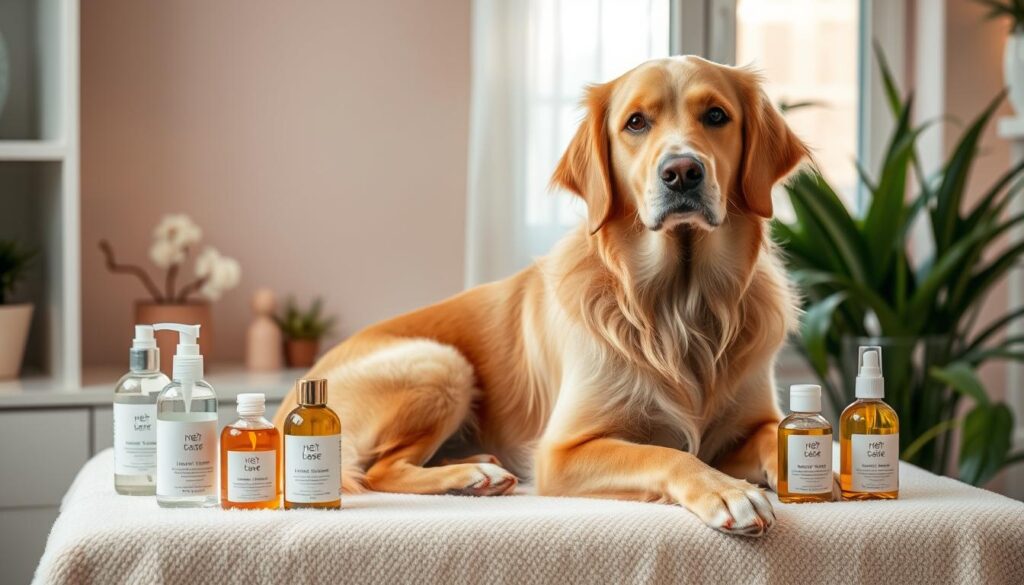
Brushing alone might not be enough for dry coats. Hydrating sprays and oils add extra moisture. They protect against harsh environmental factors.
Apply these treatments to areas prone to tangling or irritation. Following these pet grooming tips will keep your dog’s coat soft and shiny all year. Always pick products made for dogs to avoid skin problems.
| Tool Type | Primary Benefit | Best For |
|---|---|---|
| Slicker Brush | Detangling & Oil Distribution | Long or Curly Coats |
| Hydrating Spray | Moisture Retention | Dry or Brittle Fur |
| Natural Oil | Deep Conditioning | Sensitive Skin |
Recognizing Skin Issues Related to Hydration
Keeping your dog’s skin healthy means watching for small changes in their coat and behavior. We often focus on grooming, but spotting early signs of skin trouble is key. This way, you can prevent pain for your pet.
Common Skin Conditions
Many think a dry coat is just from low humidity or bad grooming. But, health problems can show up through the skin. For example, food allergies cause 10 to 15 percent of skin issues in dogs, showing as redness, inflammation, or too much scratching.
If your dog loses hair, has dandruff, or a brittle coat, it’s time to investigate. These signs often point to nutrition’s role in skin health. Learn more about it in this guide on nutrition’s impact on dog skin. Finding these causes is crucial for good dog skin care.
When to Consult a Veterinarian
Telling minor dryness from a serious health issue can be tough, even for experienced owners. If your pet itches a lot, has open sores, or smells bad, see a vet right away. Professional medical attention is needed to check for infections or diseases that can’t be treated with creams.
Your vet can do tests to find out if it’s an environmental, nutritional, or allergy issue. Getting expert advice makes your pet care safe and effective. Early action helps your dog feel better and have a healthy coat again.
DIY Hydration Remedies for Your Dog
When your pup feels a bit off, natural DIY remedies can help. They’re gentle and can fix mild problems. These home treatments can boost coat health and give quick relief. We think simple, natural ingredients are best for your pet’s health between grooming visits.
Natural Oils for Coat Health
Adding high-quality fats to your routine is great for skin health. Look into different dog coat oils to find the best for your pet. These oils keep moisture in and protect against the environment.
Start with a small amount of oil to check for skin reactions. Regular use of these natural treatments is key for dog skin care. Focus on dry or brittle fur to bring back a healthy look.
Hydrating Masks for Dogs
An oatmeal bath is great for dry or itchy skin. Oatmeal soothes and hydrates the skin. Just grind plain oats into a powder and add it to warm bath water for a soothing soak.
For hotspots, pure aloe vera gel works well. Make sure the gel is 100% pure and free of additives. Keep your dog busy with a toy while the gel absorbs to stop them from licking it off.
| Remedy | Primary Benefit | Best For |
|---|---|---|
| Oatmeal Bath | Soothing Irritation | Itchy, Dry Skin |
| Natural Oils | Deep Hydration | Dull, Brittle Fur |
| Aloe Vera | Calming Hotspots | Red, Inflamed Areas |
Expert Tips for Optimal Coat Hydration
To get a shiny, healthy coat, mix home care with expert advice. This combo keeps your dog happy and hydrated all year. It’s key to a vibrant coat.
Veterinary Insights
Seeing your vet regularly is crucial. It lets them check your dog’s health. They can spot problems early, keeping your dog’s fur healthy.
Professional Grooming Standards
Professional groomers have the tools and skills for tough grooming tasks. They know how to clean deep and restore natural oils. This keeps your dog’s coat strong.
By combining vet visits with grooming, you’re on the right track. You can keep your dog comfortable and looking great. Regular care means a long, happy life for your pet.