Did you know that nearly 70% of skin issues in pets come from bad grooming? Your dog’s coat shows their health inside. By keeping up with grooming, you do more than just make them look good.
We keep their skin hydrated and free from painful matting. This lets us find health problems early. By following our expert tips, your dog will feel comfortable and full of life every day. Learning how to care for your dog’s fur is a simple yet powerful way to improve their life.
Key Takeaways
- Grooming is a key sign of your pet’s health inside.
- Regular brushing stops painful matting and skin problems.
- Keeping up with routines helps find parasites or lumps early.
- Good grooming keeps the skin moist and the coat shiny.
- A well-groomed pet feels more comfortable every day.
Understanding the Importance of Fur Care for Dogs
Proper fur care for dogs is more than just making your pet look good. A clean, fluffy coat is nice to touch, but it also shows your dog’s health. We think grooming is key for a happy, long life for your pet.
Why Fur Health Matters
A dog’s coat protects them from the outside world. But it also shows what’s going on inside. A dull or brittle coat can mean there’s a problem. This could be because of bad food or hidden bugs like fleas and mites.
Watching for changes in your dog’s coat can help find health issues early. Regular fur care for dogs lets you check the skin under the hair. This helps keep your dog’s skin healthy and stops infections.
The Impact on Overall Well-being
Ignoring your dog’s grooming can cause a lot of pain. Mats and skin problems can be very uncomfortable. They can also make your dog itchy and unhappy.
Really, fur care for dogs is about their comfort and happiness. Grooming stops skin problems and makes your bond stronger. A healthy coat means your dog is doing well inside and out.
Types of Dog Fur and Their Care Requirements
Different dog breeds need different grooming habits to stay healthy. Each dog has a unique coat, so a one-size-fits-all approach doesn’t work. By knowing their specific needs, we can make sure our fur care for dogs is both effective and gentle.
Short-Haired Breeds
Short-haired dogs, like Beagles or Boxers, might look easy to care for. But they still need regular grooming. We suggest weekly brushing to get rid of loose hair and spread skin oils. This keeps their coat shiny and healthy.
Long-Haired Breeds
Long-haired dogs, such as Golden Retrievers or Shih Tzus, need more care. They should be brushed every day to avoid painful mats and tangles. Without daily brushing, their long hair can become tangled and dirty.
Curly and Wavy Coats
Dogs with curly or wavy hair, like Poodles or Bichon Frises, have special hair that traps shed hair. This makes them prone to matting if not groomed right. We recommend using a slicker brush to get to the hair’s base and keep the skin breathing.
| Coat Type | Brushing Frequency | Primary Goal | Recommended Tool |
|---|---|---|---|
| Short | Weekly | Oil Distribution | Rubber Curry Brush |
| Long | Daily | Detangling | Pin Brush |
| Curly/Wavy | 3-4 Times Weekly | Preventing Mats | Slicker Brush |
| Double Coat | Bi-Weekly | Removing Undercoat | Undercoat Rake |
Essential Grooming Tools for Dog Fur Care
Learning to groom your pet starts with the right tools. You need dog grooming essentials that fit your dog’s fur type. The right gear makes grooming easier and keeps your pet’s coat healthy.
Follow these grooming tips to keep your dog comfortable and happy. It’s all about making grooming a positive experience for them.
Brushes and Combs
The right brush depends on your dog’s fur. Long fur needs combs or brushes with long teeth to avoid pain. Regular brushing dogs’ fur stops mats and spreads oils.
For the best grooming kit, check out this long hair kit. Work in small areas to catch tangles before they become knots.
Clippers and Shears
Clippers keep your dog looking neat, around paws, ears, and sanitary areas. Use quiet, high-quality clippers to avoid scaring your pet. Keep blades sharp and clean to avoid hair pulling.
When using shears, safety first. Use blunt-tipped scissors for sensitive areas. Always keep your fingers between the blade and your dog’s skin for safety.
Bathing Supplies
A good bath needs more than water and soap. Use dog-specific shampoo to avoid skin problems. Absorbent microfiber towels dry your dog faster.
Keep a non-slip mat in your tub or sink for your dog’s safety. Having everything within reach makes bathing easier for both of you.
How Often Should You Groom Your Dog?
Finding the right grooming schedule for your dog depends on several factors. Start with short grooming sessions of 1-2 minutes. This helps your dog get used to the process. By learning these pet grooming techniques, your dog will stay comfortable and relaxed.
Factors Influencing Grooming Frequency
The grooming schedule varies based on your dog’s breed and coat type. Long-haired dogs need daily grooming to avoid painful mats. Short-haired dogs might only need a weekly brush. Activity level also matters, as active dogs pick up more debris.
Being consistent is key to successful grooming. A regular schedule helps your dog feel secure. Whether your dog has a high-maintenance coat or sheds less, regular grooming is crucial for their skin health.
Signs That Your Dog Needs Grooming
Your dog may show signs it needs grooming. Excessive scratching could mean trapped dirt or loose fur. Look for tangles or mats that can irritate the skin if not removed.
Other signs include a dull coat, bad smell, or too much shedding. Watching for these changes lets you act early. Here’s a guide to find the right grooming schedule for your dog:
| Coat Type | Brushing Frequency | Bathing Frequency |
|---|---|---|
| Short/Smooth | Weekly | Every 6-8 weeks |
| Long/Silky | Daily | Every 4-6 weeks |
| Curly/Wavy | Daily | Every 3-4 weeks |
| Double Coat | 3-4 times weekly | Every 6-8 weeks |
Bathing Your Dog: Best Practices
Having a regular bathing schedule is a top grooming tip. Dogs don’t need to be washed every day. Bathing them once or twice a month keeps their coat looking good and healthy. But, bathing too much can take away important oils, so finding the right balance is crucial.
Choosing the Right Shampoo
Choosing the right shampoo is key to pet grooming techniques. Always pick a shampoo made for dogs, as their skin is different from ours. Using human shampoo can dry out their skin, cause irritation, and even lead to allergies.
Opt for natural, soap-free shampoos with ingredients like oatmeal or aloe vera. If your dog has sensitive skin, talk to your vet before trying new shampoos. Make sure to rinse well to avoid any leftover soap that might irritate their skin.
Bathing Techniques for Different Fur Types
When it comes to dog bathing strategies, the type of fur matters. For dogs with long hair, brush out all mats before the bath. Water can make tangles worse. Short-haired dogs need less prep but still benefit from a gentle massage to improve blood flow.
Use lukewarm water to keep your dog comfortable. Make sure the tub has a non-slip mat to prevent slipping and reduce stress. After the bath, gently pat your dog dry with a towel instead of rubbing, which can cause tangles in long fur.
| Coat Type | Bathing Frequency | Key Focus Area |
|---|---|---|
| Short/Smooth | Every 4-6 weeks | Skin health and shine |
| Long/Silky | Every 2-3 weeks | Detangling and conditioning |
| Curly/Wire | Every 3-4 weeks | Deep cleaning at the root |
| Double Coat | Every 6-8 weeks | Removing loose undercoat |
The Role of Nutrition in Fur Health
We believe that true dog fur maintenance starts before you brush your pet. Grooming is key, but your dog’s coat also shows their health and diet.
A good diet helps grow strong hair and skin. When your dog eats well, their fur will look better.
Key Nutrients for Healthy Fur
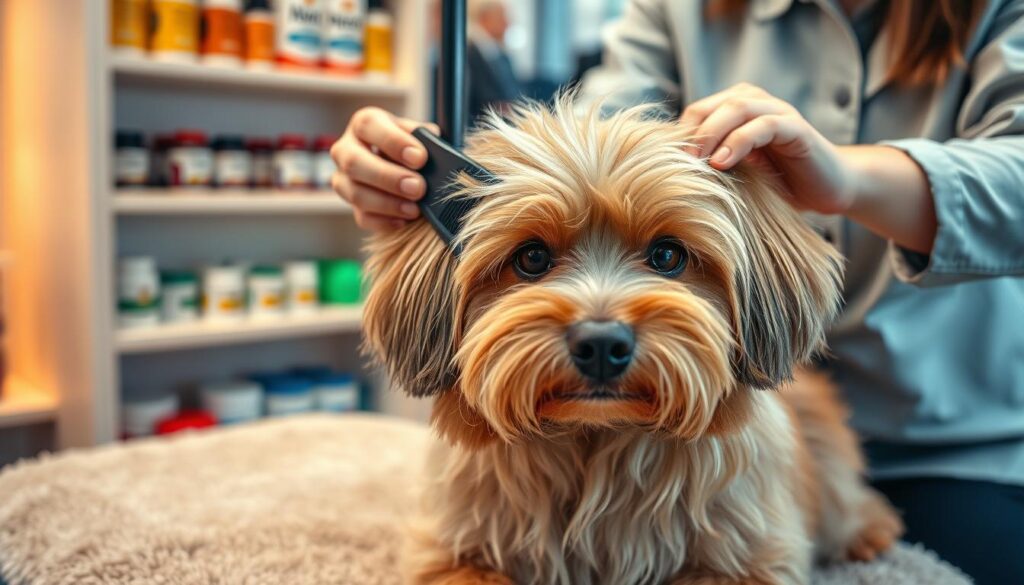
Proteins are vital for hair, as fur is mostly keratin. Without enough protein, your dog’s hair may break easily.
Omega-3 and Omega-6 fatty acids also matter. They keep the skin and hair healthy, reducing dryness and irritation.
Supplements That Can Help
Even with a good diet, some dogs need extra help. Supplements can boost their dog fur maintenance routine.
Supplements like fish oil, biotin, and zinc can be helpful. But talk to your vet before adding them to your dog’s diet.
| Nutrient | Primary Benefit | Source |
|---|---|---|
| Protein | Builds hair structure | Chicken, Beef, Fish |
| Omega-3 | Reduces inflammation | Salmon Oil, Flaxseed |
| Biotin | Improves hair elasticity | Egg yolks, Liver |
| Zinc | Supports skin barrier | Meat, Whole grains |
By focusing on these nutrients, you help your pet’s coat. Good diet is key to dog fur maintenance for lasting results.
Tackling Common Fur Problems
Dealing with fur issues early keeps your dog comfy and happy. Even with a good grooming routine, changes in coat or skin can happen. Regular dog fur maintenance is key to fighting these common problems.
Mats and Tangles
Mats are tight hair knots that can hurt your dog’s skin. They often form in areas like armpits, genital region, and behind the ears. Always check these spots during grooming to prevent tangles.
For small mats, use a detangling spray and a slicker brush. Be gentle to avoid hurting your pet. For big mats, it’s best to see a pro for safe removal.
Dandruff and Dry Skin
Dandruff shows as white flakes on your dog’s coat, meaning they need more moisture. It’s often due to low humidity, bad diet, or harsh soaps. Keeping them hydrated helps restore their skin’s natural oils.
Use a moisturizing dog shampoo to soothe their skin. Brushing helps spread natural oils, which is crucial for dog fur maintenance. If dandruff doesn’t go away, try adding omega-3 fatty acids to their food.
Allergies and Irritation
Skin irritation shows as redness, bumps, or too much scratching. Allergies to food, pollen, or the environment are common. Watching your dog closely helps spot these issues.
If your dog scratches a lot or has inflamed spots, see a vet. A clean home and hypoallergenic grooming products help. Proper dog fur maintenance lets you catch problems early, making your pet happier and healthier.
Dealing with Shedding: Tips and Tricks
Knowing when your dog sheds is the first step to a cleaner home. Shedding is natural for dogs, but it can make our homes furry. Regular dog fur maintenance helps us keep up without getting overwhelmed.
Seasonal Shedding Patterns
Dogs often change their coats twice a year, in spring and fall. As the weather changes, they shed their old coats for new ones. This is normal, but the amount can depend on the dog and the weather.
When it’s time to shed, you’ll see more hair around your house. Knowing when helps us get ready with the right grooming tools. This way, we keep our pets comfortable and our homes clean.
Effective Shedding Control
The best way to deal with a lot of hair is regular grooming. During heavy shedding, grooming your dog every day is key. It keeps the fur from getting tangled in their coat.
Using the right tools, like a de-shedding rake or slicker brush, makes grooming faster. Focus on areas where hair collects, like the neck and back. A few minutes each day can make a big difference in keeping your home hair-free.
Proactive dog fur maintenance is key for a happy pet and a clean home. The right care makes even the heaviest shedding seasons easier. By using these shedding solutions for dogs, your pet’s coat will stay great all year.
Natural Remedies for Fur Care
We often look to our kitchen pantries for gentle solutions for our dogs’ skin and fur. Many pet owners find that simple, organic ingredients can greatly improve coat care for pets. This is done without harsh chemicals.
Natural treatments often help with shedding solutions for dogs by nourishing the skin. Ingredients like oatmeal are great because they have natural anti-inflammatory properties. These properties soothe itchy skin and stop excessive scratching.
Benefits of Coconut Oil
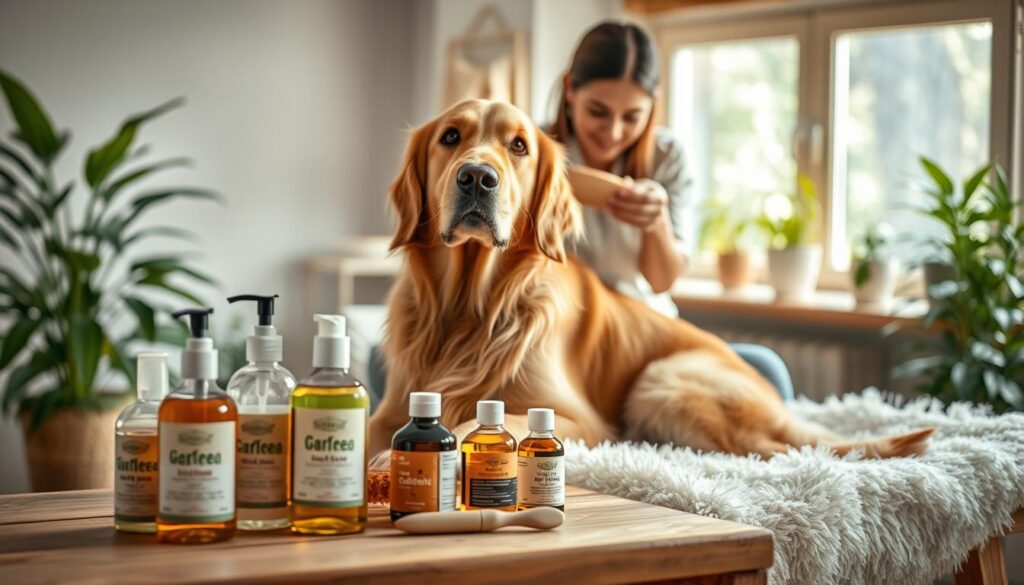
Coconut oil is a versatile staple that’s great as a moisturizer for dry, flaky skin. When applied topically, it creates a protective barrier. This barrier locks in hydration and promotes a lustrous, healthy shine.
Coconut oil does more than moisturize. It supports overall skin health. Here are some ways to use it:
- Topical massage: Rub a small amount into your dog’s skin to soothe irritation.
- Paw care: Apply to dry paw pads to prevent cracking in harsh weather.
- Dietary supplement: Add a small amount to their food to support skin health from within.
Essential Oils Safe for Dogs
Many essential oils are popular in human aromatherapy, but we must be cautious with dogs. Only specific oils are safe, and they must be properly diluted before use.
If you use essential oils, consider these safe options for grooming:
- Lavender: Known for its calming properties and ability to soothe minor skin irritations.
- Chamomile: Excellent for reducing redness and providing relief to sensitive skin.
- Frankincense: Often used to support healthy skin cell regeneration.
Always talk to your vet before adding new oils to your dog’s routine. By choosing safe and natural ingredients, you can support your dog’s coat and skin health long-term.
Understanding Flea and Tick Prevention
Fleas and ticks are a big problem for pets. They love the warm, moist places under matted fur. Keeping your pet’s coat clean is key to spotting infestations early.
Importance of Year-Round Protection
Many think parasite prevention is only for summer. But fleas and ticks are active all year. Consistent protection keeps your dog safe no matter the season.
Keeping your dog’s coat clean makes it hard for fleas and ticks to live there. Regular brushing lets you check for parasites. This is crucial for coat care for pets.
Natural vs. Chemical Solutions
Choosing the right prevention depends on your dog and what you prefer. Chemical treatments like spot-on drops or oral meds work fast and last long. They’re great for dogs that go outside a lot.
Natural options like essential oils or herbal sprays are gentler. But they need to be applied more often. Adding these to your coat care for pets routine is key.
| Prevention Method | Primary Benefit | Application Frequency | Best For |
|---|---|---|---|
| Chemical Spot-on | High efficacy | Monthly | Active outdoor dogs |
| Oral Medication | Systemic protection | Monthly/Quarterly | Dogs with skin sensitivities |
| Natural Sprays | Chemical-free | Before every walk | Low-risk environments |
| Essential Oil Collars | Convenience | As directed | General maintenance |
Seasonal Fur Care Tips
The changing seasons can be tough on your dog’s fur. It’s key to adjust your care routine to keep them comfy. By focusing on coat care for pets, you can avoid common problems in extreme weather.
Summer Care Strategies
In the summer, keeping your dog cool and skin irritation-free is crucial. Remove their harness or collar indoors to let their skin breathe and prevent hair breakage. This simple step reduces friction and keeps their coat healthy.
For dog bathing strategies, make sure to rinse well to remove pollen or grass allergens. Always ensure your dog is completely dry after a bath to prevent hot spots in the humid heat. Regular brushing also helps remove the undercoat, improving airflow against the skin.
Winter Coat Maintenance
Winter brings dry air and indoor heating issues. You might see your dog’s skin getting flaky or their fur losing shine. Brushing more often helps spread natural oils, protecting against the cold.
Use gentle, moisturizing products for baths in the cold months. Effective dog bathing strategies in winter include using lukewarm water instead of hot. This helps keep moisture in. Here’s a table to guide your grooming schedule through the year.
| Season | Primary Focus | Grooming Frequency |
|---|---|---|
| Spring | Removing shedding undercoat | High |
| Summer | Cooling and allergen removal | Moderate |
| Autumn | Preparing for winter growth | Moderate |
| Winter | Moisturizing and detangling | Low to Moderate |
When to Consult a Professional Groomer
Learning to groom your pet at home strengthens your bond. Yet, sometimes your dog needs more than basic grooming. This is when you should call in a professional for complex haircuts, deep skin treatments, or precise nail trimming.
Recognizing Grooming Needs Beyond Basics
Keep an eye out for signs your dog needs more than your usual grooming. If mats or skin issues persist, despite regular brushing, it’s time for a pro. Experts use top-notch tools for thick coats or sensitive skin, ensuring your dog’s comfort.
They offer deep cleans and sanitary trims. These services keep your dog happy all year round.
Finding a Qualified Groomer
Seek out certified groomers who put animal safety and comfort first. Check local reviews for places like PetSmart or local salons. Make sure they know your breed’s specific needs.
A good groomer is a key partner in your pet’s health. Regular visits keep your dog happy and healthy.